Author: Victor de Paula

  • 10 Dark Academia Books That Will Obsess You

    10 Dark Academia Books That Will Obsess You

    10 Dark Academia Books That Will Obsess You

    If you’re drawn to the allure of gothic libraries, secret societies, and the dangerous pursuit of knowledge, then Dark Academia is the literary aesthetic you’ve been searching for. This captivating genre romanticizes intellectualism while exploring its darker side, where ambition, obsession, and moral ambiguity collide within the hallowed halls of elite institutions.

    Dark Academia emerged as an internet aesthetic in 2015 and has since evolved into a distinct literary fiction subgenre. These stories typically unfold in prestigious universities or remote campuses, featuring brilliant but flawed characters whose passion for learning leads them into morally questionable territory. Think candlelit libraries, ancient texts, philosophical debates, and secrets that can destroy lives.

    Whether you’re a longtime fan or new to the genre, these 10 books will pull you into worlds where knowledge comes at a price, and the line between right and wrong blurs like ink on aged parchment.

    1. The Secret History by Donna Tartt

    The quintessential Dark Academia novel that started it all.

    Published in 1992, Donna Tartt’s debut is widely considered the foundational text of Dark Academia. Set at the elite Hampden College in Vermont, the story follows Richard Papen, who becomes entangled with an exclusive group of Classics students under the tutelage of the enigmatic Professor Julian Morrow.

    What makes this book unforgettable is its inverted mystery structure, Tartt reveals the murder in the prologue, then spends the rest of the novel exploring the psychological why. The group’s obsession with ancient Greek culture and their professor’s teachings lead them to transcend conventional morality, with devastating consequences.

    The novel perfectly captures the intoxicating blend of intellectualism, elitism, and moral decay that defines Dark Academia. Tartt’s lush prose and complex character dynamics make this a must-read that has influenced countless books in the genre.

    2. If We Were Villains by M.L. Rio

    Shakespeare, murder, and the thin line between performance and reality.

    Set at an elite arts conservatory, this novel follows seven Shakespeare students whose intense immersion in their roles begins to blur the boundaries between stage and life. When one of them is found dead, the remaining students must grapple with their complicity and secrets.

    M.L. Rio masterfully weaves Shakespearean themes and quotes throughout the narrative, creating a story that feels like a modern tragedy. The claustrophobic setting, complex friendships, and the question of who is truly guilty make this a gripping page-turner.

    For readers who love theatrical settings and morally ambiguous characters, this book delivers the perfect blend of literary sophistication and suspenseful storytelling.

    3. Ninth House by Leigh Bardugo

    Dark Academia meets supernatural horror at Yale.

    Leigh Bardugo takes Dark Academia into the realm of fantasy with this adult debut. Galaxy “Alex” Stern is given a full scholarship to Yale, not for her academic prowess, but for her ability to see ghosts. She’s tasked with monitoring the university’s secret societies, which practice magic and occult rituals.

    What sets Ninth House apart is its unflinching examination of privilege, power, and the dark histories of elite institutions. Bardugo doesn’t romanticize academia; instead, she exposes its capacity for exploitation and abuse. The mystery is compelling, the magic system is intricate, and Alex is a refreshingly complex protagonist.

    This book is perfect for readers who want their Dark Academia with a supernatural twist and social commentary.

    4. The Atlas Six by Olivie Blake

    Six magicians, one impossible choice, and secrets that could destroy them all.

    Every decade, the mysterious Alexandrian Society recruits six of the world’s most talented magicians. They’re offered access to ancient knowledge and unimaginable power, but only five will be initiated. One must be eliminated.

    Olivie Blake creates a richly atmospheric story filled with morally gray characters, each with their own motivations and secrets. The novel explores themes of ambition, betrayal, and the ethical implications of pursuing knowledge at any cost.

    With its ensemble cast, philosophical debates, and slow-burn tension, The Atlas Six has become a modern Dark Academia favorite, especially among readers who enjoy character-driven narratives and complex magical systems.

    5. A Deadly Education by Naomi Novik

    Survival of the fittest in a magical school where graduation might kill you.

    The Scholomance is not your typical magical academy, it’s a death trap. Students must survive four years of deadly creatures, treacherous classwork, and the constant threat of being killed by the school itself. El Higgins is a powerful sorceress with an affinity for mass destruction spells, making her both feared and isolated.

    Naomi Novik subverts typical magical school tropes by creating an institution where survival is never guaranteed. The dark, claustrophobic atmosphere and El’s sardonic voice make this a compelling read. The novel examines themes of power, privilege, and what it means to be a hero when the system is designed to make you a villain.

    This is Dark Academia for readers who want high stakes, creative world-building, and a protagonist who refuses to play by the rules.

    6. Bunny by Mona Awad

    A surreal, unsettling exploration of female friendship and creative obsession.

    Samantha Heather Mackey is a scholarship student at an elite MFA program, isolated from her wealthy, cliquish classmates who call each other “Bunny.” When they invite her into their circle, she discovers their creative workshops involve disturbing rituals that blur the line between art and reality.

    Mona Awad’s novel is darkly comedic, surreal, and deeply unsettling. It’s a sharp critique of creative writing programs, toxic friendships, and the violence inherent in the creative process. The prose is hypnotic, and the atmosphere is suffocatingly strange.

    For readers who appreciate experimental fiction and psychological horror, Bunny offers a uniquely twisted take on Dark Academia.

    7. The Picture of Dorian Gray by Oscar Wilde

    The classic tale of beauty, corruption, and the price of immortality.

    While not traditionally categorized as Dark Academia, Oscar Wilde’s only novel is a spiritual predecessor to the genre. Dorian Gray, a beautiful young man, becomes the subject of a portrait. He wishes that the painting would age instead of him, and his wish is granted.

    As Dorian descends into hedonism and moral corruption, his portrait bears the marks of his sins while he remains eternally youthful. Wilde’s exploration of aestheticism, vanity, and the consequences of living without moral constraints resonates deeply with Dark Academia themes.

    The novel’s lush prose, philosophical musings, and gothic atmosphere make it essential reading for anyone drawn to the genre.

    8. Special Topics in Calamity Physics by Marisha Pessl

    A brilliant, genre-bending mystery wrapped in literary references.

    Blue van Meer is a precocious teenager who moves frequently with her professor father. When she finally settles at an elite boarding school, she’s drawn into the orbit of the charismatic film teacher Hannah Schneider and her exclusive group of students. When Hannah is found dead, Blue must unravel the mystery.

    Marisha Pessl structures the novel like a syllabus, with each chapter named after a literary work. The narrative is dense with references, footnotes, and Blue’s encyclopedic knowledge. It’s a coming-of-age story, a murder mystery, and a meditation on how we construct narratives to make sense of our lives.

    This book rewards careful reading and is perfect for those who love intellectually ambitious fiction and enjoy finding yourself in the pages of complex narratives.

    9. Catherine House by Elisabeth Thomas

    A mysterious, atmospheric novel about a college that demands everything from its students.

    Catherine House is an elite, isolated college that offers a transformative education—but students must commit completely for three years, with no contact with the outside world. Ines Murillo arrives broken and desperate for escape, but she soon discovers the school harbors dark secrets.

    Elisabeth Thomas creates a dreamlike, unsettling atmosphere where nothing is quite as it seems. The novel explores themes of identity, ambition, and what we’re willing to sacrifice for transformation. The slow-burn mystery and gothic setting make this a haunting read.

    For readers who enjoy atmospheric, character-driven stories with a sense of creeping dread, Catherine House delivers.

    10. Ace of Spades by Faridah ÀbĂ­kĂ©-ÍyĂ­mĂ­dĂ©

    A thrilling examination of racism and power at an elite private school.

    When two Black students at the prestigious Niveus Private Academy become targets of an anonymous texter known as Aces, their lives are turned upside down. As secrets are exposed and tensions escalate, they must uncover who is behind the attacks before it’s too late.

    Faridah ÀbĂ­kĂ©-ÍyĂ­mĂ­dĂ© brings a fresh, necessary perspective to Dark Academia by centering the experiences of Black students in predominantly white elite institutions. The novel is a gripping thriller that doesn’t shy away from examining systemic racism, privilege, and the psychological toll of being “the only one.”

    This book is essential reading for anyone who wants Dark Academia that challenges the genre’s often Eurocentric and elitist foundations.

    Why Dark Academia Captivates Us

    The appeal of Dark Academia lies in its contradictions. It romanticizes the pursuit of knowledge while acknowledging its potential for corruption. It celebrates intellectualism while exposing the elitism and exclusivity of academic institutions. These stories allow us to explore moral ambiguity in settings that feel both timeless and intensely atmospheric.

    Whether you’re drawn to murder mysteries, supernatural elements, or psychological explorations of ambition and obsession, Dark Academia offers something uniquely compelling. These 10 books represent the best the genre has to offer—each one a portal into a world where knowledge is power, secrets are currency, and nothing is quite as it seems.

    So light a candle, brew some tea, and prepare to lose yourself in these obsession-worthy reads. Just remember: in Dark Academia, the pursuit of knowledge always comes with a price.

    Looking for more book recommendations? Check out our curated lists, or explore books to read before their movie adaptations for your next literary adventure.

  • 10 Legal Alternatives to Z-Library

    10 Legal Alternatives to Z-Library

    10 Legal Alternatives to Z-Library: Read Books for Free Safely

    Looking for safe and legal ways to access free books online? While Z-Library gained popularity for its vast collection, its legal status has always been questionable. Fortunately, there are numerous legitimate platforms that offer free access to thousands of books without any legal or security risks.

    In this comprehensive guide, we’ll explore 10 completely legal alternatives to Z-Library that allow you to read books for free while supporting authors and respecting copyright laws.

    Why Choose Legal Alternatives?

    Before diving into the alternatives, it’s important to understand why choosing legal platforms matters:

    • Safety First: Legal platforms don’t expose you to malware, viruses, or security risks
    • Ethical Reading: You support authors and publishers by using authorized channels
    • No Legal Risks: Avoid potential copyright infringement issues
    • Quality Content: Access properly formatted, verified books
    • Reliable Access: No risk of sudden shutdowns or domain seizures

    1. Project Gutenberg

    Best for: Classic literature and public domain works

    Project Gutenberg is the pioneer of free ebooks, offering over 70,000 titles completely free and legal. Founded in 1971, it’s the oldest digital library in the world.

    Key Features:

    • Over 70,000 free ebooks in the public domain
    • Multiple formats: EPUB, Kindle, HTML, and plain text
    • No registration required
    • Works include classic novels, philosophy, historical records, and more
    • Completely free from DRM (Digital Rights Management)
    • Available worldwide

    What You’ll Find: Classic works by authors like Jane Austen, Charles Dickens, Mark Twain, and Shakespeare.

    2. Internet Archive

    Best for: Rare books, academic texts, and digital lending

    The Internet Archive is a massive digital library offering millions of free books, texts, and cultural artifacts. It’s one of the most comprehensive free resources available online.

    Key Features:

    • Millions of scanned books and texts
    • Academic journals and research papers
    • Magazines and historical documents
    • Digital lending through Open Library integration
    • Public domain and open access materials
    • Instant access to a significant portion of the collection

    3. Open Library

    Best for: Borrowing contemporary books legally

    Open Library is a project by the Internet Archive that aims to create “one page for every book ever published.” It offers controlled digital lending, similar to a traditional library.

    Key Features:

    • Borrow digitized books for free
    • Time-limited loans (typically 14 days)
    • No late fees
    • Access to both classic and contemporary titles
    • Create reading lists and track your reading
    • Community-driven catalog

    4. LibriVox

    Best for: Free audiobooks of classic literature

    If you prefer listening to reading, LibriVox is your go-to resource. All audiobooks are recorded by volunteers and are completely free.

    Key Features:

    • Thousands of free audiobooks
    • All public domain works
    • Recorded by volunteers worldwide
    • Multiple languages available
    • No registration required
    • Compatible with all devices

    5. Google Books

    Best for: Previewing books and accessing public domain titles

    Google Books offers access to millions of books, with full access to public domain titles and previews of copyrighted works.

    Key Features:

    • Millions of books indexed
    • Full access to public domain titles
    • Preview pages of copyrighted books
    • Advanced search capabilities
    • Links to purchase or borrow options
    • Excellent for research and finding rare literature

    6. ManyBooks

    Best for: Diverse selection including indie authors

    ManyBooks features thousands of free ebooks from both the public domain and self-published authors who choose to offer their work for free.

    Key Features:

    • Over 50,000 free ebooks
    • Public domain classics and contemporary indie titles
    • Multiple formats available
    • Personalized recommendations
    • Regular new additions
    • Easy browsing by genre and category

    7. Digital Public Library of America (DPLA)

    Best for: Comprehensive access to American cultural heritage

    The DPLA provides unified access to millions of items from libraries, archives, and museums across the United States.

    Key Features:

    • Millions of books, photographs, and manuscripts
    • Aggregates content from institutions nationwide
    • Free and open access
    • Advanced search and filtering
    • Educational resources
    • Primary sources for research

    8. Your Local Library (Libby/OverDrive & Hoopla)

    Best for: Current bestsellers and new releases

    Don’t overlook your local public library! Most libraries now offer digital lending through apps like Libby (powered by OverDrive) and Hoopla.

    Key Features:

    • Free with your library card
    • Access to current bestsellers and new releases
    • Ebooks and audiobooks
    • No late fees (books automatically return)
    • User-friendly mobile apps
    • Supports authors and publishers

    How to Access: Download the Libby or Hoopla app and sign in with your library card number.

    9. OpenStax

    Best for: Free college textbooks

    OpenStax offers high-quality, peer-reviewed, openly licensed college textbooks that are completely free online.

    Key Features:

    • Free college-level textbooks
    • Peer-reviewed by academic experts
    • Covers major subjects (math, science, humanities, social sciences)
    • Available in multiple formats
    • Regularly updated
    • Used by millions of students worldwide

    10. HathiTrust Digital Library

    Best for: Academic research and scholarly works

    HathiTrust is a partnership of major research institutions and libraries, offering access to millions of digitized books for research purposes.

    Key Features:

    • Over 17 million digitized items
    • Focus on scholarly and academic works
    • Public domain works fully accessible
    • Emergency temporary access program
    • Advanced research tools
    • Preservation of digital knowledge

    Bonus Resources

    DOAB (Directory of Open Access Books)

    Excellent for peer-reviewed open access academic books across all disciplines.

    OAPEN Library

    Focuses on open access academic books in the humanities and social sciences.

    Smashwords

    Offers free ebooks from independent authors, with many authors choosing to offer their work for free or at discounted prices.

    Tips for Maximizing Your Free Reading

    1. Combine Multiple Platforms: Each platform has unique offerings, so use several to access the widest variety
    2. Get a Library Card: Even if you don’t visit physical libraries, a card gives you access to digital collections
    3. Check Public Domain Status: Books published before 1928 in the US are generally in the public domain
    4. Use RSS Feeds: Many platforms offer feeds for new additions
    5. Explore Different Formats: Try audiobooks, ebooks, and PDFs to find what works best for you
    6. Support When You Can: If you enjoy an indie author’s free work, consider purchasing their other books

    Understanding Copyright and Public Domain

    It’s important to understand the difference between legal free books and pirated content:

    • Public Domain: Works whose copyright has expired (generally 70+ years after the author’s death, or published before 1928 in the US)
    • Open Access: Authors or publishers choose to make works freely available
    • Library Lending: Licensed digital lending through official library partnerships
    • Free Promotions: Authors temporarily offer books for free as marketing

    Conclusion

    You don’t need to resort to questionable platforms like Z-Library to access free books. These 10 legal alternatives offer millions of books across all genres, from timeless classics to contemporary bestsellers, all while respecting copyright laws and keeping you safe online.

    Whether you’re a student looking for textbooks, a literature enthusiast seeking classics, or a casual reader wanting to discover new authors, these platforms provide legitimate, safe, and ethical ways to read for free.

    Start exploring these resources today and build your digital library the right way – legally, safely, and sustainably.

    Ready to start reading? Pick one of these platforms and discover your next great book today! Your local library’s digital collection through Libby is an excellent starting point for current bestsellers, while Project Gutenberg offers an unmatched collection of classics.

  • 6 Revolutionary Ideas from The Diamond Age by Neal Stephenson

    6 Revolutionary Ideas from The Diamond Age by Neal Stephenson

    6 Revolutionary Ideas from The Diamond Age by Neal Stephenson

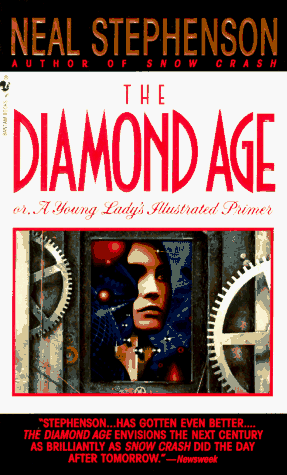
    Neal Stephenson’s The Diamond Age: Or, A Young Lady’s Illustrated Primer (1995) is a visionary work of science fiction that predicted many aspects of our digital future. Here are six groundbreaking ideas from this cyberpunk masterpiece:

    the diamond age

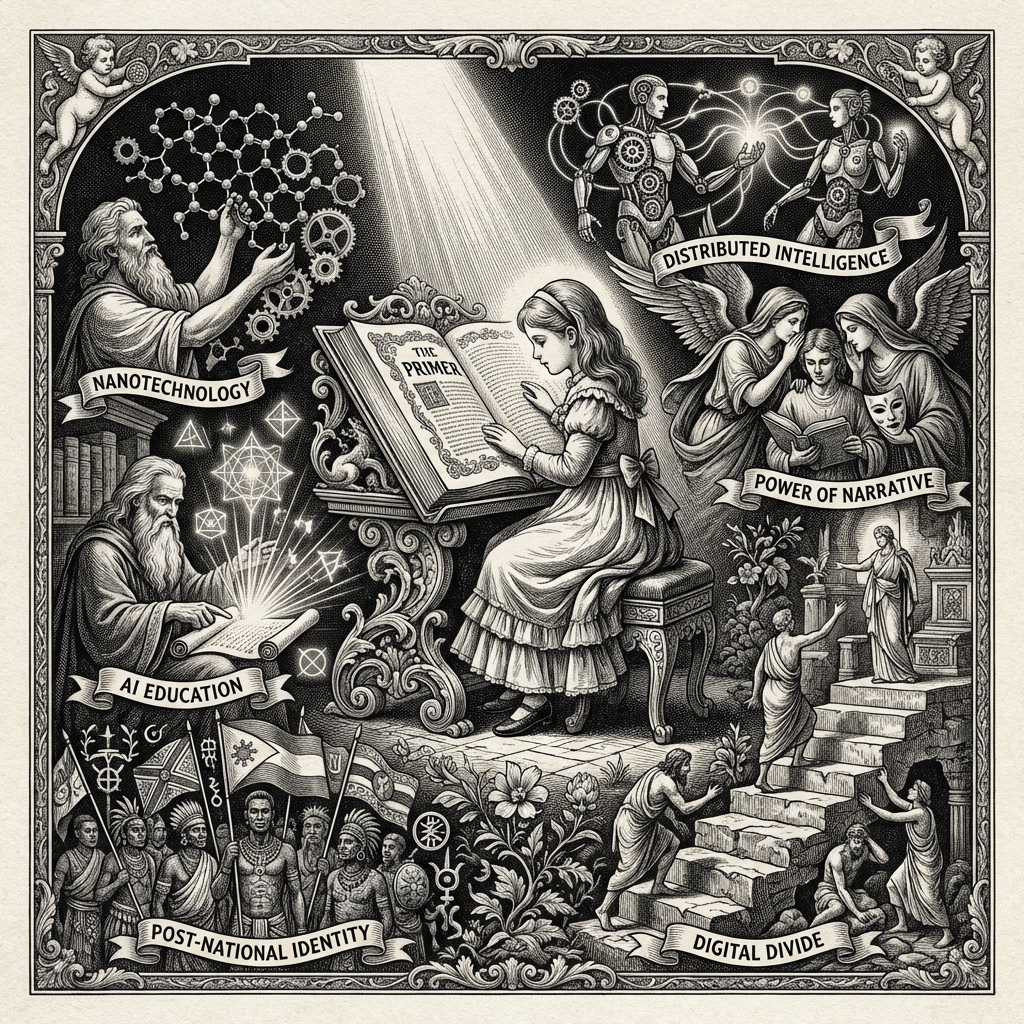
    1. Nanotechnology as the Foundation of Society

    Stephenson envisions a world where molecular nanotechnology has fundamentally transformed civilization. Matter compilers, devices that can assemble any object atom by atom, have made traditional manufacturing obsolete. This concept explores how abundance created by nanotech doesn’t eliminate inequality but reshapes it along new lines of access and control.

    Key insight: Technology doesn’t solve social problems; it transforms them into new configurations.

    2. Interactive Education Through AI Storytelling

    The titular “Young Lady’s Illustrated Primer” is an adaptive, AI-powered book that educates through personalized interactive narratives. It adjusts its stories, challenges, and lessons based on the reader’s responses, creating a unique educational journey for each child.

    Key insight: The most effective education is personalized, interactive, and narrative-driven, a concept that predates modern adaptive learning platforms by decades.

    3. Tribal Identity in a Post-National World

    In Stephenson’s future, nation-states have largely dissolved, replaced by “phyles”, voluntary tribal affiliations based on shared values, culture, and technology rather than geography. People choose their cultural identity like selecting a membership, from the neo-Victorian “New Atlantis” to the Confucian “Celestial Kingdom.”

    Key insight: Identity and community may become increasingly detached from physical location, a prediction remarkably prescient in our age of digital communities and remote work.

    4. The Digital Divide as Cultural Stratification

    While nanotechnology provides material abundance, access to sophisticated technology and education creates new class divisions. The story follows Nell, a poor girl who accidentally receives a Primer designed for aristocratic children, highlighting how technology access determines life trajectories.
    Key insight: In an information economy, educational technology becomes the primary determinant of social mobility, a reality increasingly visible in our own world.

    5. The Power of Narrative in Human Development

    The Primer doesn’t just teach facts; it shapes Nell’s character through carefully crafted stories featuring Princess Nell, a fictional alter-ego who faces challenges parallel to the reader’s own life. These narratives provide models for problem-solving, resilience, and moral reasoning.

    Key insight: Stories are not mere entertainment but fundamental tools for cognitive and moral development, shaping how we understand ourselves and navigate the world.

    6. Distributed Intelligence and the Turing Test

    The Primer appears to be powered by advanced AI, but Stephenson reveals it’s actually operated by human “ractors” (interactive actors) who improvise responses in real-time. This hybrid human-AI system raises questions about the nature of intelligence and whether the distinction between human and artificial intelligence matters if the results are indistinguishable.

    Key insight: The most powerful “AI” systems may be human-machine hybrids, where the boundary between human creativity and computational power becomes deliberately blurred.

    A Blueprint for the Future

    The Diamond Age remains remarkably relevant thirty years after publication. Its exploration of personalized education, technological inequality, post-national identity, and the fusion of human and artificial intelligence speaks directly to contemporary debates about AI, education reform, and the future of society.

    Stephenson’s genius lies not in predicting specific technologies but in understanding how technological change reshapes human relationships, power structures, and the fundamental question of what it means to grow up and become educated in a radically transformed world.

    Whether you’re interested in technology, education, social theory, or simply great storytelling, The Diamond Age offers a rich meditation on how we might navigate, and shape, the future that’s rapidly becoming our present.

  • Top 10 Ways How Western Literature Inspired Your Favorite Anime

    Top 10 Ways How Western Literature Inspired Your Favorite Anime

    Top 10 Ways How Western Literature Inspired Your Favorite Anime

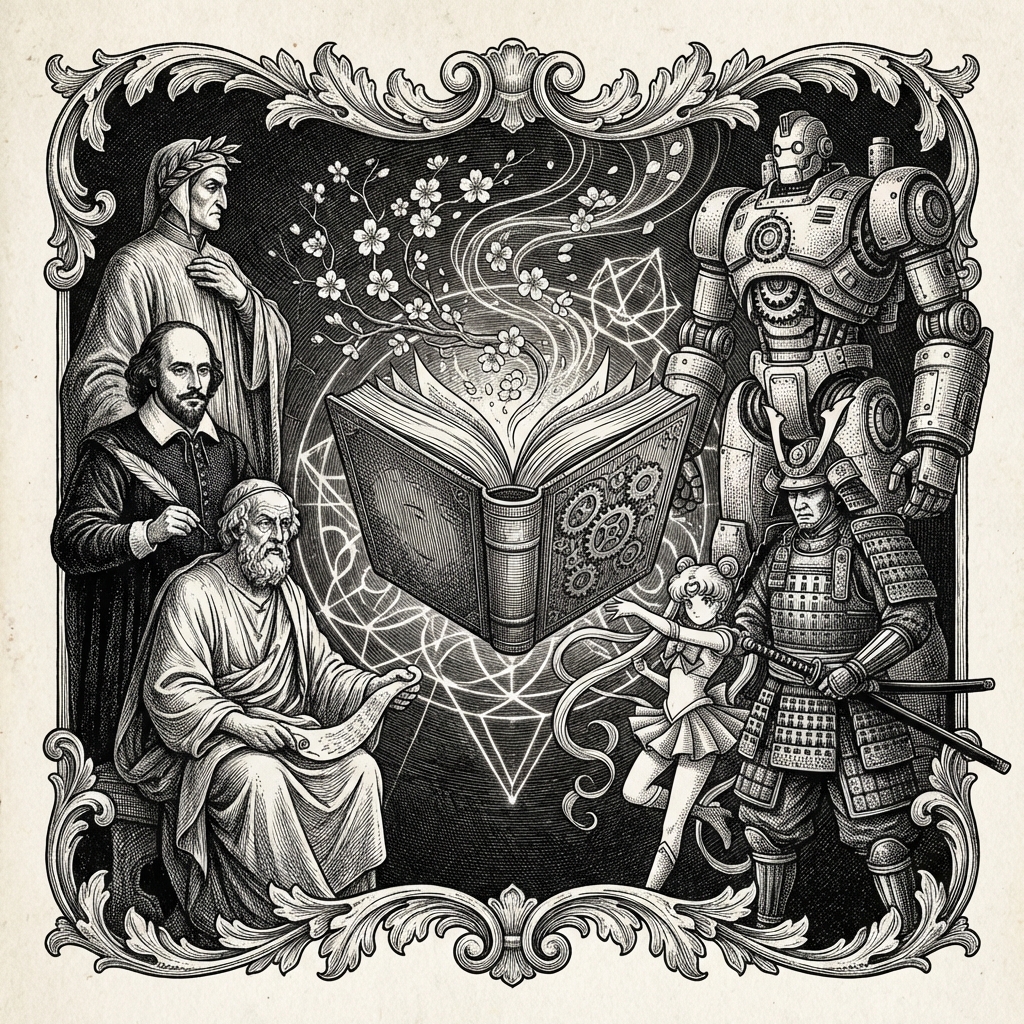
    Anime has captivated audiences worldwide with its unique storytelling, complex characters, and breathtaking visuals. But beneath the surface of many beloved series lies a rich tapestry of Western literary influences.

    From classic novels to philosophical treatises, Western literature has profoundly shaped the narratives, themes, and character archetypes that define modern anime. Let’s explore the top 10 ways Western literature has inspired your favorite anime series.

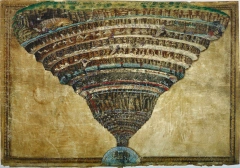
    1. Dante’s Divine Comedy and the Journey Through Hell

    divine comedy dante

    Dante Alighieri’s epic poem The Divine Comedy has left an indelible mark on anime, particularly in series that explore themes of redemption, punishment, and the afterlife. The most notable example is “Dante’s Inferno: An Animated Epic”, but the influence extends far beyond direct adaptations.
    Fullmetal Alchemist draws heavily from Dante’s vision of hell and purgatory. The concept of equivalent exchange mirrors the moral balance Dante describes, while the Gate of Truth resembles the entrance to the underworld. The homunculi, named after the seven deadly sins, echo Dante’s classification of sinners in the circles of hell.

    Similarly, “Hell Girl” (Jigoku Shoujo) presents a modern interpretation of Dante’s infernal vision, where characters face consequences for their actions in a supernatural realm that punishes the wicked.

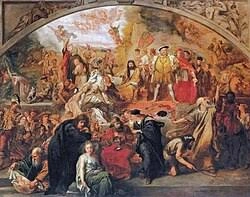
    2. Shakespeare’s Tragedies and Complex Character Dynamics

    shakespeare

    William Shakespeare’s exploration of human nature, ambition, and tragedy has profoundly influenced anime character development and plot structures. “Code Geass” is essentially a futuristic retelling of Hamlet and Macbeth, with Lelouch embodying the tragic hero consumed by revenge and ambition.

    “Monster” by Naoki Urasawa channels Shakespearean tragedy through its exploration of good and evil, featuring morally complex characters reminiscent of Othello and King Lear. The psychological depth and moral ambiguity that Shakespeare pioneered are evident in the series’ protagonist, Dr. Tenma, who faces impossible ethical dilemmas.

    “Romeo x Juliet” offers a direct reimagining of Shakespeare’s most famous tragedy, transporting the star-crossed lovers to a floating city and adding fantasy elements while preserving the core themes of forbidden love and family conflict.

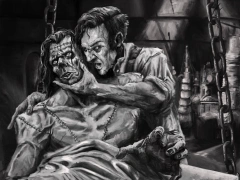
    3. Mary Shelley’s Frankenstein and the Ethics of Creation

    frankstein

    Mary Shelley’s Frankenstein introduced the world to questions about the ethics of creation, the responsibility of creators, and what it means to be human. These themes resonate powerfully in anime, particularly in the mecha and science fiction genres.

    “Neon Genesis Evangelion” explores the Frankenstein complex through the relationship between Gendo Ikari and the Evangelion units, artificial beings created to serve humanity but ultimately questioning their purpose and existence. The series delves into the psychological trauma of both creators and creations.
    “Fullmetal Alchemist” again draws from this well, with the creation of homunculi and chimeras raising ethical questions about playing God. The failed human transmutation that creates the homunculi mirrors Victor Frankenstein’s hubris and the tragic consequences of defying natural law.

    “Ghost in the Shell” examines what happens when the line between human and machine blurs, questioning consciousness, identity, and the soul, all central concerns in Shelley’s novel.

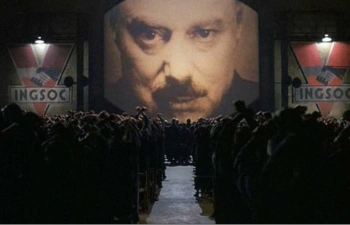
    4. George Orwell’s 1984 and Dystopian Surveillance States

    1984 movie

    George Orwell’s 1984 has become the blueprint for dystopian fiction, and anime has embraced its themes of totalitarian control, surveillance, and the manipulation of truth.

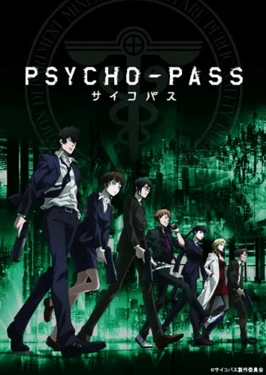
    “Psycho-Pass” presents a society where the Sibyl System monitors citizens’ mental states and predicts criminal behavior before crimes occur. This echoes Orwell’s Thought Police and the concept of thoughtcrime, creating a world where freedom is sacrificed for the illusion of safety.

    “Ergo Proxy” explores themes of manufactured reality and controlled populations, similar to Orwell’s Ministry of Truth. The series questions the nature of truth in a world where information is controlled and manipulated by those in power.

    “Shinsekai Yori” (From the New World) depicts a seemingly utopian society built on dark secrets and historical revisionism, much like Orwell’s Oceania, where the past is constantly rewritten to serve the present regime.

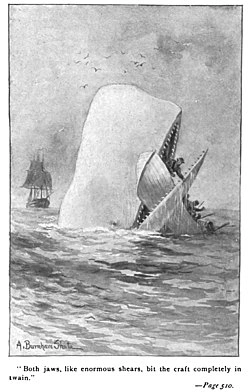
    5. Herman Melville’s Moby-Dick and the Obsessive Quest

    moby dick

    Herman Melville’s Moby-Dick is the quintessential tale of obsession, revenge, and humanity’s struggle against nature. This narrative structure has inspired numerous anime series centered on relentless pursuits.

    “Gankutsuou: The Count of Monte Cristo” adapts Alexandre Dumas’s novel but incorporates the obsessive quest motif that Melville perfected. The Count’s single-minded pursuit of revenge mirrors Captain Ahab’s hunt for the white whale.

    “One Piece” features Luffy’s quest for the legendary treasure, One Piece, which parallels Ahab’s pursuit of Moby-Dick. Both involve a charismatic leader gathering a diverse crew for an seemingly impossible journey across treacherous seas.

    “Hunter x Hunter” showcases multiple characters driven by obsessive goals, Gon’s search for his father, Kurapika’s quest for revenge against the Phantom Troupe, all echoing the self-destructive nature of Ahab’s obsession.

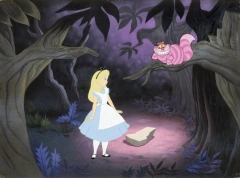
    6. Lewis Carroll’s Alice in Wonderland and Surreal Fantasy Worlds

    alice

    Lewis Carroll’s Alice’s Adventures in Wonderland pioneered the portal fantasy genre and introduced readers to surreal, logic-defying worlds. This influence is evident in countless anime series that transport characters to strange new realities.

    “Pandora Hearts” directly references Carroll’s work, with characters named after Alice in Wonderland figures and a plot involving a mysterious dimension called the Abyss. The series embraces Carroll’s blend of whimsy and darkness.

    “No Game No Life” transports siblings to a world where everything is decided by games, echoing Alice’s journey through a world with its own bizarre rules and logic.

    “The Promised Neverland” uses the Alice motif more subtly, with children discovering that their seemingly perfect world is actually a nightmare, much like Alice’s realization that Wonderland operates on dream logic rather than reality.

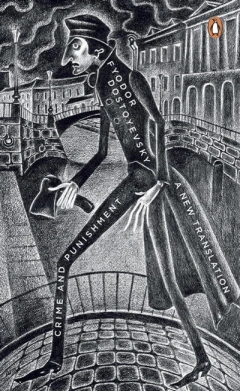
    7. Fyodor Dostoevsky’s Crime and Punishment and Moral Philosophy

    crime and punishment

    Dostoevsky’s exploration of guilt, redemption, and the psychological consequences of crime has deeply influenced anime that grapple with moral complexity.

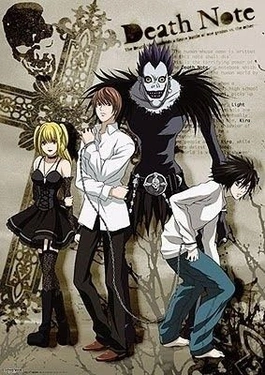
    “Death Note” is perhaps the most direct descendant of Crime and Punishment. Light Yagami, like Raskolnikov, believes himself above conventional morality and justified in taking lives for a greater good. Both characters experience psychological deterioration as they grapple with the consequences of their actions.
    “Monster” channels Dostoevsky’s philosophical depth, examining whether some people are inherently evil or if circumstances create monsters. Dr. Tenma’s moral crisis mirrors the existential questions Dostoevsky posed about justice and redemption.
    “Bungou Stray Dogs” pays homage to Dostoevsky by featuring him as a character and incorporating themes from his works throughout the series.

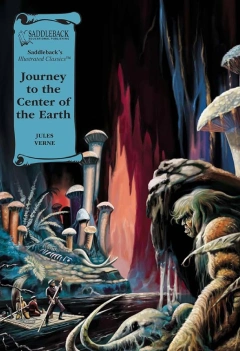
    8. H.G. Wells and Jules Verne’s Science Fiction Foundations

    journey to the earth center

    The pioneering science fiction of H.G. Wells and Jules Verne laid the groundwork for countless anime series that explore technology, time travel, and adventure.

    “Steins;Gate” draws heavily from Wells’s The Time Machine, exploring the consequences of time travel and the butterfly effect. The series examines how small changes can have catastrophic consequences, a theme Wells pioneered.

    “Nadia: The Secret of Blue Water” is directly inspired by Verne’s Twenty Thousand Leagues Under the Sea, featuring the submarine Nautilus and adventures beneath the ocean.

    “Castle in the Sky” by Studio Ghibli echoes Verne’s sense of adventure and wonder, with flying machines and lost civilizations reminiscent of Journey to the Center of the Earth.

    9. Homer’s The Odyssey and Epic Journeys

    the odyssey

    Homer’s The Odyssey established the template for the hero’s journey, a long, perilous quest filled with trials, growth, and the eventual return home. This structure is fundamental to many anime series.

    “Space Battleship Yamato” is essentially The Odyssey in space, with a crew undertaking a dangerous journey to save humanity, facing numerous challenges along the way.

    “Made in Abyss” follows young adventurers descending into a mysterious abyss, facing increasingly dangerous creatures and environments. Like Odysseus, they must use wit and courage to overcome seemingly insurmountable obstacles.

    “Mushishi” features Ginko traveling from place to place, encountering strange phenomena and helping people, much like Odysseus’s episodic adventures across the Mediterranean.

    10. Gothic Literature and Atmospheric Horror

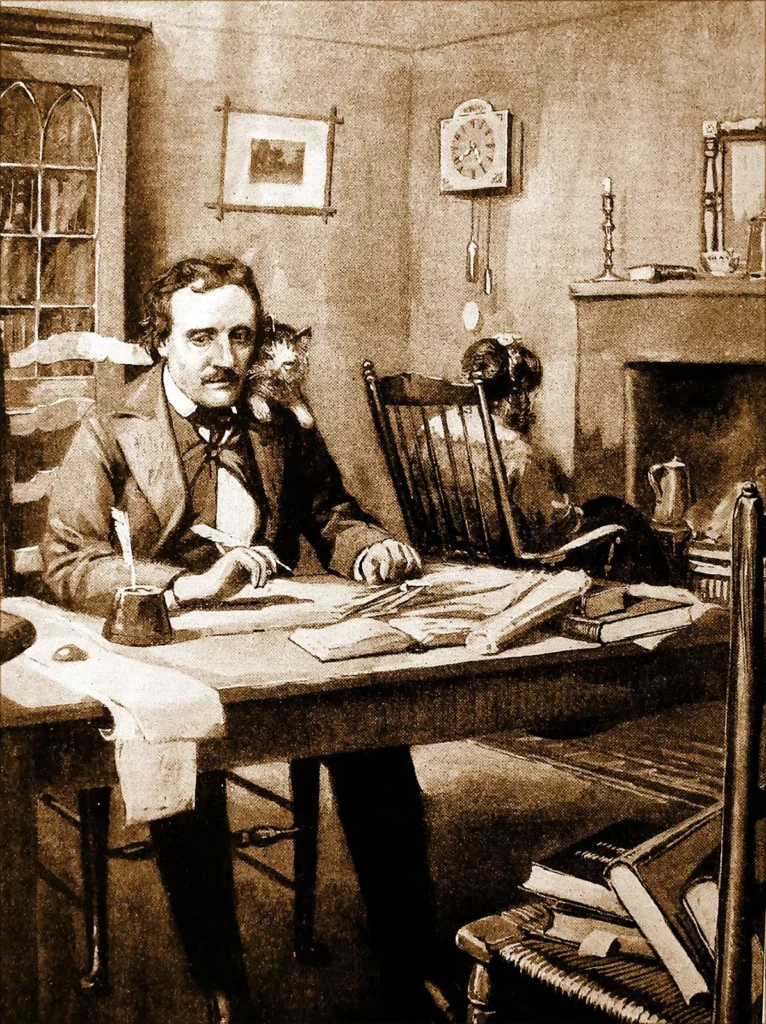
    allan poe

    The Gothic tradition, from Mary Shelley to Edgar Allan Poe to Bram Stoker, has profoundly influenced anime’s approach to horror, atmosphere, and the supernatural.

    “Hellsing” draws directly from Bram Stoker’s Dracula, reimagining the vampire hunter as an organization and Dracula himself as an anti-hero. The series embraces Gothic aesthetics with Victorian settings, dark castles, and themes of immortality and damnation.

    “Black Butler” channels Gothic literature through its Victorian setting, supernatural elements, and exploration of contracts with demonic entities. The series captures the Gothic fascination with death, decay, and the macabre.

    “Vampire Hunter D” combines Gothic horror with post-apocalyptic science fiction, featuring a dhampir (half-vampire) protagonist in a world where Gothic castles and advanced technology coexist.

    “Another” employs Gothic horror techniques, isolated settings, mysterious curses, and atmospheric dread, reminiscent of Poe’s psychological horror stories.

    A Literary Legacy

    The relationship between Western literature and anime is not one of simple borrowing but of creative transformation. Anime creators have taken the themes, structures, and philosophical questions posed by Western literary masters and reimagined them through a distinctly Japanese cultural lens, creating something entirely new yet deeply connected to literary tradition.

    From Dante’s moral universe to Orwell’s dystopian warnings, from Shakespeare’s tragic heroes to Carroll’s surreal wonderlands, Western literature has provided anime with a rich foundation upon which to build innovative narratives. These influences demonstrate that great storytelling transcends cultural boundaries, and that the fundamental questions about humanity, morality, justice, and existence remain relevant regardless of medium or origin.

    The next time you watch your favorite anime, consider the literary giants whose works may have inspired it. You might discover new layers of meaning and appreciate how these series participate in a centuries-old conversation about what it means to be human. This cross-cultural dialogue between Western literature and Japanese animation continues to produce some of the most compelling storytelling in contemporary media, proving that great art builds upon the foundations laid by those who came before.

    Whether you’re a literature enthusiast discovering anime or an anime fan exploring classic books, recognizing these connections enriches both experiences, revealing the universal power of storytelling to illuminate the human condition.

  • 10 Mind-Bending Anime for Inception Fans (Ranked)

    10 Mind-Bending Anime for Inception Fans (Ranked)

    10 Mind-Bending Anime for Inception Fans (Ranked)

    Christopher Nolan’s Inception (2010) redefined what mainstream cinema could achieve with psychological complexity. But if you think Inception pushed the boundaries of mind-bending storytelling, you haven’t explored anime.

    Japanese animation has been crafting intricate psychological narratives for decades, stories that challenge perception, question reality, and dive deep into the human psyche. If Inception left you craving more reality-bending, mind-manipulating, existential storytelling, these ten anime will blow your mind.

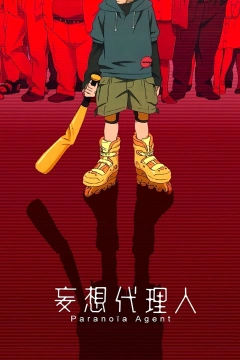
    10. Paranoia Agent (2004)

    paranoia agent cover

    Director: Satoshi Kon | Episodes: 13

    A mysterious assailant known as “Lil’ Slugger” attacks people with a golden baseball bat, but the line between reality and mass hysteria blurs. Satoshi Kon’s only TV series explores how collective delusion can become reality, similar to how Inception shows shared dreams creating consequences in the real world.

    Why It’s Mind-Bending: Each episode peels back layers of Tokyo’s collective psyche, revealing that the attacker might be a manifestation of societal stress itself. Reality becomes negotiable when enough people believe in the same delusion.

    9. Ergo Proxy (2006)

    ergo proxy cover

    Genre: Cyberpunk Psychological Thriller | Episodes: 23

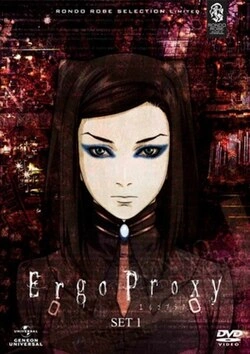
    In a post-apocalyptic domed city, inspector Re-L Mayer investigates murders connected to the Cogito virus, which gives self-awareness to androids. The series spirals into existential questions about consciousness, identity, and what it means to be “real.”

    Why It’s Mind-Bending: Like Inception‘s exploration of constructed realities, Ergo Proxy questions whether programmed beings with consciousness are any less real than humans. The show’s philosophical density rivals any art-house film.

    8. Steins;Gate (2011)

    steins gate

    Genre: Time Travel Psychological Thriller | Episodes: 24

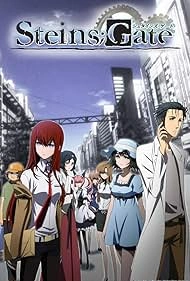
    A self-proclaimed mad scientist accidentally invents time travel via microwave, but each attempt to fix the past creates devastating butterfly effects. What starts as quirky sci-fi becomes a psychological nightmare about consequence and sacrifice.

    Why It’s Mind-Bending: The protagonist must navigate multiple timelines while retaining memories others don’t have, similar to Cobb’s burden in Inception. The weight of being the only one who remembers alternate realities drives him to the edge of sanity.

    7. Neon Genesis Evangelion (1995)

    neon genesis

    Director: Hideaki Anno | Episodes: 26 + Movie

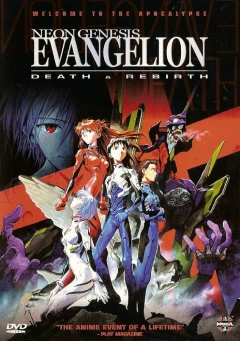
    What appears to be a mecha anime about teenagers fighting aliens becomes a brutal psychological deconstruction of trauma, depression, and the human need for connection. The final episodes abandon plot entirely to explore the protagonist’s fractured psyche.

    Why It’s Mind-Bending: The show literally enters characters’ minds, visualizing their inner demons and defense mechanisms. Like Inception‘s dream layers, Evangelion peels back layers of consciousness until nothing is certain.

    6. Monster (2004)

    monter cover

    Genre: Psychological Thriller | Episodes: 74

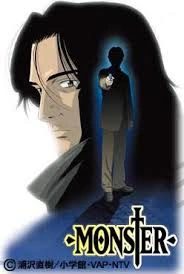
    A brilliant surgeon saves a young boy’s life, only to discover years later that the boy grew up to be a serial killer. The cat-and-mouse chase becomes a philosophical exploration of nature vs. nurture and the banality of evil.

    Why It’s Mind-Bending: The antagonist, Johan Liebert, is one of anime’s most terrifying villains, not because of supernatural powers, but because of his ability to manipulate perception and identity. He makes people question their own memories and motivations, much like inception itself.

    5. Death Note (2006)

    death note cover

    Genre: Psychological Cat-and-Mouse Thriller | Episodes: 37

    A high school genius finds a notebook that kills anyone whose name is written in it. What follows is an intense psychological battle between the user and a detective trying to stop him, each trying to out-think the other across multiple layers of deception.

    Why It’s Mind-Bending: The show is essentially Inception as a detective story, plans within plans, deceptions within deceptions. Both protagonists must think several moves ahead, creating mental labyrinths as complex as any dream architecture.

    4. Psycho-Pass (2012)

    psycho pass cover

    Genre: Dystopian Psychological Thriller | Episodes: 22

    In a future where a system can measure criminal intent before crimes occur, a detective questions whether free will exists if your thoughts are monitored and judged. The antagonist is a man whose psyche is immune to the system’s scanning—making him either perfectly sane or perfectly insane.

    Why It’s Mind-Bending: Like Inception‘s exploration of subconscious security, Psycho-Pass asks: if your thoughts can be read and judged, are you still in control of your mind?

    3. Serial Experiments Lain (1998)

    serial experience lain cover

    Genre: Existential Cyber Horror | Episodes: 13

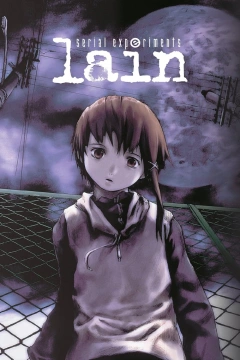
    A quiet girl receives an email from a dead classmate claiming to have abandoned her body to live in “the Wired” (the internet). As Lain explores this digital realm, the boundaries between virtual and physical reality dissolve entirely.

    Why It’s Mind-Bending: Made in 1998, Lain predicted our current digital existence with disturbing accuracy. Like Inception, it asks: if everyone believes in a constructed reality, does it become real? The show’s oppressive atmosphere and non-linear storytelling create a fever dream that stays with you.

    2. Perfect Blue (1997)

    perfect blue cover

    Director: Satoshi Kon | Runtime: 81 minutes (Film)

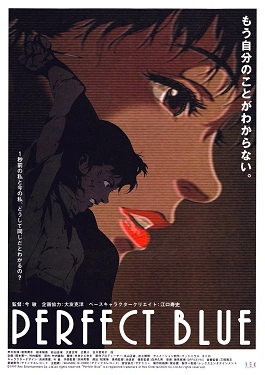
    A pop idol transitions to acting, but as she takes on darker roles, she loses her grip on reality. Stalked by an obsessed fan and haunted by her former persona, Mima can no longer distinguish between her life, her roles, and her hallucinations.

    Why It’s Mind-Bending: The film constantly shifts between reality, performance, and delusion without warning. Like Inception‘s manipulation of memory, Perfect Blue shows how identity can be constructed, performed, and shattered. It directly influenced Darren Aronofsky’s Black Swan.

    1. Paprika (2006)

    paprika cover

    Director: Satoshi Kon | Runtime: 90 minutes (Film)

    Christopher Nolan himself acknowledged Paprika‘s influence on Inception. A device that allows therapists to enter patients’ dreams is stolen, causing dreams to invade reality. Dr. Atsuko Chiba, using her dream avatar “Paprika,” must navigate layered dreamscapes to stop reality from collapsing.

    Why It’s #1: Paprika features dream-sharing technology, layered dream levels, and reality infected by dream logic, all before Inception. But it goes further with surrealist visuals that make Nolan’s film look restrained. The parade scene alone is more inventive than most entire films. If you want to see where Inception drew inspiration, this is essential viewing.

    Dive Deeper into the Psyche

    If Inception was your gateway into complex, reality-bending narratives, these ten anime will take you even further down the rabbit hole. They don’t just entertain, they challenge, disturb, and linger in your mind long after the credits roll.

    From Paprika’s surreal dreamscapes to Serial Experiments Lain’s digital existentialism, from Perfect Blue’s identity crisis to Death Note’s mental chess match, anime has been pushing psychological boundaries for decades.

    So turn off the lights, put on your headphones, and prepare to question everything. Reality is overrated anyway.

  • Book vs. Movie

    Book vs. Movie

    Book vs. Movie: 5 Times the Adaptation Was Better than the Original

    The age-old debate of “the book was better” has become almost a cultural reflex. Readers clutch their beloved novels and declare that no film could ever capture the magic of the written word. And often, they’re right. But not always.

    There exists a rare breed of film adaptation that does the unthinkable: it improves upon the source material. These are the movies that take a good book and transform it into something greater, tightening the narrative, deepening the characters, or adding visual poetry that the page alone couldn’t achieve.

    This isn’t about disrespecting the original authors. It’s about recognizing that different mediums have different strengths, and sometimes, the transition from page to screen unlocks potential that was waiting to be discovered.

    Here are five times the movie adaptation was genuinely better than the book.

    1. The Godfather (1972) – Based on Mario Puzo’s Novel

    The Book

    Mario Puzo’s The Godfather (1969) is a gripping crime novel that introduced the world to the Corleone family. It’s packed with drama, violence, and intricate mafia politics. However, the book also includes subplots that feel more like pulp fiction than literary masterpiece, most notably, a lengthy storyline about Lucy Mancini’s vaginal surgery. Yes, really.

    The Movie

    Francis Ford Coppola’s film adaptation is widely considered one of the greatest movies ever made. What made it better?

    • Focus and Pacing: Coppola stripped away the unnecessary subplots and honed in on the core story: Michael Corleone’s tragic transformation from war hero to ruthless mafia don.
    • Visual Storytelling: The film’s iconic imagery, the horse head, the baptism montage, the closing door on Kay, conveys emotion and meaning that words struggle to match.
    • Performances: Marlon Brando and Al Pacino brought depth and nuance to Vito and Michael that elevated them beyond Puzo’s characterizations.

    The movie didn’t just adapt the book; it refined it into a Shakespearean tragedy.

    2. The Shawshank Redemption (1994) – Based on Stephen King’s “Rita Hayworth and Shawshank Redemption”

    The Book

    Stephen King’s novella, part of the Different Seasons collection, is a solid, well-crafted story about hope and friendship in prison. It’s told from Red’s perspective and captures the bleakness of incarceration with King’s signature style.

    The Movie

    Frank Darabont’s adaptation is consistently ranked as one of the best films of all time. What made it better?

    • Emotional Depth: The film amplifies the emotional beats. Andy’s escape, the rooftop beer scene, and the final reunion on the beach are more powerful on screen, enhanced by Thomas Newman’s soaring score.
    • Morgan Freeman’s Narration: Red’s voiceover in the film is iconic. Freeman’s delivery adds warmth, wisdom, and gravitas that the written narration, while good, doesn’t quite achieve.
    • Visual Symbolism: The rain scene where Andy stands in the storm after escaping is pure cinema, a moment of rebirth that hits harder than any description could.

    The novella is excellent, but the film is transcendent.

    3. Jaws (1975) – Based on Peter Benchley’s Novel

    The Book

    Peter Benchley’s Jaws (1974) is a thriller about a great white shark terrorizing a beach town. But it’s also bogged down by subplots involving an affair between Hooper and Brody’s wife, mafia connections, and class resentment that feel forced and distracting.

    The Movie

    Steven Spielberg’s Jaws is the film that invented the summer blockbuster. What made it better?

    • Simplicity: Spielberg cut the soap opera elements and focused on three men hunting a shark. The result is lean, tense, and relentless.
    • Character Chemistry: The dynamic between Brody, Hooper, and Quint (especially the USS Indianapolis monologue) is far more compelling than anything in the book.
    • Suspense Mastery: The mechanical shark’s limitations forced Spielberg to show less and suggest more, creating one of the most suspenseful films ever made. The book tells you about the shark; the movie makes you feel it.

    Benchley himself admitted the movie was better.

    4. Fight Club (1999) – Based on Chuck Palahniuk’s Novel

    The Book

    Chuck Palahniuk’s Fight Club (1996) is a darkly satirical novel about consumerism, masculinity, and identity. It’s sharp, transgressive, and inventive, but also somewhat uneven in tone and pacing.

    The Movie

    David Fincher’s adaptation is a visual and narrative tour de force. What made it better?

    • Visual Style: Fincher’s kinetic direction, the split-second subliminal flashes of Tyler Durden, and the grimy aesthetic perfectly capture the novel’s anarchic energy in ways prose cannot.
    • The Twist: While the book has the same twist, the film’s visual medium makes the reveal more shocking and satisfying. Seeing Tyler and the Narrator as the same person hits differently than reading it.
    • Ending: The film’s ending, watching credit card buildings explode while the Narrator and Marla hold hands, is more cathartic and visually stunning than the book’s quieter conclusion.

    Palahniuk himself has said he prefers the movie’s ending.

    5. The Princess Bride (1987) – Based on William Goldman’s Novel

    The Book

    William Goldman’s The Princess Bride (1973) is a beloved fairy tale satire. It’s witty, charming, and metafictional, framed as an abridgment of a fictional classic by S. Morgenstern. However, the framing device can feel overlong and interrupt the flow of the story.

    The Movie

    Rob Reiner’s film is a perfect adventure-comedy that has achieved cult classic status. What made it better?

    • Pacing: The movie streamlines the story, keeping the best jokes and action while trimming the metafictional interruptions that sometimes bog down the book.
    • Performances: The cast is pitch-perfect. Cary Elwes, Robin Wright, Mandy Patinkin, and AndrĂ© the Giant bring the characters to life with charm and humor that leap off the screen.
    • Quotability: Lines like “Hello. My name is Inigo Montoya. You killed my father. Prepare to die” and “As you wish” have become cultural touchstones, delivered with a timing and emotion that the page can’t replicate.

    The book is delightful, but the film is pure magic.

    When the Screen Surpasses the Page

    These five films prove that adaptation is an art form in itself. A great director, screenwriter, and cast can take a good book and elevate it, cutting what doesn’t work, amplifying what does, and adding layers that only cinema can provide.

    This doesn’t diminish the original books. It simply acknowledges that storytelling is medium-specific. What works on the page doesn’t always work on screen, and vice versa. Sometimes, the constraints of film, time limits, visual language, performance, force creators to distill a story to its purest, most powerful form.

    So the next time someone insists “the book was better,” remember: sometimes, just sometimes, the movie gets it right.

  • Why Experience is the Best Teacher (But Books Are Faster)

    Why Experience is the Best Teacher (But Books Are Faster)

    Wisdom Through Two Paths

    There is a fascinating tension between two fundamental methods of learning: lived experience and knowledge acquired through reading. Both transform us, but in profoundly different ways. While experience teaches us through pain, error, and personal discovery, books offer us a shortcut, the distilled wisdom of thousands of lives condensed into pages we can absorb in days, not decades.

    The Difference Between Living and Reading

    When we live something, every cell in our body participates in the learning. Experience is visceral, emotional, and indelible. Touching fire teaches us about heat in a way no description could replicate. The failure of a business teaches us about financial management with an intensity no administration manual can match. Experience engraves lessons in our memory with a branding iron.

    On the other hand, reading about something is like observing the world through a well-positioned window. We don’t feel the burn of fire, but we learn about its nature. We don’t lose money in the failed business, but we understand the principles that lead to failure. Reading allows us to learn from others’ mistakes without paying the full price of those lessons.

    Experience gives us emotional depth and personal connection with knowledge. When we go through something, it becomes part of who we are. But this depth has a cost: time, energy, and often, suffering. Reading, in turn, gives us breadth. We can explore a thousand lives, a thousand perspectives, a thousand eras, all without leaving our chair.

    How Books Prepare Us to Act

    Here is the true power of reading: it equips us with mental maps before we enter unknown territory. When we read about negotiation before an important meeting, about child psychology before becoming parents, or about leadership before taking on a team, we are essentially downloading software into our brain.

    Books give us frameworks, thought structures that organize the chaos of reality. They show us patterns that other people took years to identify. They alert us to traps that cost fortunes and lives to discover. They offer us strategies tested in battles we never fought.

    When we act armed with this prior knowledge, our precision increases dramatically. We’re no longer shooting in the dark; we have a flashlight. We’re no longer navigating without a compass; we have coordinates. The wisdom of books doesn’t eliminate mistakes, but it significantly reduces their frequency and severity.

    The Precision That Comes from Preparation

    Imagine two entrepreneurs opening their first business. The first has never read about entrepreneurship, relying only on intuition and willingness to work hard. The second spent months studying success and failure cases, financial management principles, marketing strategies, and consumer psychology.

    Both will make mistakes, that’s inevitable. But the second entrepreneur will recognize patterns more quickly. They’ll know when they’re repeating classic mistakes that others have already made. They’ll have vocabulary and concepts to diagnose problems. Their learning curve will be steeper because they’re building on already established foundations.

    Precision doesn’t mean perfection. It means making more informed decisions, making smarter mistakes (those from which we learn more), and recovering more quickly when things go wrong. Books give us that advantage.

    The Perfect Synthesis: Experience Informed by Reading

    The true power isn’t in choosing between experience and reading, but in combining them strategically. Read before acting to maximize your chances of success. Act to transform abstract knowledge into embodied wisdom. Then, read again to contextualize your experience and extract deeper lessons.

    This cycle, read, act, reflect, read again,creates a compound effect. Each book you read before an experience increases the value you extract from that experience. Each experience you have makes the next books more relevant and applicable.

    Experience remains the best teacher because its lessons are engraved in us indelibly. But books are the fastest teachers, allowing us to learn in months what would take decades to discover on our own. Together, they form the most efficient path to wisdom: the speed of books combined with the depth of experience.

    Start Today!

    We don’t need to choose between living and reading. We need to recognize that they are complementary tools in our growth journey. Books give us the map; experience teaches us to read the terrain. Books show us the path; experience teaches us to walk. Books prepare us; experience transforms us.

    True wisdom lies in using books to accelerate our learning, reduce our mistakes, and increase our precision, and then going out into the world to live, test, fail, adjust, and grow. Because in the end, the goal is not just to know, but to know how to do. And for that, we need both the speed of books and the depth of experience.

  • 6 Powerful Ideas from Dune by Frank Herbert

    6 Powerful Ideas from Dune by Frank Herbert

    6 Powerful Ideas from Dune by Frank Herbert

    Frank Herbert’s Dune is far more than a science fiction epic, it’s a philosophical masterpiece that explores power, ecology, religion, and human evolution. Published in 1965, this groundbreaking novel continues to resonate with readers because of its profound insights into leadership, environmental stewardship, and the dangers of hero worship. Here are six transformative ideas from this timeless classic.

    1. Fear is the Mind-Killer

    The Litany Against Fear

    One of the most iconic passages in Dune is the Bene Gesserit litany against fear:

    “I must not fear. Fear is the mind-killer. Fear is the little-death that brings total obliteration. I will face my fear. I will permit it to pass over me and through me. And when it has gone past I will turn the inner eye to see its path. Where the fear has gone there will be nothing. Only I will remain.”

    The Lesson

    Fear paralyzes rational thought and prevents us from reaching our full potential. Paul Atreides learns that fear must be acknowledged, confronted, and transcended, not suppressed or avoided. This ancient Bene Gesserit wisdom teaches us that courage isn’t the absence of fear, but the ability to function despite it.

    Application: When facing difficult decisions or challenges, acknowledge your fear without letting it control you. Use it as information, not as a barrier. The greatest growth happens when we move through fear rather than around it.

    2. Beware of Heroes and Messiahs

    The Danger of Charismatic Leadership

    Herbert wrote Dune partly as a warning against charismatic leaders and the cult of personality. Paul Atreides becomes Muad’Dib, a messianic figure whose followers commit atrocities in his name. Despite his prescient abilities, Paul cannot prevent the jihad that kills billions across the universe.

    The Lesson

    Even well-intentioned leaders can become instruments of destruction when people surrender their critical thinking to follow blindly. Herbert shows us that messianic movements, regardless of their noble origins, often lead to fanaticism and violence.

    Application: Question authority, even when it comes from charismatic or seemingly enlightened sources. Maintain your individual judgment and resist the temptation to outsource your thinking to any leader, movement, or ideology. Democracy and progress require engaged, critical citizens, not devoted followers.

    3. Ecology is Destiny

    The Planet as Character

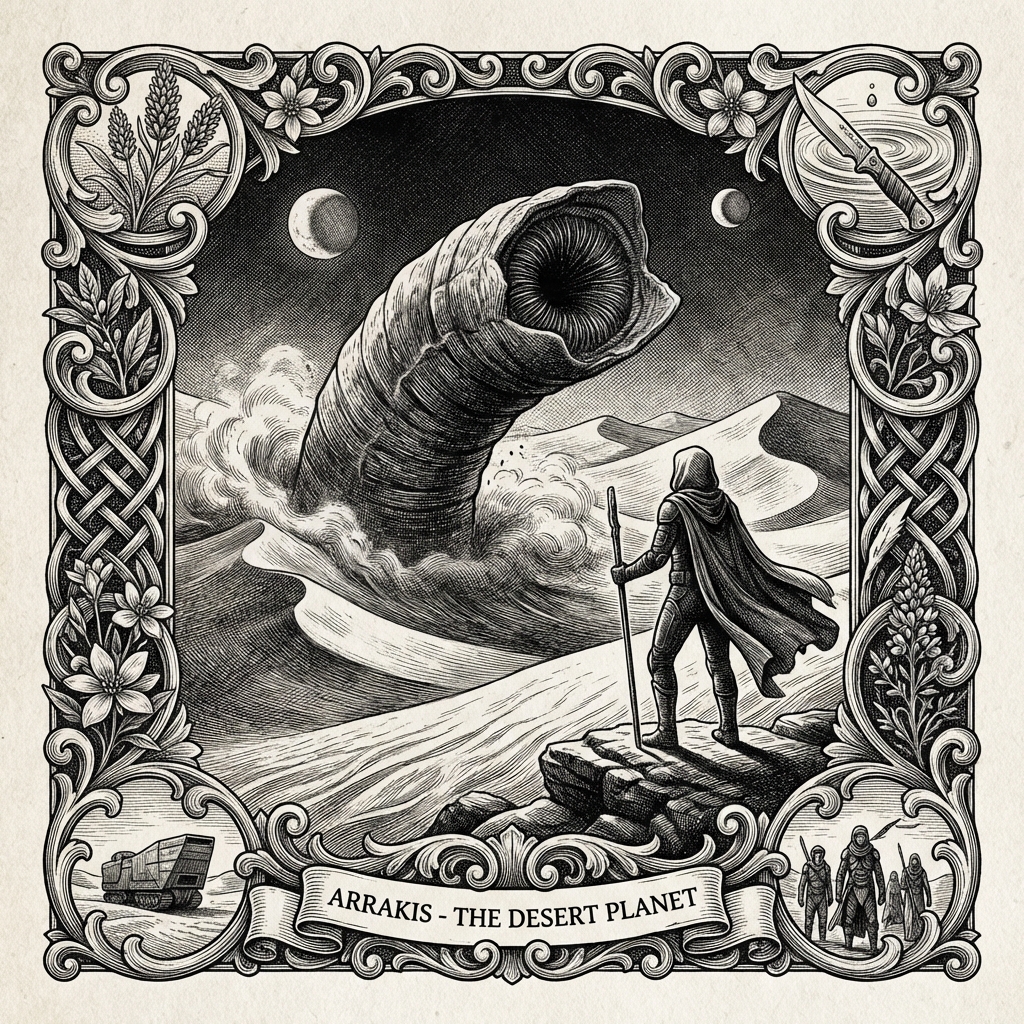
    Arrakis (Dune) isn’t just a setting, t’s a character that shapes every aspect of life. The scarcity of water determines culture, religion, economics, and survival strategies. The Fremen’s entire civilization evolved in response to their harsh environment.

    The Lesson

    Our environment fundamentally shapes who we are and what we can become. Herbert, who studied ecology extensively, understood that civilizations rise and fall based on their relationship with their environment. The spice melange, found only on Arrakis, controls the fate of the entire universe, a metaphor for oil and natural resources.

    Application: Pay attention to your environment, both physical and social. The spaces you inhabit, the people you surround yourself with, and the resources available to you shape your possibilities. Like the Fremen adapted to Arrakis, we must learn to work with our environment rather than against it. Consider the long-term ecological consequences of our actions.

    4. Control the Resource, Control the Universe

    The Politics of Scarcity

    The spice melange is the most valuable substance in the universe. It extends life, expands consciousness, and enables space travel. Whoever controls Arrakis controls the spice, and whoever controls the spice controls civilization itself.

    The Lesson

    Power flows from controlling essential resources. Herbert’s vision was prophetic written in 1965, Dune anticipated our modern struggles over oil, water, and rare earth minerals. The political machinations around spice mirror real-world geopolitics.

    Application: Understand what resources are truly essential in your life and work. Whether it’s time, attention, knowledge, or relationships, identify what you cannot do without and ensure you have agency over it. In business and politics, follow the resources to understand where real power lies.

    5. Adapt or Perish

    The Fremen Way

    The Fremen are the ultimate survivors. Living in the harshest environment imaginable, they developed stillsuits to recycle every drop of moisture, created a culture that values water above all else, and learned to ride the giant sandworms. Their adaptation made them the most formidable fighting force in the universe.

    The Lesson

    Survival and success require constant adaptation to changing conditions. The Fremen didn’t complain about Arrakis being inhospitable, they evolved to thrive in it. Their constraints became their strengths.

    Application: When faced with constraints or difficult circumstances, ask “How can I adapt?” rather than “Why is this unfair?” Your greatest competitive advantages often come from adapting to challenges that others avoid. Embrace constraints as opportunities for innovation.

    6. Prescience is a Prison

    The Burden of Knowing the Future

    Paul’s prescient visions allow him to see possible futures, but this gift becomes a curse. He sees the terrible jihad coming but feels powerless to prevent it. His knowledge of the future traps him in a predetermined path, robbing him of genuine choice.

    The Lesson

    Perfect knowledge can be paralyzing. Paul’s tragedy is that seeing all possible futures doesn’t give him freedom, it takes it away. He becomes a prisoner of his own visions, unable to escape the golden path.

    Application: Overthinking and trying to predict every outcome can lead to analysis paralysis. Sometimes, too much information or too much planning prevents action. There’s wisdom in accepting uncertainty and making decisions with incomplete information. The future is not fixed, your choices matter, but you cannot control everything.

    Think About It

    Dune remains relevant because it grapples with timeless questions: How should we relate to our environment? What are the dangers of concentrated power? How do we balance individual agency with collective destiny? Frank Herbert created a universe that serves as a mirror to our own world, reflecting our struggles with ecology, politics, religion, and human nature.

    These six ideas, mastering fear, questioning heroes, respecting ecology, understanding resource politics, adapting to constraints, and accepting uncertainty, offer a framework for navigating our complex modern world. Whether you’re facing personal challenges or trying to understand global events, the wisdom of Dune provides valuable perspective.

    As Herbert himself said: “The function of science fiction is not always to predict the future but sometimes to prevent it.” By understanding these lessons from Arrakis, we can make wiser choices on Earth.


    Have you read Dune? Which idea resonates most with you? Share your thoughts in the comments below!

  • Books to Read Before Their Movie Adaptations in 2026

    Books to Read Before Their Movie Adaptations in 2026

    Books to Read Before Their Movie Adaptations in 2026

    2026 is shaping up to be an extraordinary year for book lovers and movie enthusiasts alike. From beloved classics getting fresh interpretations to contemporary bestsellers making their way to the big screen, there’s no shortage of literary adaptations to look forward to. If you’re the type who prefers to read the book before watching the movie, this list is your essential guide to the must-read titles hitting theaters and streaming platforms this year.

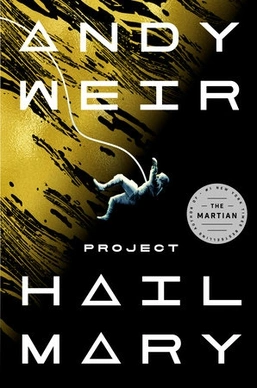
    1. Project Hail Mary by Andy Weir (March 2026)

    Project Hail Cover

    Why Read It: Andy Weir, the mastermind behind The Martian, delivers another thrilling sci-fi adventure that combines hard science with heart-pounding suspense. The story follows Ryland Grace, a lone astronaut who wakes up on a spaceship with no memory of how he got there, only to discover he’s humanity’s last hope for survival.

    What Makes It Special: Weir’s signature blend of humor, scientific accuracy, and emotional depth creates an unforgettable reading experience. The novel’s clever narrative structure and surprising twists will keep you turning pages late into the night.

    The Movie: Starring Ryan Gosling and directed by Phil Lord and Christopher Miller, this March release promises to be one of the year’s biggest sci-fi spectacles.

    Reading Time: Approximately 10-12 hours

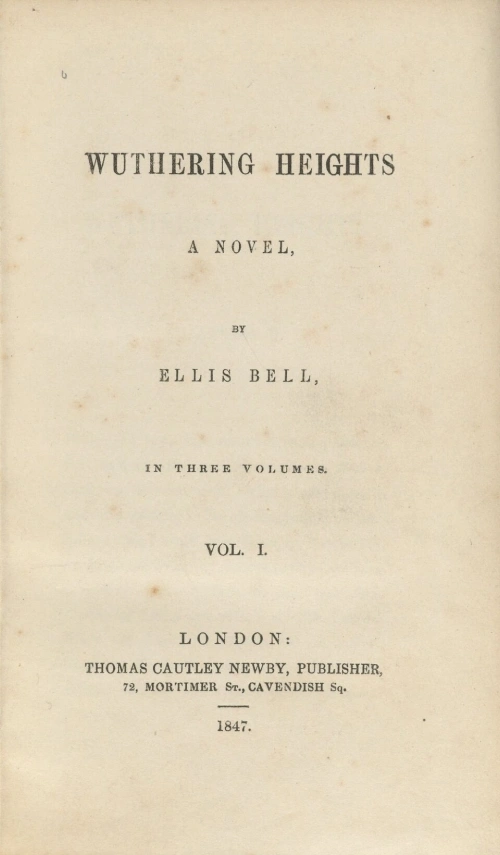
    2. Wuthering Heights by Emily Brontë (February 2026)

    Wuthering Heights

    Why Read It: This Gothic masterpiece has captivated readers for over 170 years with its dark, passionate tale of love, revenge, and obsession on the Yorkshire moors. Heathcliff and Catherine’s tumultuous relationship remains one of literature’s most intense and controversial love stories.

    What Makes It Special: BrontĂ«’s atmospheric prose and complex character psychology create a haunting narrative that explores the destructive nature of passionate love. The novel’s layered storytelling and moral ambiguity make it endlessly fascinating to analyze.

    The Movie: Directed by Emerald Fennell (Promising Young Woman) and starring Margot Robbie and Jacob Elordi, this February adaptation promises a fresh, contemporary take on the classic tale.

    Reading Time: Approximately 12-15 hours

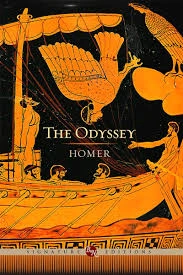
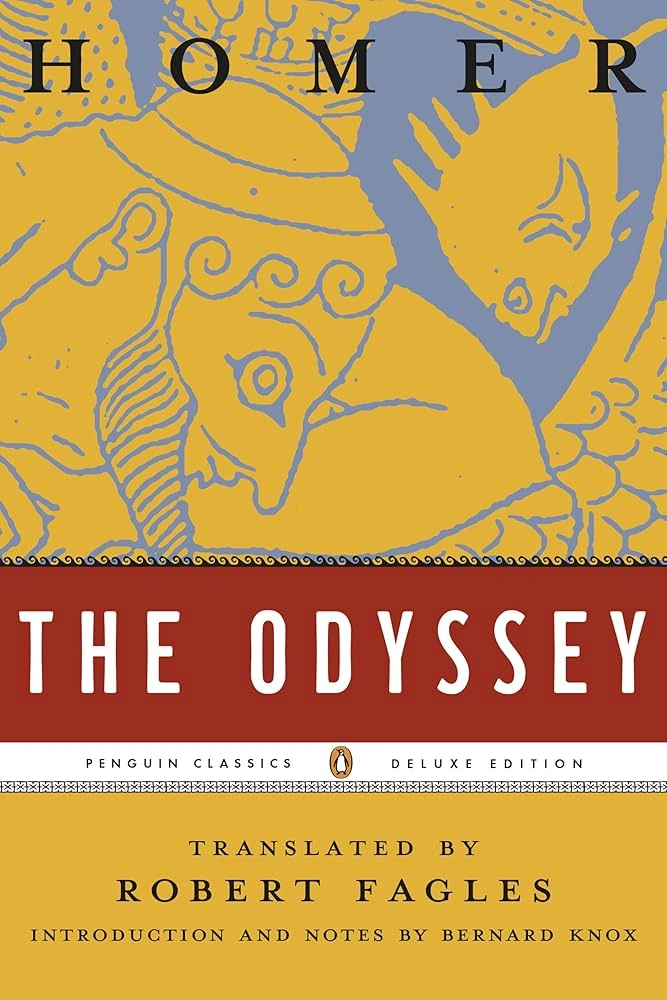
    3. The Odyssey by Homer (July 2026)

    the pdissey cover

    Why Read It: One of the foundational texts of Western literature, Homer’s epic poem follows the Greek hero Odysseus on his perilous ten-year journey home after the Trojan War. This timeless tale of adventure, perseverance, and cunning has influenced countless works of literature and remains remarkably relevant today.

    What Makes It Special: The epic’s themes of homecoming, identity, and the human struggle against fate resonate across millennia. Homer’s vivid imagery and memorable characters—from the enchantress Circe to the one-eyed Cyclops—have become cultural touchstones.

    The Movie: Christopher Nolan directs this highly anticipated July release, featuring an all-star cast including Matt Damon, Anne Hathaway, Tom Holland, and Zendaya. Nolan’s track record with complex narratives makes this one of the year’s most exciting adaptations.

    Reading Time: Approximately 8-10 hours (depending on translation)

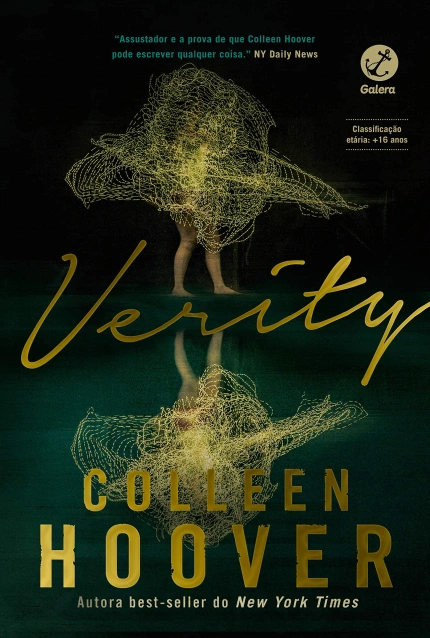
    4. Verity by Colleen Hoover (October 2026)

    verity cover book

    Why Read It: This psychological thriller marks a departure from Hoover’s typical romance novels, delivering a dark, twisted tale that will keep you guessing until the final page. When struggling writer Lowen Ashleigh is hired to complete a bestselling author’s book series, she discovers a disturbing manuscript that reveals horrifying secrets.

    What Makes It Special: Hoover masterfully blends romance and suspense, creating an addictive narrative with unreliable narrators and shocking revelations. The book’s controversial ending has sparked countless debates among readers.

    The Movie: Starring Anne Hathaway and Dakota Johnson, this October release is poised to be a major thriller event. The casting alone suggests a sophisticated adaptation of Hoover’s darkest work.

    Reading Time: Approximately 6-8 hours

    https://youtu.be/WH6XvRS_ACE?si=CkUT1vDZFMVL150Q

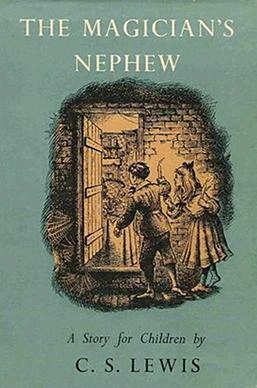
    5. The Magician’s Nephew by C.S. Lewis (December 2026)

    the magician cover book

    Why Read It: While The Lion, the Witch and the Wardrobe introduced most readers to Narnia, The Magician’s Nephew serves as the series’ origin story, revealing how the magical world was created and how the White Witch came to power. This prequel combines Lewis’s trademark blend of adventure, philosophy, and Christian allegory.

    What Makes It Special: The book explores profound themes of creation, temptation, and moral choice through the adventures of Digory Kirke and Polly Plummer. Lewis’s imaginative world-building shines as readers discover the Wood between the Worlds and witness Aslan’s song bringing Narnia to life.

    The Movie: Greta Gerwig directs this Christmas 2026 release, with Emma Mackey and Daniel Craig in starring roles. After her success with Barbie, Gerwig’s vision for Narnia has generated enormous anticipation.

    Reading Time: Approximately 4-6 hours

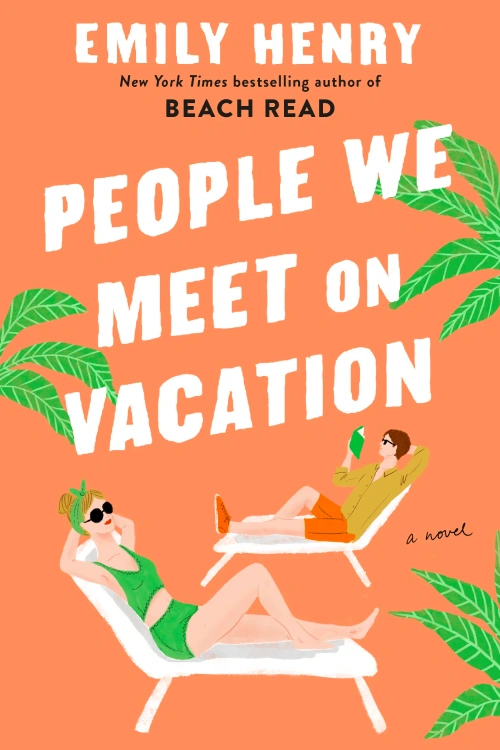
    6. People We Meet on Vacation by Emily Henry (2026)

    people we met on vacation cover book

    Why Read It: Emily Henry has become the queen of contemporary romance with her witty, emotionally intelligent novels. This story follows Poppy and Alex, best friends who take annual vacations together despite being complete opposites. When their friendship falls apart, Poppy convinces Alex to take one more trip to fix what went wrong.

    What Makes It Special: Henry’s sharp dialogue, relatable characters, and perfect balance of humor and heart make this a standout in the romance genre. The dual timeline structure adds depth as readers discover what happened to fracture their friendship.

    The Movie: Netflix is adapting this beloved romance, ensuring it reaches a wide audience of rom-com enthusiasts.

    Reading Time: Approximately 8-10 hours

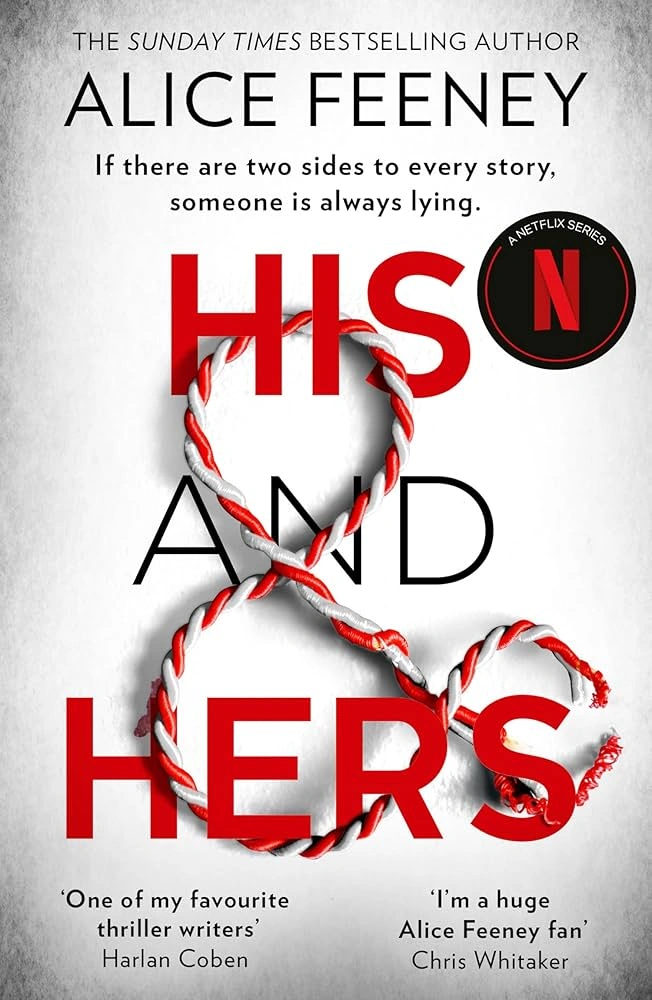
    7. His and Hers by Alice Feeney (2026)

    his and hers cover book

    Why Read It: This gripping psychological thriller alternates between three perspectives: a detective, a news reporter, and a killer. When a woman is found dead in a sleepy British village, the investigation uncovers dark secrets and unexpected connections.

    What Makes It Special: Feeney’s clever narrative structure and expertly planted clues create a puzzle box of a thriller. The unreliable narrators and shocking twists will keep you second-guessing everything you think you know.

    The Movie: Netflix is bringing this twisty thriller to screens, perfect for fans of Gone Girl and The Girl on the Train.

    Reading Time: Approximately 7-9 hours

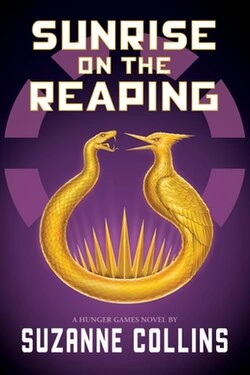
    8. Sunrise on the Reaping by Suzanne Collins (November 2026)

    sunrise on the reaping book cover

    Why Read It: Suzanne Collins returns to Panem with this prequel focusing on Haymitch Abernathy’s Hunger Games—the 50th Games, also known as the Second Quarter Quell. Fans have long wanted to know Haymitch’s backstory, and Collins finally delivers.

    What Makes It Special: Understanding Haymitch’s traumatic past adds profound depth to his character in the original trilogy. Collins’s sharp social commentary and action-packed storytelling promise another compelling examination of power, survival, and resistance.

    The Movie: Scheduled for November 2026, this addition to the Hunger Games franchise will undoubtedly be a major box office event.

    Reading Time: Approximately 10-12 hours (estimated based on Collins’s previous works)

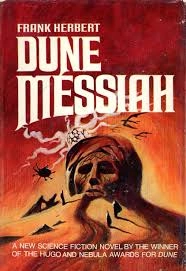
    9. Dune Messiah by Frank Herbert (December 2026)

    dune messiah book cover

    Why Read It: The second book in Herbert’s groundbreaking Dune series picks up twelve years after the first novel, exploring the consequences of Paul Atreides’s rise to power. This darker, more philosophical sequel examines the dangers of messianic leadership and the burden of prescience.

    What Makes It Special: While shorter than Dune, Messiah is arguably more complex, deconstructing the hero’s journey and challenging readers’ expectations. Herbert’s exploration of religious fanaticism, political manipulation, and the cost of power feels remarkably prescient.

    The Movie: Denis Villeneuve’s Dune: Part Three arrives in December, continuing his acclaimed adaptation of Herbert’s epic saga.

    Reading Time: Approximately 8-10 hours

    https://youtu.be/-glW8zLI9W0?si=3zdt7sNdGqv2u4Sp

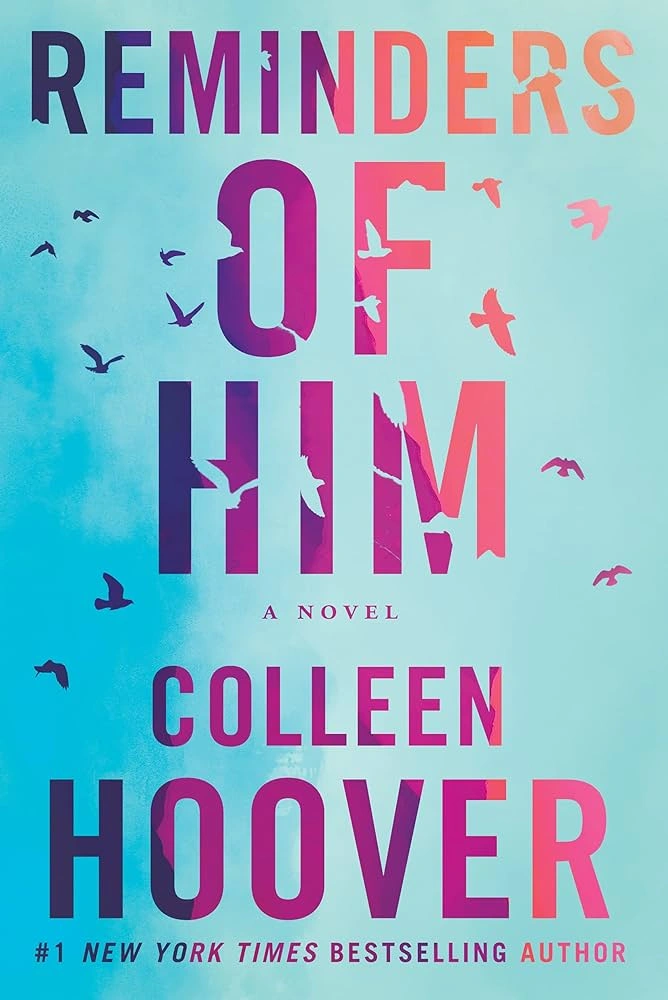
    10. Reminders of Him by Colleen Hoover (March 2026)

    reminders of him cover book

    Why Read It: This emotionally devastating novel tells the story of Kenna Rowan, a young mother released from prison who returns to her hometown seeking redemption and a relationship with her daughter. What she finds is a community that refuses to forgive and a ledger keeper named Ledger who might be her only ally.

    What Makes It Special: Hoover tackles themes of forgiveness, second chances, and the complexity of grief with her signature emotional intensity. The novel’s exploration of how past mistakes shape our present is both heartbreaking and hopeful.

    The Movie: Starring Maika Monroe, this March adaptation will bring Hoover’s tear-jerker to the big screen.

    Reading Time: Approximately 7-9 hours

    Why Read Before Watching?

    Reading the book before seeing its adaptation offers several unique advantages:

    Deeper Character Understanding: Books provide access to characters’ internal thoughts and motivations that films often struggle to convey, even with talented actors.

    Your Own Imagination: Creating your own mental images of characters and settings before seeing the director’s interpretation makes the reading experience more personal and immersive.

    Richer Context: Novels typically include subplots, backstories, and details that adaptations must cut for time, giving readers a fuller understanding of the story world.

    Enhanced Appreciation: Understanding the source material allows you to better appreciate the adaptation’s creative choices, whether they’re faithful translations or bold reimaginings.

    Join the Conversation: Being familiar with both versions enables you to participate in discussions about what worked, what didn’t, and how the adaptation compares to the original.

    Making Time to Read

    With ten books on this list, you might feel overwhelmed. Here are some strategies to tackle your reading goals:

    • Prioritize by Release Date: Start with books whose movies premiere earliest (February-March releases).
    • Mix Lengths: Alternate between shorter reads like The Magician’s Nephew and longer ones like Wuthering Heights.
    • Use Multiple Formats: Combine physical reading, e-books, and audiobooks to fit reading into different parts of your day.
    • Set Realistic Goals: You don’t have to read all ten. Choose the adaptations you’re most excited about.
    • Start Now: With releases spanning the entire year, beginning today gives you plenty of time.

    Final Thoughts

    2026’s lineup of book-to-film adaptations represents an incredible diversity of genres, from epic fantasy and hard science fiction to psychological thrillers and heartfelt romances. Whether you’re drawn to timeless classics receiving fresh interpretations or contemporary bestsellers making their cinematic debuts, there’s something for every reader on this list.

    The magic of reading these books before their adaptations lies not just in avoiding spoilers, but in the rich, immersive experience that only literature can provide. You’ll develop your own connection to these stories, characters, and worlds before seeing them interpreted on screen—and that personal relationship with the text is something no movie can replicate.

    So grab your reading list, visit your local library or bookstore, and dive into these incredible stories. Your future movie-watching self will thank you for the enhanced appreciation and deeper understanding you’ll bring to the theater. Happy reading, and enjoy the show!


    Which book are you most excited to read before its 2026 adaptation? Share your thoughts in the comments below!

  • Dark Academia Books

    Dark Academia Books

    Dark Academia Books: The Aesthetic That’s Still Trending in 2026

    Introduction

    The dark academia aesthetic has captivated readers, students, and dreamers since its emergence, and in 2026, it shows no signs of fading. This literary and visual movement celebrates classical education, Gothic architecture, tweed jackets, candlelit libraries, and the pursuit of knowledge—often with a dark, mysterious twist. What began as a Tumblr aesthetic has evolved into a full-fledged cultural phenomenon, influencing fashion, interior design, and most importantly, literature.

    In this comprehensive guide, we’ll explore what defines dark academia books, why the aesthetic remains so compelling in 2026, and present the 12 essential reads that capture the genre’s essence. Whether you’re a longtime devotee or newly curious about candlelit study sessions and secret societies, this is your gateway into the shadowy halls of dark academia literature.

    What Is Dark Academia?

    Dark academia is both an aesthetic and a mindset. At its core, it romanticizes classical education, intellectualism, and the pursuit of knowledge, but with Gothic undertones. Think ivy-covered universities, leather-bound books, classical music, dead languages, and the sense that something sinister lurks beneath the scholarly surface.

    Key Elements of Dark Academia

    • Setting: elite universities, boarding schools, libraries, museums
    • Atmosphere: Gothic, mysterious, often autumnal or wintry
    • Themes: Obsession with knowledge, moral ambiguity, elitism, forbidden love, death
    • Aesthetic: Vintage clothing, classical art, handwritten notes, candlelight
    • Subjects: Classics, philosophy, literature, art history, ancient languages
    • Tone: Melancholic, introspective, often tragic

    The genre often explores the dark side of intellectual pursuit—how obsession with knowledge can lead to moral compromise, isolation, or destruction.

    Why Dark Academia Remains Trending in 2026

    Escapism with Substance

    In a digital age dominated by quick content, dark academia offers escape into a world where deep reading, contemplation, and classical education are valued. It’s aspirational intellectualism—even if tinged with darkness.

    Aesthetic Appeal

    The visual components—Gothic architecture, vintage fashion, candlelit study spaces—translate beautifully to social media. Instagram and TikTok accounts dedicated to dark academia aesthetics have millions of followers.

    Nostalgia for “Serious” Education

    Dark academia taps into nostalgia for a (perhaps imagined) time when education was about pure intellectual pursuit rather than career preparation. It romanticizes learning for its own sake.

    Moral Complexity

    The best dark academia literature doesn’t just romanticize elite education—it critiques it. These books explore privilege, exclusion, and the moral costs of ambition, making them intellectually satisfying.

    Top 12 Essential Dark Academia Books

    1. The Secret History by Donna Tartt

    The book that defined the genre. A group of classics students at an elite Vermont college become entangled in murder. Tartt’s prose is lush, the characters are morally compromised, and the atmosphere is intoxicating. This is the dark academia bible—if you read only one book from this list, make it this one.

    Why it’s essential: It established every dark academia trope and executed them perfectly.

    2. If We Were Villains by M.L. Rio

    Seven Shakespearean actors at an elite arts conservatory. Intense friendships. A murder. This book reads like The Secret History meets Dead Poets Society, with Shakespeare as the backdrop. The theatrical setting adds extra drama to an already tense narrative.

    Why it’s essential: Perfect for readers who want dark academia with a theatrical flair.

    3. The Picture of Dorian Gray by Oscar Wilde

    A Victorian classic that feels like proto-dark academia. Dorian’s Faustian bargain, the decadent aestheticism, and Wilde’s gorgeous prose make this essential reading. It explores beauty, corruption, and the price of eternal youth.

    Why it’s essential: The original dark academia novel, written before the term existed.

    4. Ninth House by Leigh Bardugo

    Yale’s secret societies practice real magic, and Galaxy “Alex” Stern must navigate this dangerous world. Bardugo brings dark academia into the fantasy realm, adding occult elements to the traditional formula. It’s darker and more violent than most in the genre.

    5. The Maidens by Alex Michaelides


    A psychological thriller set at Cambridge University involving a secret society of female students and their charismatic Greek tragedy professor. Michaelides creates an atmosphere of creeping dread while exploring obsession and manipulation.


    Why it’s essential: A modern thriller that captures dark academia’s sinister potential.

    6. Catherine House by Elisabeth Thomas


    A mysterious, isolated college where students surrender the outside world for three years of intense study. The atmosphere is dreamlike and claustrophobic, with Gothic undertones and scientific experimentation. It’s strange, unsettling, and utterly compelling.


    Why it’s essential: Adds science and psychological horror to dark academia.

    7. Babel by R.F. Kuang


    A dark academia fantasy set at Oxford’s Royal Institute of Translation, where translation magic powers the British Empire. Kuang brilliantly critiques colonialism, linguistic imperialism, and elite education while delivering a gripping narrative.


    Why it’s essential: Intellectually rigorous dark academia with important social commentary.

    8. The Historian by Elizabeth Kostova


    A sprawling novel about scholars hunting for Dracula across Europe. It combines academic research, Gothic horror, and historical mystery. The love of libraries, archives, and historical detective work makes this quintessential dark academia.


    Why it’s essential: Proves dark academia works in historical and horror contexts.

    9. The Atlas Six by Olivie Blake


    Six magicians compete for five spots in the secretive Alexandrian Society. Blake combines dark academia with fantasy, creating morally gray characters pursuing forbidden knowledge. The library setting and intellectual competition are pure dark academia.


    Why it’s essential: A contemporary fantasy take on academic competition and secret societies.

    10. A Deadly Education by Naomi Novik


    A magical school where the building itself tries to kill students. Novik subverts the magical school trope by making Scholomance genuinely dangerous. The dark academia aesthetic meets survival horror in this brilliant series.


    Why it’s essential: Dark academia meets magical realism with genuine stakes.

    11. The Name of the Rose by Umberto Eco


    A medieval murder mystery set in an Italian monastery. Eco’s erudite novel is dense with philosophy, theology, and literary references. It’s challenging but rewarding—the thinking person’s dark academia.


    Why it’s essential: The most intellectually demanding book on this list, and worth the effort.

    12. Bunny by Mona Awad


    A surreal, darkly comic novel about an MFA program where a clique of students called “the Bunnies” engage in disturbing creative rituals. It’s weird, unsettling, and a brilliant satire of elite creative writing programs.


    Why it’s essential: Shows dark academia can be experimental and satirical.

    Dark Academia Beyond Books


    The aesthetic extends beyond literature:


    Films: Dead Poets Society, The Riot Club, Kill Your Darlings, Maurice


    TV Shows: The Magicians, A Discovery of Witches, The Chair


    Music: Classical composers (Chopin, Debussy), Hozier, Florence + The Machine


    Fashion: Tweed blazers, turtlenecks, Oxford shoes, vintage watches, leather satchels

    How to Embrace Dark Academia


    You don’t need to attend an elite university to embrace dark academia:


    • Create a cozy reading nook with warm lighting and classical music
    • Keep a handwritten journal for thoughts and quotes
    • Visit libraries, museums, and historic sites
    • Study a classical language or philosophy
    • Curate a vintage-inspired wardrobe
    • Join book clubs focused on classics and literary fiction
    • Collect antique books and academic ephemera

    Conclusion


    The dark academia aesthetic endures because it offers something rare: the romanticization of intellectual pursuit in an age of anti-intellectualism. These books remind us that ideas matter, that beauty and knowledge are worth pursuing, even when that pursuit leads to dark places.


    The 12 books on this list represent the best of what dark academia offers—Gothic atmosphere, moral complexity, beautiful prose, and the intoxicating sense that knowledge is both salvation and damnation. Whether you’re drawn to secret societies, forbidden magic, or simply the aesthetic of candlelit libraries, there’s a dark academia book waiting to consume you.


    So brew some tea, light a candle, put on your favorite cardigan, and lose yourself in the shadowy world of dark academia. The library awaits.

    Frequently Asked Questions


    Is dark academia only for students?


    Not at all! While many dark academia books feature student characters, the aesthetic and themes appeal to anyone who loves learning, Gothic atmospheres, and intellectual pursuits. Readers of all ages embrace dark academia.

    Is dark academia elitist?


    The aesthetic can romanticize elite institutions, but the best dark academia literature actually critiques elitism, privilege, and exclusivity. Books like Babel and The Secret History examine the dark side of elite education.

    What’s the difference between dark academia and light academia?


    Light academia shares the love of learning and classical aesthetics but with a brighter, more optimistic tone. It emphasizes the joy of knowledge rather than its dangers. Think sunny libraries instead of candlelit ones.

    Are dark academia books always set in universities?


    Most are, but not all. Some are set in libraries, museums, or feature self-taught scholars. The key is the atmosphere and themes rather than the specific setting.

    Can dark academia include diverse characters?


    Absolutely, and increasingly so. Books like Babel, Ninth House, and A Deadly Education feature diverse protagonists and actively address issues of exclusion in elite academic spaces.

    References


    • Goodreads – Dark Academia Genre Lists and Reviews
    • The Guardian – The Rise of Dark Academia
    • Literary Hub – Dark Academia as Literary Movement
    • Aesthetics Wiki – Dark Academia Definition and History

  • A Complete Unknown

    A Complete Unknown

    A Complete Unknown: Why This Bob Dylan Biopic Is Breaking Records

    Introduction

    A Complete Unknown has become the surprise phenomenon of early 2026, breaking box office records and redefining what a music biopic can achieve. Starring Timothée Chalamet as the legendary Bob Dylan, this film has captivated audiences and critics alike with its unconventional approach to the biographical genre. Rather than delivering a straightforward cradle-to-grave narrative, director James Mangold crafts an impressionistic meditation on artistic genius, authenticity, and the burden of cultural icon status.

    In this comprehensive review, we’ll explore why A Complete Unknown is breaking records, analyze Chalamet’s transformative performance, examine the film’s unique narrative approach, and discuss its place in the pantheon of great music biopics. Whether you’re a Dylan devotee or simply curious about the buzz, this guide will help you understand why this film is resonating so powerfully with 2026 audiences.

    The Bob Dylan Story: A Brief Context

    Bob Dylan revolutionized popular music in the 1960s, transforming from a folk troubadour into rock’s most enigmatic poet. His decision to “go electric” at the 1965 Newport Folk Festival remains one of music history’s most controversial moments. Dylan’s refusal to be pinned down—constantly reinventing his sound, persona, and message—made him both beloved and frustrating to fans and critics.

    A Complete Unknown focuses on Dylan’s early years (1961-1965), from his arrival in New York’s Greenwich Village through the Newport controversy. This period saw his transformation from unknown folk singer to voice of a generation—and his subsequent rejection of that role.

    TimothĂ©e Chalamet’s Transformative Performance

    The film’s greatest achievement is Chalamet’s portrayal of Dylan. The young actor doesn’t attempt mere impersonation; instead, he captures Dylan’s essence—the restless intelligence, the defensive arrogance, the vulnerability hidden beneath layers of persona.

    The Voice and the Music

    Perhaps most impressively, Chalamet performs all of Dylan’s songs himself. He spent two years learning guitar and harmonica, working with vocal coaches to approximate Dylan’s distinctive nasal delivery without resorting to caricature. The result is uncanny—not Dylan’s voice exactly, but a convincing interpretation that serves the film’s emotional truth.

    Key musical moments include haunting renditions of “Blowin’ in the Wind,” “The Times They Are a-Changin’,” and a climactic performance of “Like a Rolling Stone” that serves as the film’s emotional crescendo.

    Capturing Dylan’s Contradictions

    Chalamet excels at showing Dylan’s contradictions: the shy kid from Minnesota and the cocky provocateur, the earnest protest singer and the cynical artist who resents being labeled, the romantic and the emotionally distant genius. These aren’t presented as character flaws but as the complex reality of a young man thrust into cultural significance he never asked for.

    James Mangold’s Directorial Vision

    Director James Mangold (Logan, Walk the Line) brings his experience with character-driven narratives to Dylan’s story. Rather than a traditional biopic structure, Mangold employs a more fragmented, impressionistic approach that mirrors Dylan’s own artistic philosophy.

    Non-Linear Storytelling

    The film doesn’t proceed chronologically. Instead, it circles around key moments, returning to them from different perspectives. This structure reflects how memory works and how Dylan himself resists linear narratives about his life and art.

    Visual Poetry

    Cinematographer Phedon Papamichael shoots in grainy 16mm, giving the film a documentary-like authenticity. The Greenwich Village scenes feel lived-in and real, while performance sequences have an almost dreamlike quality. The visual approach serves the film’s central theme: the gap between the person and the myth.

    The Supporting Cast

    While Chalamet dominates, the supporting performances add crucial depth:

    • Elle Fanning as Sylvie Russo (a composite character based on Suze Rotolo) brings warmth and groundedness, representing the personal cost of Dylan’s ambition
    • Edward Norton as Pete Seeger captures the folk purist’s heartbreak at Dylan’s evolution
    • Boyd Holbrook as Johnny Cash provides mentorship and understanding of the burden of fame
    • Monica Barbaro as Joan Baez delivers a nuanced portrayal of artistic rivalry and romantic complexity

    Why It’s Breaking Box Office Records

    1. The Chalamet Factor

    TimothĂ©e Chalamet has become one of cinema’s biggest draws, particularly with younger audiences who might not otherwise see a Bob Dylan biopic. His fanbase has turned out in force, many discovering Dylan’s music for the first time through the film.

    2. Musical Authenticity

    Unlike many music biopics that use lip-syncing, hearing Chalamet actually perform the songs creates an immediacy and authenticity that resonates with audiences. The live performances feel genuine rather than manufactured.

    3. Timely Themes

    The film’s exploration of authenticity, artistic integrity, and the pressure to represent a movement feels remarkably relevant in 2026’s social media age. Dylan’s refusal to be what others wanted him to be speaks to contemporary discussions about identity and self-determination.

    4. Critical Acclaim

    With a 94% Rotten Tomatoes score and universal praise for Chalamet’s performance, strong word-of-mouth has driven repeat viewings and sustained box office performance beyond the opening weekend.

    5. Awards Season Momentum

    As an Oscar frontrunner in multiple categories (Picture, Actor, Director, Sound), the film benefits from awards buzz driving audiences to see what the fuss is about.

    Comparing to Other Music Biopics

    A Complete Unknown stands apart from recent music biopics:

    vs. Bohemian Rhapsody: Where Bohemian Rhapsody was a crowd-pleasing celebration, A Complete Unknown is more challenging and ambiguous, refusing to make Dylan entirely sympathetic.

    vs. Rocketman: While Rocketman embraced fantasy and musical numbers, Mangold’s film stays grounded in realism, using music as it would have occurred naturally.

    vs. Walk the Line: Mangold’s own Johnny Cash biopic was more traditional; A Complete Unknown shows his evolution as a filmmaker, willing to experiment with form.

    The Film’s Weaknesses

    No film is perfect, and A Complete Unknown has some limitations:

    Inaccessibility: The non-linear structure and refusal to explain everything may frustrate viewers unfamiliar with Dylan’s story.

    Emotional Distance: The film’s intellectual approach sometimes keeps viewers at arm’s length emotionally.

    Limited Scope: Focusing only on 1961-1965 means we don’t see Dylan’s later evolution, which some fans find disappointing.

    Cultural Impact and Legacy

    Beyond box office numbers, A Complete Unknown has sparked renewed interest in Dylan’s music. Streaming numbers for his early albums have surged 400%. Younger audiences are discovering folk music’s rich history. The film has also reignited debates about artistic authenticity and the relationship between artists and their audiences.

    Where to Watch

    A Complete Unknown is currently playing in theaters worldwide. Given its cinematography and musical performances, this is a film best experienced on the big screen with quality sound. Check local listings for showtimes, including special IMAX screenings that enhance the concert sequences.

    Conclusion

    A Complete Unknown succeeds because it understands that Bob Dylan’s greatest trick was remaining unknowable. Rather than pretending to explain Dylan, the film embraces the mystery, giving us a portrait of an artist in the act of becoming—and refusing to become what others demanded.

    TimothĂ©e Chalamet’s performance is career-defining, James Mangold’s direction is assured and innovative, and the film’s meditation on authenticity resonates far beyond its 1960s setting. It’s breaking records because it offers something rare: a smart, challenging film that trusts its audience while still being emotionally powerful.

    Whether you’re a Dylan fan or not, A Complete Unknown is essential viewing—a reminder of cinema’s power to illuminate the human experience through art.

    Frequently Asked Questions

    Does Timothée Chalamet really sing in the movie?

    Yes! Chalamet performs all of Bob Dylan’s songs himself. He spent two years learning guitar, harmonica, and approximating Dylan’s vocal style. No lip-syncing was used.

    Do I need to know Bob Dylan’s music to enjoy the film?

    Not necessarily. While Dylan fans will appreciate deeper references, the film works as a story about artistic integrity and the burden of fame. However, some familiarity with his music enhances the experience.

    Is the film historically accurate?

    It takes some liberties, particularly with composite characters and compressed timelines. The emotional truth is prioritized over documentary accuracy, which is appropriate for a film about an artist who constantly mythologized his own life.

    What Bob Dylan songs are featured?

    The film includes “Blowin’ in the Wind,” “The Times They Are a-Changin’,” “A Hard Rain’s a-Gonna Fall,” “Don’t Think Twice, It’s All Right,” “Like a Rolling Stone,” and many others from Dylan’s early catalog.

    Will there be a sequel covering Dylan’s later years?

    Nothing has been announced, but the film’s success makes a continuation possible. However, Mangold has suggested this period (1961-1965) is the most dramatically compelling chapter of Dylan’s story.

    References

    • Box Office Mojo – A Complete Unknown Performance Data
    • Rotten Tomatoes – Critical Reviews and Audience Scores
    • Rolling Stone – Bob Dylan Biography and Historical Context
    • Variety – Behind the Scenes Production Coverage
    • The Hollywood Reporter – Awards Season Analysis
  • Isekai Anime Evolution

    Isekai Anime Evolution

    Isekai Anime Evolution: How the Genre Changed in 2026

    Introduction

    The isekai anime genre has undergone a remarkable transformation in 2026. What began as a niche category featuring protagonists transported to fantasy worlds has evolved into one of anime’s most diverse and sophisticated genres. From its humble beginnings with shows like Sword Art Online and Re:Zero, isekai has grown to encompass everything from comedy to psychological horror, from power fantasies to philosophical meditations on existence.

    In this comprehensive analysis, we’ll explore how isekai anime has changed in 2026, examining the subgenres that have emerged, the tropes that have been subverted, and the best series that represent the genre’s current evolution. Whether you’re a longtime isekai fan or a skeptic curious about what’s changed, this guide will show you why 2026 is the most exciting time for isekai anime.

    The History of Isekai: A Quick Primer

    Isekai (literally “different world”) anime features protagonists transported, reincarnated, or trapped in alternate worlds. The genre exploded in popularity in the 2010s, but its roots go back decades to classics like The Vision of Escaflowne and even Alice in Wonderland.

    The 2010s saw the “golden age” of isekai with shows like Sword Art Online, Overlord, and Re:Zero. However, the genre became oversaturated with similar premises: overpowered protagonists, harem dynamics, and RPG-style world-building. By the early 2020s, viewers were experiencing isekai fatigue.

    Then came the evolution. In 2026, isekai has matured, diversified, and surprised us in ways we never expected.

    How Isekai Changed in 2026

    1. From Power Fantasy to Psychological Depth

    The biggest shift is away from overpowered protagonists steamrolling through challenges. Modern isekai explores the psychological impact of being displaced from your world. Shows like The Faraway Paladin and Mushoku Tensei pioneered this approach, and 2026 has taken it further.

    Protagonists now grapple with identity crises, moral ambiguity, and the trauma of leaving everything behind. The focus has shifted from “what can I do in this world?” to “who am I in this world?”

    2. Subversion of Tropes

    2026’s isekai actively subverts established tropes. The “truck-kun” death has been replaced with more creative transportation methods. Harems are being deconstructed or eliminated entirely. The “chosen one” narrative is questioned rather than celebrated.

    Shows are asking: What if the protagonist isn’t special? What if the fantasy world is worse than modern Earth? What if returning home is impossible—and you have to grieve that loss?

    3. Diverse Protagonists

    We’re seeing more female protagonists, older protagonists, and characters from diverse backgrounds. The “teenage male gamer” archetype is no longer the default. This diversity brings fresh perspectives to the genre.

    4. Sophisticated World-Building

    Gone are the days of generic medieval Europe with RPG stats. Modern isekai features complex political systems, unique magic frameworks, and worlds that feel lived-in rather than game-like. The best series treat their fantasy worlds as characters in their own right.

    5. Genre Blending

    Isekai is merging with other genres: mystery isekai, horror isekai, slice-of-life isekai, and even isekai romance. This cross-pollination has revitalized the genre by introducing new narrative possibilities.

    Top 10 Isekai Anime of 2026

    1. Mushoku Tensei: Jobless Reincarnation (Continuing)

    Still the gold standard for character-driven isekai. Rudeus’s journey of redemption continues to set the bar for psychological depth and world-building. The animation quality remains breathtaking.

    2. Re:Zero Season 4

    Subaru’s suffering continues, but Season 4 explores the consequences of his time-loop power in devastating new ways. The psychological horror elements have intensified, making this the darkest season yet.

    3. The Faraway Paladin Season 3

    A contemplative isekai about faith, duty, and found family. Will’s journey as a paladin serving the God of the Flame continues to offer a mature alternative to power-fantasy isekai.

    4. Ascendance of a Bookworm (Final Season)

    Myne’s quest to create books in a medieval world concludes. This series proved that isekai doesn’t need combat to be compelling—economic and social innovation can be just as engaging.

    5. Overlord V

    Ainz Ooal Gown’s conquest continues. What makes Overlord unique is its villain protagonist perspective—we’re watching an isekai from the “final boss” point of view.

    6. The Eminence in Shadow Season 3

    A brilliant parody that also works as a genuine isekai. Cid’s delusions of being a mastermind accidentally create real conspiracies. The comedy-action balance is perfect.

    7. Frieren: Beyond Journey’s End (Part 2)

    Technically a reverse isekai (the hero’s journey is over), but it deconstructs isekai tropes beautifully. Frieren’s meditation on time, memory, and mortality is genre-defining.

    8. Konosuba Season 4

    9. That Time I Got Reincarnated as a Slime Season 4


    Rimuru’s nation-building continues. This series excels at showing the logistics of creating a society, making governance and diplomacy as exciting as battle scenes.

    10. The Saint’s Magic Power is Omnipotent Season 3


    A refreshing female-led isekai focused on herbalism and healing magic. Sei’s quiet competence and the slow-burn romance make this a cozy alternative to action-heavy series.

    Emerging Isekai Subgenres

    Reverse Isekai


    Fantasy characters coming to modern Earth. Shows like The Devil is a Part-Timer! pioneered this, and 2026 has seen an explosion of reverse isekai exploring culture shock from the opposite direction.

    Villainess Isekai


    Protagonists reincarnated as the villain in an otome game or novel. These series subvert romance tropes while offering satisfying “change your fate” narratives.

    Isekai Noir


    Dark, mystery-focused isekai with morally gray protagonists. Think detective stories in fantasy settings with isekai knowledge as the protagonist’s edge.

    Slice-of-Life Isekai


    No grand quests or demon lords—just living a peaceful life in another world. These cozy series focus on cooking, crafting, and community-building.

    Why Isekai Remains Popular


    Despite predictions of its demise, isekai thrives because it offers:


    Escapism: In uncertain times, the fantasy of starting over in a new world resonates deeply.


    Wish Fulfillment: Even subversive isekai taps into desires for agency, competence, and purpose.


    Flexibility: The genre can accommodate any story type—comedy, horror, romance, action—making it endlessly adaptable.


    Relatability: Starting from zero in a new world mirrors real-life experiences of change, making protagonists’ struggles universally understandable.

    Conclusion


    The isekai genre in 2026 is unrecognizable from its early 2010s incarnation. What was once dismissed as formulaic power fantasy has evolved into one of anime’s most diverse and experimental genres. From psychological depth to genre-blending innovation, modern isekai proves that familiar premises can yield fresh stories when approached with creativity and care.


    Whether you’re a longtime fan or someone who wrote off isekai years ago, 2026 offers something for everyone. The genre has grown up, and the results are spectacular.


    So give isekai another chance—you might be surprised by what you find in these other worlds!

    Frequently Asked Questions


    What does “isekai” mean?


    Isekai (異侖界) is Japanese for “different world” or “another world.” In anime, it refers to stories where characters are transported to, reborn in, or trapped in alternate worlds.

    Why are there so many isekai anime?


    Isekai is popular because it’s accessible (protagonists start as outsiders like viewers), flexible (works with any genre), and based on successful light novels that provide source material for adaptation.

    What’s the best isekai for beginners?


    Frieren: Beyond Journey’s End or The Faraway Paladin are excellent starting points. They’re well-crafted, avoid common tropes, and showcase the genre’s potential.

    Are all isekai anime power fantasies?


    No! While many early isekai featured overpowered protagonists, modern isekai includes weak protagonists, slice-of-life stories, and psychological dramas where power isn’t the focus.

    What’s “truck-kun”?


    “Truck-kun” is a meme about how many isekai protagonists die by being hit by a truck before reincarnating. It became so common it’s now a genre in-joke.

    References


    • MyAnimeList – Isekai Genre Statistics 2026
    • Anime News Network – Evolution of Isekai Analysis
    • Crunchyroll – Isekai Anime Trends Report
    • Reddit r/anime – Isekai Discussion Archives

    Explore More: