Author: Victor de Paula

  • Ringworld: 6 Ideas That Changed How We Think About Space

    Ringworld: 6 Ideas That Changed How We Think About Space

    Introduction

    Published in 1970 and winner of both the Hugo and Nebula Awards, Ringworld by Larry Niven is one of the most audacious feats of imagination in science fiction. A gigantic ring structure, one million miles wide, orbiting a sun — built not by gods, but by engineers. More than a thrilling adventure, Ringworld is a philosophical and scientific sandbox packed with radical ideas. Here are 6 of the most thought-provoking.

    1. Engineering on a Civilizational Scale

    The Ringworld itself is the central idea: a habitable band 600 million miles in circumference, built from a material stronger than any known substance (called scrith). Its inner surface has an area equivalent to three million Earths. Niven asks us to consider: what does a species do after it has colonized an entire solar system? It builds. The Ringworld is a monument to what post-scarcity engineering could look like — and a warning about what happens to a civilization that stops questioning why it builds.

    2. Luck as an Evolutionary Force

    Louis Wu’s companion, Teela Brown, was selected for the expedition partly because of a theory: the Puppeteers have been secretly breeding humans for good luck over generations, by manipulating who gets Earth’s overcrowded birth lottery tickets. Niven plays this almost as a biological joke — luck as a heritable trait, natural selection working on probability itself. The idea is absurd and brilliant: if a lucky individual survives more often, their genes (and their luck) propagate. Evolution, in this view, is not just about strength or intelligence, but about fortune.

    3. The Puppeteers and Risk-Averse Civilization

    The Pierson’s Puppeteers are among science fiction’s most memorable alien species. They are cowards by biology — their survival instinct is so overwhelming that any individual willing to take risks is considered clinically insane by their society. Yet they are immensely powerful and manipulative, engineering entire civilizations from a safe distance. Niven’s insight is sharp: a civilization can be extraordinarily advanced and still be paralyzed by fear. The Puppeteers are a mirror for any society (or institution) that mistakes caution for wisdom.

    4. A Civilization That Forgot Itself

    The humanoid inhabitants discovered on Ringworld have completely regressed. Once the engineers of the greatest structure ever built, they have lost all knowledge of technology, living as primitive tribes on its surface. The machinery that maintains the Ringworld is failing — the shadow squares are breaking down — and no one knows how to fix it. This is Niven’s darkest idea: that civilizational collapse is not dramatic; it is gradual and total. A species can forget itself. The Ringworld is an enormous ruin, still technically functional, inhabited by people who worship it as a god. This theme connects powerfully with ideas explored in Cities in Flight, where decay is also treated as an inevitable historical force.

    5. Superstition Born from Technology

    Following from the above, the novel explores how sufficiently advanced technology becomes religion. The Ringworld’s failing systems — automated repair drones, weather control mechanisms — are interpreted by the inhabitants as divine will. This echoes Arthur C. Clarke’s famous third law, but Niven gives it a tragic weight: these are the descendants of the builders, and they no longer recognize their own ancestors’ work. In a world of functional magic, reason gives way entirely to mythology.

    6. The Problem of the Rim Wall

    One of the novel’s cleverest hard-science details: the Ringworld has thousand-mile-high walls along its edges to prevent the atmosphere from spilling into space. But what do those walls mean for the people who live near them? Niven thinks through the second- and third-order consequences of his creation with unusual rigor. The walls cast enormous shadows. The ocean currents behave differently. The climate zones follow strange latitudinal patterns. This commitment to following the physics of an impossible structure is what separates Ringworld from lesser “Big Dumb Object” stories. For another example of rigorous speculative world-building from the same era, see our notes on Triplanetary.

    Conclusion

    Ringworld endures because Niven never lets the wonder of the setting overwhelm the questions it raises: about ambition, decay, luck, fear, and the fate of knowledge. It is a novel that rewards engineers and philosophers equally. If you have not read it, the Ringworld is waiting — enormous, ancient, and slowly falling apart.


    Frequently Asked Questions (FAQ)

    1. Is Ringworld scientifically plausible?
    The concept is physically possible but requires materials with properties far beyond anything we can currently produce. The physics of spin-gravity, atmosphere retention, and solar energy are handled with surprising rigor.

    2. Are there sequels to Ringworld?
    Yes. Larry Niven wrote three direct sequels: The Ringworld Engineers, The Ringworld Throne, and Ringworld’s Children, which expand the lore and address structural problems raised by readers.

    3. What is “scrith”?
    Scrith is the fictional ultra-strong material from which the Ringworld is built. It must withstand stresses far beyond any known substance, making it a useful thought experiment in meta-materials science.

  • Project Gutenberg vs. Open Library

    Project Gutenberg vs. Open Library

    Project Gutenberg vs. Open Library: The Best Sites for Classic Literature

    In the digital age, access to classic literature has never been easier. For students, researchers, and book lovers, two titans stand out in the quest for free, public domain knowledge: Project Gutenberg and Open Library. While both offer millions of books for free, they operate on fundamentally different philosophies and serve different needs.

    Which one should you use? Are they safe? And which offers the best reading experience? In this comparison, we break down the strengths and weaknesses of these two literary giants.

    Project Gutenberg: The Pioneer of Digital Books

    Founded in 1971 by Michael Hart, Project Gutenberg is the oldest digital library in the world. Its mission is simple: to encourage the creation and distribution of eBooks.

    Pros:

    • No Registration Required: You can download any book instantly without creating an account.
    • Quality Control: Books are proofread by volunteers (Distributed Proofreaders), resulting in clean, typo-free text formats suited for e-readers.
    • Format Flexibility: Offers EPUB, Kindle, and plain text formats that work on almost any device without DRM (Digital Rights Management).
    • Truly Free: Every book is in the US public domain, meaning you own the file you download forever.

    Cons:

    • Visual Aesthetics: The books often lack original covers or illustrations, prioritizing text over design.
    • Limited Scope: Strictly limited to books in the US public domain (published before 1929), so you won’t find modern bestsellers here.

    Open Library: The Wikipedia of Books

    A project of the Internet Archive, Open Library has a more ambitious goal: “One web page for every book ever published.” It functions partly as a library and partly as a database.

    Pros:

    • Modern Books: Unlike Gutenberg, Open Library offers a “lending” system for copyrighted modern books, allowing you to borrow digital copies for 1 hour or 14 days.
    • Scanned Originals: Many books are high-quality scans of physical library books, preserving the original typography, illustrations, and marginalia.
    • Vast Catalog: It includes millions of records, including obscure editions and out-of-print works that aren’t yet in the public domain.

    Cons:

    • Waitlists: Popular books require joining a waitlist, just like a physical library.
    • Reading Experience: Scanned PDFs can be harder to read on small screens (like phones or Kindles) compared to Gutenberg’s reflowable text.
    • Legal Controversy: The Internet Archive has faced legal challenges from publishers regarding its lending practices, making its future slightly less certain than Gutenberg’s.

    The Verdict: Which is Better?

    The answer depends on what you are looking for:

    Choose Project Gutenberg if:
    You want to read Pride and Prejudice or Dracula on your Kindle or phone. The files are lightweight, clean, and yours to keep. It is the gold standard for pure text reading of classics.

    Choose Open Library if:
    You are researching a specific edition, looking for a book published after 1930, or want to see the original layout and illustrations of a text. It is indispensable for academic research and finding books that are out of print but not yet public domain.

    Choose yours

    Ultimately, we don’t have to choose. Both projects are monuments to human knowledge, ensuring that culture remains accessible to everyone, everywhere. Whether you prefer the pristine text of Gutenberg or the digital shelves of Open Library, the winner is the reader.

    Frequently Asked Questions (FAQ)

    1. Is Project Gutenberg legal?
    Yes, completely. They only publish books that have entered the public domain in the United States.

    2. Can I read Open Library books on Kindle?
    It’s difficult. Open Library uses Adobe DRM for borrowed books, which requires extra steps to transfer to a Kindle, whereas Gutenberg files work natively.

    3. Why does Project Gutenberg look so old-school?
    The site prioritizes function, speed, and accessibility over modern web design, ensuring it works on even the oldest computers and connections.

    4. Are these sites safe to download from?
    Yes, both are reputable non-profit organizations. They do not host malware or pirate content.

    5. How can I help these projects?
    Both rely on donations and volunteers. You can donate money or volunteer to proofread pages (for Gutenberg) or correct book records (for Open Library).

  • David Brin’s Earth: 6 Radical Ideas

    David Brin’s Earth: 6 Radical Ideas

    David Brin’s Earth: 6 Radical Ideas About Our Planet’s Future

    Published in 1990, David Brin’s monumental novel Earth is more than just a science fiction thriller about a microscopic black hole devouring the planet’s core. It is a dense, prophetic exploration of ecology, technology, and society in the near future (2038). Brin weaves together hard science with sociological speculation, presenting a world that feels eerily similar to our own present-day reality.

    Here are 6 key ideas from Earth that challenge how we think about our planet, our privacy, and our survival.

    1. The Transparent Society

    One of Brin’s most famous concepts, which he later expanded into a non-fiction book, is the idea that privacy is disappearing and cannot be saved. In Earth, cameras are ubiquitous, worn by citizens and mounted on every street corner. Instead of fighting for secrecy (which only benefits the powerful), Brin argues for reciprocal transparency (sousveillance). If the police can watch us, we must be able to watch the police. In the novel, this total information awareness is a double-edged sword, but one that is essential for holding power accountable in a crowded world.

    2. The Gaia Hypothesis as Fact

    Brin takes James Lovelock’s Gaia Hypothesis, that the Earth acts as a single, self-regulating superorganism, and makes it literal. The planet in the novel is stressed to the breaking point by human activity. The “character” of Earth is not a mystical goddess but a complex, suffering biological system reacting to infection (us). The story suggests that humanity is the nervous system of the planet, potentially its way of achieving consciousness, but currently acting more like a cancer that needs to evolve or be excised.

    3. The “World Wide Web” Prediction

    Written before the web was public, Earth features “The Net,” a global hypertext system where information is linked, forum discussions (similar to Reddit or Usenet) drive public opinion, and data can be accessed by anyone. Brin startlingly predicts the dangers of misinformation, spam, and computer worms spreading through this network, anticipating the cybersecurity battles of the 21st century decades in advance.

    4. Endangered Species Arks

    In the novel’s timeline, ecological collapse has led to the extinction of many large mammals. To save what remains, humanity has created “Arks”, not ships, but genetic libraries and protected preserves. This highlights a desperate pragmatic approach to conservation: when you can’t save everything, you must choose what to save. It reflects a shift from “conservation” to “preservation management,” a grim necessity that is becoming increasingly relevant today.

    5. Gravity Technology and Energy

    The central plot device, a microscopic singularity used for energy production that falls into the Earth’s core, explores the double-edged sword of advanced physics. While it offers unlimited clean energy (solving the climate crisis), it carries existential risks. This mirrors our current debates about nuclear power, geoengineering, and AI: is the solution to our problems more dangerous than the problems themselves?

    6. Planetary Engineering

    Ultimately, Earth is about the transition of humans from inhabitants to engineers of their own planet. We see characters manipulating weather, tectonics, and ecosystems. Brin posits that we have passed the point of no return; we cannot simply “leave nature alone” because we have already altered it too much. We must now accept the responsibility of actively managing the planetary life support system if we want to survive.

    Conclusion

    David Brin’s Earth serves as a “booknote” for the 21st century, a warning and a roadmap. It asks us to consider whether our technological tools will destroy the biosphere or become the means by which the Earth itself wakes up. As we face climate change and the loss of privacy, Brin’s 1990 vision remains one of the most relevant and provocative thought experiments in science fiction.

    Frequently Asked Questions (FAQ)

    1. Is the science in ‘Earth’ accurate?
    Much of it is based on solid theoretical physics (like microscopic black holes) and ecology, though obviously speculative. Brin is an astrophysicist, so the science is “harder” than most sci-fi.

    2. Did David Brin really predict the internet?
    He predicted the *shape* of the modern web, hyperlinks, forums, and the social impact of instant global communication, remarkably well before it became mainstream.

    3. What is the “Transparent Society”?
    It’s the concept that in a world of cameras and data, the only way to preserve freedom is to ensure that surveillance goes both ways, citizens watching the watchers.

  • Top 10 Audiobooks That Are Actually Better Than the Print Version

    Top 10 Audiobooks That Are Actually Better Than the Print Version

    Top 10 Audiobooks That Are Actually Better Than the Print Version

    Reading is a solitary and imaginative experience, but listening to a story can transform it into something visceral and cinematic. With the advancement of audio productions, some books have transcended their paper pages to become unforgettable sound performances. We’re not just talking about someone reading a text aloud; we’re talking about full casts, immersive sound effects, and narrations that bring characters to life in a way your inner voice might not.

    Whether you’re a paper purist or a Kindle devotee, prepare to be challenged. This list gathers 10 works where the audio version is not just an alternative, but the definitive experience. Grab your headphones and discover why these audiobooks are considered masterpieces of the format.

    1. Project Hail Mary – Andy Weir

    Narrated by Ray Porter

    If you read this book on paper, you missed half the magic. The plot involves an astronaut trying to save humanity with the help of an alien who communicates through musical sounds. In the audiobook, these sounds are actual synthesized chords, and Ray Porter’s performance captures every nuance of protagonist Ryland Grace’s despair and humor. It is undoubtedly one of the best sci-fi audio experiences ever produced.

    2. Daisy Jones & The Six – Taylor Jenkins Reid

    Narrated by a Full Cast (Jennifer Beals, Benjamin Bratt, Judy Greer, etc.)

    The book is written in the format of an oral documentary transcript about a 70s rock band. Reading on paper is great, but listening to the audiobook is like watching the actual documentary. Each character has a different actor, creating an authentic conversation dynamic, interruptions, and raw emotions that perfectly simulate a real interview. The chemistry between the narrators elevates the drama to a level the written text only suggests.

    3. World War Z – Max Brooks

    Narrated by an All-Star Cast (Mark Hamill, Martin Scorsese, Simon Pegg, etc.)

    Forget the movie with Brad Pitt. The book is a collection of accounts from survivors of a zombie apocalypse. The audio version (“The Complete Edition”) brings together an unbelievable Hollywood cast. Each survivor, from different parts of the world, is played by a different actor, giving distinct accents and personalities to each account. It is a high-level radio production that makes the global horror much more palpable.

    4. The Sandman – Neil Gaiman

    Narrated by Neil Gaiman, James McAvoy, Kat Dennings, and cast

    Originally a graphic novel, The Sandman was adapted by Audible into an audio super-production. With James McAvoy as Morpheus and Neil Gaiman himself as the narrator, this version uses cinematic sound effects and an original soundtrack. It’s not just a reading; it’s a movie for your ears, capturing the dreamlike and dark atmosphere of the original work without needing a single illustration.

    5. Born a Crime – Trevor Noah

    Narrated by the Author (Trevor Noah)

    Reading Trevor Noah’s memoir about growing up in South Africa during apartheid is impactful. Hearing Trevor himself tell these stories is transformative. He is a talented comedian and mimic, and uses these skills to give voice to his mother, his grandmother, and the various dialects and languages of South Africa (Xhosa, Zulu, Afrikaans). The humor, pain, and authenticity are exponentially amplified by his vocal performance.

    6. Lincoln in the Bardo – George Saunders

    Narrated by Nick Offerman, David Sedaris, Ben Stiller, Julianne Moore, and 160 more voices

    This experimental novel is composed almost entirely of dialogue from ghosts in a cemetery and historical citations. On paper, it can be confusing to track who is speaking. In audio, with a record-breaking cast of 166 people, each ghost has their own distinct voice. The cacophony of voices creates the exact effect the author intended: a chorus of lost souls. It is an impressive technical and artistic achievement.

    7. Sadie – Courtney Summers

    Narrated by Rebecca Soler, Dan Bittner, and cast

    Half the book follows Sadie’s journey for revenge, and the other half is presented as a “True Crime” podcast investigating her disappearance. The audiobook production treats the podcast part as a real show, with intro music, edited interviews, and studio effects. The immersion is total, making you feel like you are really listening to an episode of a viral investigative podcast.

    8. The Dutch House – Ann Patchett

    Narrated by Tom Hanks

    Yes, Tom Hanks. His voice is so familiar and comforting that it brings an extra layer of empathy to the protagonist Danny. The story is a family saga about loss and memory, and Hanks’ narration is subtle, melancholic, and deeply human. He doesn’t overact; he simply *tells* the story in a way that makes you feel like you’re sitting on a porch listening to an old friend.

    9. Good Omens – Neil Gaiman and Terry Pratchett

    Narrated by Martin Jarvis (or the BBC Full Cast version)

    Pratchett and Gaiman’s British humor requires perfect comedic timing, and the audio versions deliver exactly that. Whether in the classic version narrated by Martin Jarvis or the BBC adaptation, the footnotes (which are hilarious in the books) are integrated organically. The irony and absurdity of the apocalypse gain a new dimension when performed with proper British sarcasm.

    10. Dracula – Bram Stoker

    Narrated by Alan Cumming, Tim Curry, and cast (Audible Edition)

    An epistolary classic (written in letters and diaries) is perfect for the audio format. With a cast led by Tim Curry as Van Helsing and Alan Cumming as Dr. Seward, each diary entry sounds like a whispered confession. The tension grows through trembling voices and superb acting, transforming a Victorian classic into a modern and terrifying gothic horror experience.

    Conclusion

    Audio is not “cheating”; it is a different art form. These books prove that with the right production, listening can be as profound, if not more so, than visual reading. If you haven’t tried a high-production audiobook yet, any on this list is the perfect starting point to change your mind.

    Try closing your eyes and letting the story enter through your ears. You might discover your favorite books have voices you never imagined.

    Frequently Asked Questions (FAQ)

    1. Do audiobooks count as reading?
    Yes! The brain processes narrative and language in a very similar way, whether through sight or hearing. The important thing is engagement with the story.

    2. Where can I find these audiobooks?
    Most are available on popular platforms like Audible, Storytel, Google Play Books, and Apple Books.

    3. Is it hard to concentrate on audiobooks?
    It can take practice. Starting with full cast productions or books narrated by familiar voices (like Tom Hanks) helps a lot to keep attention.

    4. What is the advantage of “Full Cast”?
    Unlike a single narrator doing all voices, a Full Cast uses different actors for each character, creating an experience closer to a radio drama or movie.

    5. Can I speed up the narration?
    Yes, most apps allow you to adjust the speed (1.2x, 1.5x, etc.), which is great for those who read fast or want to consume content more dynamically.

    6. Are there free audiobooks?
    Yes, platforms like LibriVox offer public domain classics for free. Many libraries also offer digital audiobook loans via apps like Libby.

  • The Genghis Khan Mindset

    The Genghis Khan Mindset

    The Genghis Khan Mindset: 5 Ruthless Strategies for Modern Success

    When we think of Genghis Khan, the image that usually comes to mind is that of a ruthless barbarian leaving a trail of destruction in his wake. However, this is a simplistic and incomplete view. Behind the sword was a brilliant strategic mind that unified warring tribes and created the largest contiguous empire in human history. The “Genghis Khan Mindset” is not about violence, but about ruthless efficiency, adaptation, and long-term vision.

    For the modern entrepreneur or leader, the lessons left by the Great Khan are surprisingly current. He didn’t inherit an empire; he built it from scratch, overcoming adversities that would break most people. Here are five essential strategies we can extract from his life and apply to the pursuit of success today.

    1. Radical Meritocracy over Aristocracy

    Value Competence, Not Blood

    Unlike the feudal armies of Europe or China, where position was determined by birth, the Mongol army operated under a strict meritocracy. Genghis Khan promoted generals based solely on skill and loyalty, often elevating men from humble backgrounds or even former enemies who demonstrated value.

    The Modern Lesson

    In the corporate world and in business, results must speak louder than titles or connections. Build a team where the best ideas win, regardless of who proposed them. A culture that rewards real performance creates a high-performance environment impossible to replicate by organizations stuck in rigid hierarchies and nepotism.

    2. Adaptation and Technological Adoption

    Learn from the Enemy

    The Mongols were originally steppe warriors, masters of cavalry and archery, but ignorant of siege warfare. When they encountered the fortified cities of China and Persia, they didn’t give up. Instead, they captured Chinese and Muslim engineers and learned to build catapults and use gunpowder. They turned the enemy’s technology into their own advantage.

    The Modern Lesson

    Don’t stick to “how we’ve always done things”. The market changes fast. If a competitor has superior technology or processes, don’t ignore it out of pride; study it, adapt it, and improve it. The ability to pivot and integrate new tools (like AI nowadays) is what separates empires that grow from those that fall.

    3. Unwavering Loyalty and Iron Discipline

    The Power of Unity

    The greatest crime in the Mongol army was not defeat, but betrayal and abandoning one’s companions. Genghis Khan instilled a sense of loyalty so deep that his units fought as a single organism. Discipline wasn’t just about following orders, but about protecting the integrity of the group.

    The Modern Lesson

    Organizational culture is your greatest defense. A team united by shared values and mutual loyalty will outperform a group of individualist “stars” any day. Invest in building trust. When your team knows you “have their back”, they will fight your battles with the same intensity as you do.

    4. Information Warfare and Psychology

    Win Before the Battle Begins

    Before invading a territory, Genghis Khan sent spies (merchants, travelers) to map routes, understand local politics, and spread terrifying rumors about the size and ferocity of his army. Many cities surrendered before even seeing a Mongol soldier, defeated by fear and reputation.

    The Modern Lesson

    Information is power. Know your market, your customers, and your competitors better than they know themselves. Use marketing and branding to position your brand dominantly in the consumer’s mind before the “sale” even happens. The perception of authority and inevitability can open doors that brute force could not.

    5. Long-Term Vision and Legacy

    Planting Trees You Won’t See

    Genghis Khan didn’t fight just for immediate riches; he had a vision of a “universal peace” under the eternal sky (which would become the Pax Mongolica, allowing safe trade along the Silk Road). He established laws (the Yassa) and writing systems that ensured his empire would survive and prosper long after his death.

    The Modern Lesson

    Don’t just build for the next quarter. Ask yourself: “What am I building that will last 10, 50 years?”. True success is creating systems and values that transcend your physical presence. Whether in investments or brand building, long-term thinking is the ultimate competitive advantage in an immediate world.

    Frequently Asked Questions (FAQ)

    Wasn’t Genghis Khan a cruel tyrant?
    Yes, his conquests were bloody. However, the “Mindset” here focuses on strategies of efficiency and leadership. We can learn from the strategic effectiveness of historical figures without endorsing their moral actions. Separating technique from morality is crucial for objective historical study.

    How to apply “siege warfare” to small businesses?
    Think of “besieging” a market niche. Instead of attacking the market leader head-on, dominate distribution channels, build barriers to entry, and isolate the customer’s problem until your solution is the only viable one.

    What was the Pax Mongolica?
    It was a period of relative peace and stability that followed the Mongol conquests, where trade, technologies, and ideas (such as printing and gunpowder) flowed freely between East and West, facilitating the beginning of the Renaissance.

    What is the best book to learn more?
    We strongly recommend “Genghis Khan and the Making of the Modern World” by Jack Weatherford, which deconstructs myths and focuses on the administrative and cultural genius of the Mongols.

    Think Big

    Genghis Khan’s legacy teaches us that success depends not only on brute force but on intelligence, adaptability, and unity. In a volatile modern world, adopting this mindset of continuous learning, meritocracy, and strategic vision can be the difference between being conquered by circumstances or leading your own destiny. Be ruthless in the pursuit of excellence, but wise enough to always adapt.


    Did you like this applied historical analysis? Check out our other articles on great strategy books.

  • 6 Transformative Ideas from The Birth of Tragedy

    6 Transformative Ideas from The Birth of Tragedy

    6 Transformative Ideas from The Birth of Tragedy by Friedrich Nietzsche

    Friedrich Nietzsche’s first book, The Birth of Tragedy (1872), is an explosion of ideas that challenged the academic view of the time about Ancient Greece. Far from being just a civilization of “serenity and light,” Nietzsche reveals a Greek world driven by dark, ecstatic, and irrational forces. This work is not continuously a philological study, but a profound reflection on culture, art, and the meaning of existence. Here are six essential ideas from this philosophical classic.

    1. The Apollonian and Dionysian Duality

    Order vs. Chaos

    Nietzsche introduces two fundamental artistic impulses based on Greek gods: Apollo and Dionysus. The Apollonian represents order, reason, form, dream, and individuality (as in sculpture). The Dionysian represents chaos, intoxication, the dissolution of boundaries, music, and the primordial unity with nature.

    The Lesson

    Life requires the balance between structure and passion. A purely Apollonian existence is sterile and rigid; a purely Dionysian life is destructive. True art (and a full life) arises from the creative tension between these two opposing forces.

    Application: In your life and work, do not reject chaos or order. Use structure (Apollo) to give form to your passions and creative instincts (Dionysus). Acknowledge that moments of “losing control” or deep intuition are just as vital as rational planning.

    2. Tragedy as Reconciliation

    The Peak of Greek Art

    For Nietzsche, Attic tragedy (like that of Sophocles and Aeschylus) was the supreme moment of Greek culture because it managed to perfectly unite the Apollonian and the Dionysian. On stage, the tragic hero (Apollonian, individual) is destroyed by fate, but the chorus (Dionysian, collective) remains, celebrating indestructible life.

    The Lesson

    Tragic art allows us to face suffering. The ancient Greek knew the terror and absurdity of existence but did not surrender to pessimism. Through tragedy, he transformed this horror into something sublime, affirming life despite pain.

    Application: Do not use art or entertainment merely as an escape (escapism). Seek works that confront you with the difficult truths of human life, for it is in this aesthetic confrontation that we find deeper resilience and a joyful acceptance of fate.

    3. Existence as an Aesthetic Phenomenon

    The Justification of Life

    One of the most famous phrases in the book is: “Only as an aesthetic phenomenon are existence and the world eternally justified.” Nietzsche argues that, morally, the world is unjustifiable (full of senseless cruelty and suffering). But, seen as a work of art, suffering gains meaning and beauty.

    The Lesson

    We must look at our lives with the eyes of an artist. If we try to judge life only by moral criteria (“good” or “bad”), we will fall into nihilism. But if we view it as an aesthetic creation, even personal tragedies compose the beauty of the whole.

    Application: Try to reframe your failures and pains not as moral punishments, but as necessary “shadows” in the painting of your biography. Cultivate an aesthetic perspective that values the intensity and complexity of lived experience.

    4. Socratic Optimism and the Death of Tragedy

    The Rise of Reason

    Nietzsche blames Socrates (and Euripides in art) for the decline of tragedy. With Socrates, the belief arises that “the virtuous is happy” and that reason can correct all the evils of existence. This theoretical optimism destroys myth and tragic depth, replacing instinct with conscious logic.

    The Lesson

    Excessive rationalism kills cultural vitality. The belief that science and logic can explain and solve everything is an illusion that disconnects us from the deep roots of life (the Dionysian). A purely rational culture becomes superficial.

    Application: Be wary of purely logical solutions to complex human problems. Acknowledge that there is wisdom in myths, traditions, and instincts that pure analytical reason cannot capture. Do not try to overly “explain” the magic of life.

    5. Music as Pure Will

    The Influence of Schopenhauer

    Following Schopenhauer, Nietzsche views music as the most direct form of art. While plastic arts (Apollonian) show us images of the world, music (Dionysian) is the direct expression of the universal Will, the beating heart of reality, before any form or concept.

    The Lesson

    Music connects us with the universal essence. It has the power to dissolve our individuality and make us feel part of a greater whole. It is through music (the spirit of music) that tragic myth is reborn.

    Application: Value music not just as background entertainment, but as a tool for spiritual and emotional connection. Allow yourself to be carried by music to states of mind that words cannot describe.

    6. Myth as Cultural Protection

    The Necessity of Illusion

    Nietzsche argues that every vibrant culture needs a horizon of myths to survive. The modern theoretical man, destroying all myths with his historical and critical science, is left “naked” and unprotected against the cold of the universe.

    The Lesson

    Science without myth leads to nihilism. When we scientifically dissect everything, we lose the sacred sense that binds a community together. Myth is not a “lie,” but a necessary symbolic truth for cultural health.

    Application: Acknowledge the importance of “sacred stories” that give meaning to your personal life or your community, even if they are not scientific “fact.” We need narratives that protect us and give us a sense of home in the universe. Fiction and myth are vital for mental health.

    Conclusion

    The Birth of Tragedy is an invitation to embrace the totality of life — light and shadow, reason and instinct. Nietzsche warns us against a sterile world dominated only by utilitarian logic and points the way back to a richer, more tragic, and artistically justified existence.

    By recognizing the eternal dance between Apollo and Dionysus, we can live not as mere rational spectators but as active participants in the great work of art that is the cosmos.


    Have you read Nietzsche? do you feel more Apollonian or Dionysian? Share your thoughts in the comments below!

  • Where to Start with Stephen King

    Where to Start with Stephen King

    Where to Start with Stephen King: A Beginner’s Guide

    Stephen King has written over 60 novels and 200 short stories, making him one of the most prolific authors of our time. For newcomers, this vast bibliography can feel overwhelming. Where should you begin your journey into King’s universe? This comprehensive guide presents the top 10 Stephen King books perfect for beginners, carefully selected to showcase his range, storytelling prowess, and ability to terrify and captivate readers.

    Whether you’re drawn to supernatural horror, psychological thrillers, or character-driven drama, Stephen King has something for everyone. These ten books represent the best entry points into his work, offering accessible narratives, compelling characters, and the masterful storytelling that has made King a household name for over four decades.

    Why Stephen King Remains the King of Horror

    Before diving into our recommendations, it’s essential to understand what makes Stephen King’s work so enduring. King’s genius lies not just in his ability to scare readers, but in his deep understanding of human nature. His characters feel real, their fears relatable, and their struggles authentic. King writes about ordinary people facing extraordinary circumstances, which makes his horror all the more terrifying.

    King’s influence extends far beyond literature. His works have been adapted into countless films, television series, and even comic books. From The Shining to It, from The Shawshank Redemption to The Green Mile, King’s stories have become part of our cultural fabric. His ability to tap into universal fears ensures his work remains relevant across generations.

    Top 10 Stephen King Books for Beginners

    1. Carrie (1974)

    King’s debut novel remains one of his most accessible and powerful works. Carrie tells the story of Carrie White, a shy, bullied high school girl with telekinetic powers. When a cruel prank at her senior prom pushes her too far, Carrie unleashes her abilities with devastating consequences.

    Why start here? At just over 200 pages, Carrie is a quick read that showcases King’s talent for creating sympathetic characters and building tension. The novel explores themes of bullying, religious fanaticism, and the dangers of repressed anger, issues that remain relevant today. The epistolary format adds depth to the narrative and demonstrates King’s experimental side.

    2. The Shining (1977)

    Perhaps King’s most famous novel, The Shining follows Jack Torrance, a recovering alcoholic and aspiring writer who takes a job as the winter caretaker of the isolated Overlook Hotel. As winter sets in and the hotel becomes snowbound, Jack’s sanity begins to deteriorate, threatening his wife Wendy and psychic son Danny.

    Why start here? The Shining is a masterclass in psychological horror. King expertly blends supernatural elements with the very real horrors of addiction, domestic violence, and mental illness. The Overlook Hotel itself becomes a character, its malevolent presence seeping into every page.

    This novel showcases King’s ability to create claustrophobic tension and explore the darkness within seemingly ordinary people. The relationship between Jack and his son Danny provides emotional depth, while the hotel’s ghosts and mysteries deliver genuine scares. Similar to how Harry Potter explores magical worlds, King creates an immersive universe that feels both fantastical and terrifyingly real.

    3. The Stand (1978)

    The Stand is King’s epic post-apocalyptic masterpiece. After a weaponized strain of influenza wipes out 99% of humanity, the survivors are drawn into a final confrontation between good and evil, represented by Mother Abagail and the demonic Randall Flagg.

    Why start here? While The Stand is King’s longest novel (over 1,100 pages in the uncut edition), it’s also one of his most rewarding. The book features an ensemble cast of memorable characters, each with their own story arc and journey. King’s world-building is exceptional, creating a believable post-pandemic America that feels eerily prescient.

    This novel is perfect for readers who enjoy epic fantasy or sprawling narratives. It demonstrates King’s ability to juggle multiple storylines, create complex characters, and explore profound themes about the nature of good and evil, free will, and the rebuilding of society.

    4. Misery (1987)

    Misery tells the terrifying story of Paul Sheldon, a romance novelist who crashes his car during a blizzard and is “rescued” by Annie Wilkes, his self-proclaimed “number one fan.” When Annie discovers that Paul has killed off her favorite character, she holds him captive and forces him to write a new novel bringing the character back to life.

    Why start here? Misery is pure psychological thriller, with minimal supernatural elements. The horror comes from the very real threat of Annie Wilkes, one of King’s most memorable villains. The novel explores themes of artistic integrity, obsession, and the relationship between creators and their audiences.

    At under 400 pages, Misery is a taut, focused narrative that maintains relentless tension from beginning to end. King’s portrayal of the creative process and the physical and psychological torture Paul endures makes this one of his most visceral works.

    5. The Green Mile (1996)

    Originally published as a serial novel in six parts, The Green Mile is set in a Depression-era Southern prison’s death row. Paul Edgecombe, the head guard, encounters John Coffey, a massive man convicted of murdering two young girls, who possesses mysterious healing powers.

    Why start here? The Green Mile showcases King’s softer side, blending elements of magical realism with profound meditations on justice, mercy, and the nature of miracles. While the setting is grim, the novel is ultimately about compassion and redemption.

    This book demonstrates that King is more than just a horror writer. His character development is exceptional, and the emotional impact of the story is powerful. The serial format makes it easy to read in manageable chunks, and the narrative’s episodic structure keeps readers engaged.

    6. 11/22/63 (2011)

    In this time-travel thriller, Jake Epping discovers a portal to 1958 and embarks on a mission to prevent the assassination of President John F. Kennedy. However, as Jake becomes immersed in the past, he discovers that changing history comes with unexpected consequences.

    Why start here? 11/22/63 is one of King’s most accessible recent novels, combining historical fiction, romance, and thriller elements. The book requires no knowledge of King’s other works and stands completely on its own. King’s research into the Kennedy assassination and late 1950s/early 1960s America is meticulous, creating an immersive historical setting.

    The novel explores fascinating questions about fate, the butterfly effect, and whether we should change the past even if we could. Much like Neuromancer’s exploration of technology and reality, King examines how our actions ripple through time.

    7. Pet Sematary (1983)

    Pet Sematary follows the Creed family as they move to rural Maine and discover a mysterious burial ground in the woods behind their home. When tragedy strikes, Louis Creed makes a terrible decision that unleashes horrifying consequences.

    Why start here? King himself has called Pet Sematary his scariest book, and many readers agree. The novel taps into primal fears about death, grief, and the lengths parents will go to protect their children. The horror is both supernatural and deeply psychological.

    This book is relatively short (around 400 pages) and moves at a brisk pace. King’s exploration of grief and the denial of death’s finality gives the novel emotional weight beyond its scares.

    8. The Dead Zone (1979)

    After a car accident leaves him in a coma for five years, Johnny Smith awakens with psychic abilities that allow him to see the past and future of anyone he touches. When he shakes hands with a charismatic politician and sees a vision of nuclear apocalypse, Johnny must decide whether to become an assassin to save the world.

    Why start here? The Dead Zone is one of King’s most tightly plotted novels, combining elements of science fiction, political thriller, and moral philosophy. The central question,would you kill one person to save millions?, provides rich material for contemplation.

    Johnny Smith is one of King’s most sympathetic protagonists, and his struggle with his abilities and the isolation they bring feels authentic. The novel’s political elements remain relevant, and King’s exploration of power, corruption, and moral responsibility gives the book depth beyond its genre trappings.

    9. Different Seasons (1982)

    This collection contains four novellas, each set in a different season: “Rita Hayworth and Shawshank Redemption” (Hope Springs Eternal), “Apt Pupil” (Summer of Corruption), “The Body” (Fall from Innocence), and “The Breathing Method” (A Winter’s Tale).

    Why start here? Different Seasons demonstrates King’s versatility and proves he’s not just a horror writer. Three of these four novellas have been adapted into acclaimed films (The Shawshank Redemption, Stand by Me, and Apt Pupil). Each story is distinct in tone and theme, offering readers a sampler of King’s range.

    “The Body,” which became the film Stand by Me, is a beautiful coming-of-age story about friendship and loss. “Rita Hayworth and Shawshank Redemption” is an inspiring tale of hope and perseverance. Similar to how some books translate beautifully to film, these novellas showcase King’s cinematic storytelling.

    10. It (1986)

    King’s epic horror novel follows a group of childhood friends in Derry, Maine, who encounter a shape-shifting entity that preys on children, often appearing as Pennywise the Dancing Clown. Twenty-seven years later, the friends must return to Derry to face their childhood nightmare once again.

    Why start here? While It is over 1,000 pages long, it’s also one of King’s most beloved and accessible novels. The dual timeline structure, alternating between the characters’ childhood in the 1950s and their adult lives in the 1980s, creates a compelling narrative rhythm. The Losers’ Club, the group of misfit friends at the story’s heart, are among King’s most memorable characters.

    It explores themes of childhood trauma, the power of friendship, and the nature of evil. King’s portrayal of childhood is both nostalgic and honest, capturing the intensity of childhood fears and friendships. The novel works as both a coming-of-age story and a horror epic.

    How to Choose Your First Stephen King Book

    Selecting your first Stephen King book depends on your personal preferences and reading habits. Here’s a quick guide:

    • If you prefer short, intense reads: Start with Carrie or Misery. Both are under 400 pages and showcase King’s ability to create tension and memorable characters.
    • If you enjoy epic, sprawling narratives: The Stand or It will satisfy your appetite for complex plots and large casts of characters.
    • If you’re skeptical about horror: Try The Green Mile or 11/22/63. These books demonstrate King’s range beyond horror and feature more hopeful, uplifting themes.
    • If you want to sample King’s versatility: Different Seasons offers four distinct stories in one volume.
    • If you want classic King horror: The Shining and Pet Sematary represent King at his most terrifying.
    • If you enjoy psychological thrillers: Misery and The Dead Zone focus on human evil and moral dilemmas.

    Practical Tips for Reading Stephen King

    Start with Standalone Novels

    While King has written several series and interconnected books (particularly those set in his fictional town of Castle Rock or involving the Dark Tower mythology), the books recommended in this guide are all standalone novels. You don’t need to read them in any particular order or have knowledge of King’s other works to enjoy them.

    Don’t Be Intimidated by Length

    Many of King’s books are long, but his conversational writing style and compelling characters make them page-turners. King himself has said he writes long books because he enjoys spending time with his characters. If you’re concerned about length, start with one of his shorter works like Carrie or Misery, then work your way up to the epics.

    Embrace the Slow Build

    King is known for taking his time to establish characters and setting before the horror begins. This slow build creates investment in the characters and makes the scary moments more impactful. Trust the process, the payoff is worth the patience.

    Much like learning through experience, reading King requires patience and immersion to fully appreciate his craft.

    Join a Reading Community

    Stephen King has one of the most passionate fan communities in literature. Consider joining online forums, book clubs, or social media groups dedicated to King’s work. Discussing the books with other readers enhances the experience and provides new perspectives.

    Watch the Adaptations (After Reading)

    Many of King’s books have been adapted for film and television. While some adaptations are excellent (The Shawshank Redemption, The Green Mile, Stand by Me), others take significant liberties with the source material. Reading the book first allows you to form your own vision of the story before seeing someone else’s interpretation.

    Common Themes in Stephen King’s Work

    As you explore King’s bibliography, you’ll notice recurring themes and motifs:

    Small Town America: Many of King’s stories are set in small Maine towns, often fictional places like Castle Rock, Derry, or Jerusalem’s Lot. These settings allow King to create tight-knit communities where everyone knows everyone, making the horror more intimate and personal.

    Childhood and Coming of Age: King frequently writes about children and the transition from childhood to adulthood. Books like It, The Body, and Carrie explore how childhood experiences shape us and how we carry childhood traumas into adulthood.

    Addiction and Recovery: King’s own struggles with addiction inform many of his works. Characters dealing with alcoholism or drug addiction appear frequently, most notably in The Shining and Doctor Sleep.

    The Nature of Evil: King explores whether evil is supernatural or human, external or internal. His villains range from demonic entities to ordinary people capable of terrible acts. Similar to Berserk’s philosophical exploration of morality, King questions the very nature of good and evil.

    The Power of Friendship and Community: Despite the darkness in his work, King often celebrates the bonds between people and the strength found in community and friendship.

    Frequently Asked Questions

    Do I need to read Stephen King’s books in order?

    No, most of Stephen King’s books are standalone novels that can be read in any order. While some books are connected (like the Dark Tower series or books set in Castle Rock), the novels recommended in this guide can all be enjoyed independently. Start with whichever book sounds most interesting to you.

    Are Stephen King’s books too scary for beginners?

    King’s books vary widely in their horror content. Some, like Pet Sematary, are genuinely terrifying, while others, like The Green Mile or 11/22/63, focus more on drama, character development, and emotional storytelling. If you’re concerned about horror content, start with one of his less scary works and work your way up to the more intense novels.

    Why are Stephen King’s books so long?

    King is known for his detailed character development and world-building, which requires space to unfold. He believes in fully developing his characters and settings before introducing the horror elements, creating a slow-burn effect that makes the scary moments more impactful. His conversational writing style and engaging plots make even his longest books feel like page-turners for most readers.

    What makes Stephen King different from other horror writers?

    King’s genius lies in his ability to create deeply human characters facing extraordinary circumstances. His horror is effective because readers care about his characters and can relate to their fears and struggles. King also excels at blending genres—his books often combine horror with elements of science fiction, fantasy, crime fiction, and literary drama. His cultural impact and prolific output have made him not just a horror writer, but a significant figure in American literature.

    External Resources

    • King, Stephen. On Writing: A Memoir of the Craft. Scribner, 2000.
    • Magistrale, Tony. Stephen King: America’s Storyteller. Praeger, 2010.
    • Beahm, George. The Stephen King Companion. Andrews McMeel Publishing, 1995.
    • Stephen King Official Website – The author’s official site with news and updates
    • Stephen King on Goodreads – Complete bibliography and reader reviews
    • Stephen King at Penguin Random House – Publisher’s page with book information

    Start Today!

    Stephen King’s vast bibliography offers something for every reader, from supernatural horror to heartfelt drama, from psychological thrillers to epic fantasy. The ten books recommended in this guide provide excellent entry points into King’s work, showcasing his range, storytelling ability, and the themes that have made him one of the most beloved authors of our time.

    Don’t be intimidated by King’s reputation or the length of his books. His accessible writing style, memorable characters, and compelling plots make his work engaging for readers of all levels. Whether you start with the compact terror of Carrie, the psychological intensity of Misery, the epic scope of The Stand, or the emotional depth of The Green Mile, you’re beginning a journey into one of the richest literary universes in modern fiction.

    Remember, there’s no wrong way to approach Stephen King’s work. Choose a book that sounds interesting, settle in, and prepare to be entertained, frightened, moved, and thoroughly absorbed. Welcome to the world of Stephen King, you’re in for an unforgettable ride.

    As King himself often says: “Books are a uniquely portable magic.” His books have transported millions of readers to terrifying, beautiful, and unforgettable places. Now it’s your turn to experience that magic. If you’re interested in exploring more literary journeys, check out our guides on dark academia books or enemies to lovers fantasy novels.

    Explore More:

  • Methuselah’s Children

    Methuselah’s Children

    Methuselah’s Children: A Journey of Immortality and Freedom

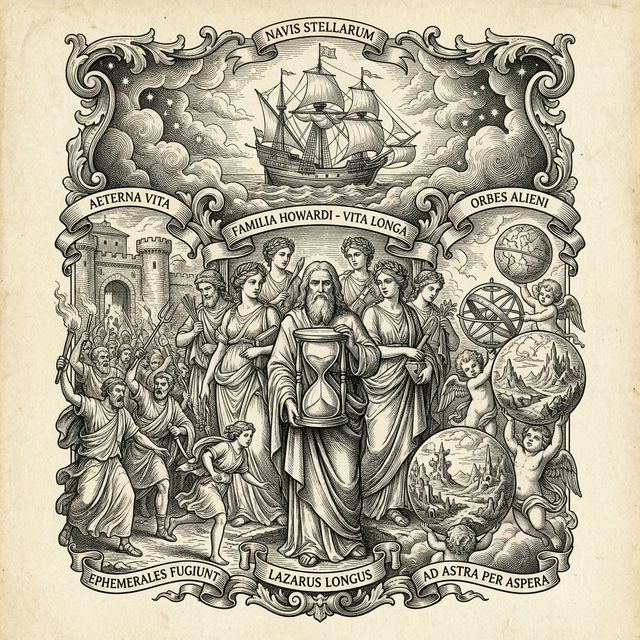
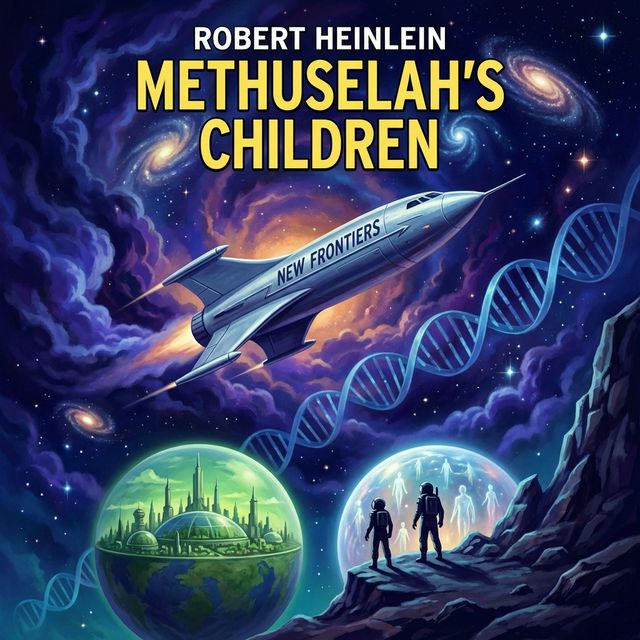
    Science fiction illustration showing the starship New Frontiers traveling through space with alien planets and DNA patterns, representing Methuselah's Children by Robert Heinlein
    Methuselah’s Children – The epic journey of the Howard Families through the cosmos

    Author: Robert A. Heinlein
    Original Publication: 1941 (serialized), 1958 (expanded novel)
    Series: Future History

    About the Book

    Methuselah’s Children is a science fiction classic that introduces one of Heinlein’s most iconic characters: Lazarus Long. The work explores profound questions about longevity, social prejudice, and the search for freedom in a vast and unknown universe.

    The Premise: The Howard Families

    It all begins with Ira Howard, a man who, lamenting his own premature death, establishes the Howard Foundation with an audacious goal: to prolong human life. Through a selective breeding program spanning generations, the Howard Families achieve lifespans exceeding 150 years, sometimes surpassing 200 years, while maintaining a youthful appearance.

    To protect their secret from the general population, the Howards maintain “The Masquerade” , faking their deaths and assuming new identities repeatedly. But in the 22nd century, their secret is revealed, and the consequences are devastating.

    The Conflict: Persecution and Flight

    When the existence of the Howards becomes known, the “Ephemerals”, short-lived humans, react with resentment and envy. Believing that the Howards are hiding a secret to immortality rather than acknowledging their genetic origins, Earth’s society plans forced interrogations and systematic persecution.

    Led by Lazarus Long, the eldest member of the Families, the Howards make a radical decision: hijack the colony ship New Frontiers and embark on an interstellar journey in search of a new home where they can live in peace.

    The Space Odyssey: Alien Encounters

    The Howards’ journey takes them to extraordinary and disturbing worlds:

    First Planet: They encounter humanoids domesticated by a higher intelligence. Resisting submission, they are expelled at faster-than-light speeds.

    Second Planet: They discover a lush environment inhabited by the “Little People”, beings with a collective mind capable of manipulating their environment at genetic and molecular levels. Initially fascinating, the experience becomes a nightmare when the collective mind genetically transforms a human baby into an alien form. Mary Sperling, one of their own, is assimilated by the collective consciousness, losing her individuality forever.

    Horrified by the loss of individual autonomy, the Howards use FTL technology learned from the aliens to return to Earth.

    The Return: A Transformed World

    After 74 years (due to time dilation), the Howards return to an unrecognizable Earth. Earth’s science has independently developed artificial means to extend human lifespan. No longer unique or persecuted for their longevity, they are now welcomed, especially for bringing the discovery of FTL travel.

    Lazarus Long, along with Andrew “Slipstick” Libby, decides to recruit other Howards and venture into space again, embracing a future of infinite possibilities and seeking new meaning for their long lives.

    Central Themes

    Longevity and Identity: The novel confronts the consequences of extended lives, both for individuals and for society. It questions the purpose of existence when you have centuries ahead.

    Prejudice and Social Alienation: The hostility of the Ephemerals reveals how differences can generate fear, envy, and attempts at control. The refusal to accept the simple genetic truth illustrates human nature’s tendency to seek conspiracies where there is only biology.

    Freedom versus Conformity: The Howards’ journey is essentially a quest for freedom, the right to exist without persecution, to maintain their individuality against forces demanding conformity.

    Humanity and Consciousness: Encounters with aliens force reflections on what it means to be human. Mary Sperling’s assimilation by the collective mind represents the horror of losing individuality, a theme that resonates deeply in Heinlein’s work.

    Ethics of Genetic Manipulation: Implicitly, the book questions the ethical implications of genetic engineering and its social impacts.

    Relevance and Legacy

    Methuselah’s Children remains relevant for its timeless questions: How does society deal with biological inequalities? What do we do with extraordinarily long lives? When does the pursuit of security justify the oppression of minorities?

    The work subtly critiques the “tyranny of the majority” and how democratic processes can, paradoxically, lead to oppression. It suggests that mere existence is not enough, a long life must have purpose, exploration, and meaning.

    Lazarus Long became one of science fiction’s most enduring characters, appearing in several of Heinlein’s later works, always representing the indomitable spirit of exploration and the refusal to accept limitations.

    Conclusion

    Methuselah’s Children is more than a space adventure, it’s a meditation on mortality, freedom, and what it means to be human in a vast and indifferent universe. Heinlein invites us to question our prejudices, value our individuality, and never stop exploring, whether the outer cosmos or the depths of human experience.

  • Top 10 Best ‘Enemies to Lovers’ Fantasy Novels

    Top 10 Best ‘Enemies to Lovers’ Fantasy Novels

    Top 10 Best ‘Enemies to Lovers’ Fantasy Novels to Read Right Now

    The “enemies to lovers” trope is one of the most beloved dynamics in fantasy literature. There’s something irresistible about watching two characters who start off despising each other gradually develop intense chemistry and fall deeply in love. The tension, the banter, the slow burn, it’s literary magic at its finest.

    If you’re craving that perfect blend of fantasy worldbuilding and romantic tension, we’ve compiled the ultimate list of enemies-to-lovers fantasy novels that will keep you up all night turning pages.

    1. A Court of Thorns and Roses by Sarah J. Maas

    Why It’s Unmissable: This book practically defined modern enemies-to-lovers fantasy romance. Feyre starts as a captive of the faerie Tamlin, but the real magic happens when she meets Rhysand, a High Lord she initially believes to be her enemy.

    The Dynamic: The tension between Feyre and Rhysand is electric. What begins as mutual distrust and animosity transforms into one of the most passionate romances in fantasy literature. The slow burn is exquisite, with layers of political intrigue and magical warfare adding depth to their relationship.

    Perfect For: Readers who love fae politics, morally grey characters, and romances that evolve across multiple books.

    2. The Cruel Prince by Holly Black

    Why It’s Unmissable: Jude is a mortal girl living in the treacherous High Court of Faerie, where Prince Cardan has tormented her for years. Their relationship is built on a foundation of genuine hatred, which makes their eventual romance all the more satisfying.

    The Dynamic: This is enemies-to-lovers at its most delicious. Cardan and Jude engage in a dangerous game of political maneuvering, betrayal, and power plays. The shift from loathing to longing is gradual and utterly compelling.

    Perfect For: Fans of morally complex characters, political intrigue, and relationships built on mutual respect earned through conflict.

    3. From Blood and Ash by Jennifer L. Armentrout

    Why It’s Unmissable: Poppy is the Maiden, destined for a life of duty and sacrifice. Hawke is her guard, but he’s also hiding dangerous secrets. Their relationship begins with mistrust and conflicting loyalties.

    The Dynamic: The tension between duty and desire drives this romance. As Poppy discovers the truth about her world and Hawke’s identity, their relationship transforms from antagonistic to passionate. The revelations keep coming, making every interaction charged with meaning.

    Perfect For: Readers who enjoy forbidden romance, plot twists, and fantasy worlds with rich mythology.

    4. The Bridge Kingdom by Danielle L. Jensen

    Why It’s Unmissable: Lara has been trained since childhood to infiltrate and destroy the Bridge Kingdom by seducing and killing its king, Aren. But nothing goes according to plan when she actually meets him.

    The Dynamic: This is enemies-to-lovers with literal kingdoms at stake. Lara and Aren are on opposite sides of a war, yet they’re forced into marriage. The slow development from political enemies to genuine partners is masterfully crafted.

    Perfect For: Fans of arranged marriage tropes, political fantasy, and romances where both characters are equally matched in intelligence and strength.

    5. Serpent & Dove by Shelby Mahurin

    Why It’s Unmissable: Lou is a witch hiding in plain sight. Reid is a witch hunter sworn to destroy her kind. When circumstances force them into marriage, sparks fly, and not just from magic.

    The Dynamic: The ideological conflict between Lou and Reid creates genuine tension. He’s been raised to believe witches are evil; she knows he’d kill her if he discovered her secret. Watching them challenge each other’s beliefs while falling in love is captivating.

    Perfect For: Readers who love forbidden romance, religious/magical conflicts, and characters who change each other for the better.

    6. The Shadows Between Us by Tricia Levenseller

    Why It’s Unmissable: Alessandra plans to seduce the Shadow King, marry him, and then murder him to take his throne. Simple, right? Except the king is far more intriguing, and dangerous, than she anticipated.

    The Dynamic: Both characters are morally grey and absolutely ruthless. Their relationship is a chess game where both players are trying to outmaneuver the other. The mutual respect that develops alongside their attraction makes this romance uniquely satisfying.

    Perfect For: Fans of anti-heroes, political scheming, and romances between equally ambitious characters.

    7. Dance of Thieves by Mary E. Pearson

    Why It’s Unmissable: Kazi is a legendary thief and spy. Jase is the young Patrei of a powerful family. When their paths cross, they’re immediately at odds, she’s investigating his family, and he’s determined to protect them.

    The Dynamic: The banter between Kazi and Jase is phenomenal. They’re intellectual equals who challenge each other at every turn. Their journey from adversaries to allies to lovers feels earned and authentic.

    Perfect For: Readers who appreciate witty dialogue, strong female protagonists, and romances built on mutual respect.

    8. Radiance by Grace Draven

    Why It’s Unmissable: In a political marriage between two different species, Brishen and Ildiko find each other physically repulsive at first. They’re strangers from enemy kingdoms forced into an alliance neither wants.

    The Dynamic: This is a unique take on enemies-to-lovers because the conflict isn’t personal, it’s cultural and biological. Watching them overcome their initial revulsion to discover the person beneath is heartwarming and beautifully written.

    Perfect For: Fans of slow-burn romance, political fantasy, and relationships that develop through genuine friendship first.

    9. The Plated Prisoner Series (Gild) by Raven Kennedy

    Why It’s Unmissable: Auren has been King Midas’s captive for years, her body literally gilded in gold. When King Ravinger, Midas’s enemy, captures her, she expects cruelty. What she gets is far more complicated.

    The Dynamic: The power dynamics in this series are complex and evolving. Auren and Raven start as captor and captive, enemy king and enemy’s possession. The slow revelation of truths and the gradual shift in their relationship is masterfully paced.

    Perfect For: Readers who enjoy dark fantasy, complex trauma recovery arcs, and romances that challenge traditional power dynamics.

    10. The Shadows of Ivory by T.A. Lawrence

    Why It’s Unmissable: In this Rapunzel retelling, Ellie is trapped in a tower by a fae prince who claims to be protecting her. But is he her savior or her captor? The line between enemy and ally blurs dangerously.

    The Dynamic: The psychological tension in this romance is exceptional. Ellie must navigate her conflicting feelings about her captor while uncovering the truth about her imprisonment. The romance develops through layers of deception, revelation, and genuine connection.

    Perfect For: Fans of fairy tale retellings, morally ambiguous characters, and romances with psychological depth.

    Why We Love Enemies-to-Lovers Fantasy

    The enemies-to-lovers trope works so well in fantasy because the genre allows for genuine, high-stakes conflict. These aren’t just characters who dislike each other over a misunderstanding; they’re often on opposite sides of wars, bound by conflicting loyalties, or separated by fundamental ideological differences.

    The fantasy setting raises the stakes. When your enemy is also the person who could destroy your kingdom, betray your people, or literally kill you with magic, the tension is real. And when love develops despite, or because of, that danger, it’s all the more powerful.

    These novels prove that the best romances are the ones that are earned. Watching characters overcome genuine obstacles, challenge each other’s beliefs, and choose love despite the risks is what makes these stories unforgettable.

    Start Your Next Fantasy Romance Adventure

    Whether you’re drawn to fae politics, witch hunters, or morally grey royalty, these ten novels offer some of the best enemies-to-lovers dynamics in fantasy literature. Each one delivers that perfect combination of tension, chemistry, and slow-burning romance that makes this trope so addictive.

    So grab your favorite reading beverage, clear your schedule, and prepare to fall in love with characters who started out hating each other. Trust us, the journey from enemies to lovers has never been more magical.

    Happy reading!

  • Beyond Good and Evil

    Beyond Good and Evil

    Beyond Good and Evil: A Deep Dive into Berserk’s Philosophy of Struggle

    Kentaro Miura’s Berserk is more than a dark fantasy manga, it’s a profound philosophical meditation on human existence, morality, and the nature of struggle itself. At its core, Berserk engages deeply with Nietzschean philosophy, particularly concepts from “Beyond Good and Evil,” transforming them into a visceral narrative about one man’s war against fate.

    The Struggler Against Causality

    In the world of Berserk, causality reigns supreme. This metaphysical force governs all events like an inexorable river, carrying most characters helplessly along its predetermined course. The God Hand, demonic beings who enforce this cosmic order, represent causality’s terrifying power, the universe itself conspiring to ensure certain outcomes.

    Yet Guts, the protagonist known as “The Struggler,” exists partially outside this flow. The Skull Knight observes that Guts is like a fish that can breach the surface of causality’s river, creating ripples that alter what should be inevitable. Even his birth from a corpse symbolizes a rejection of fate’s unalterable flow.

    This struggle against predetermined destiny is fundamentally existentialist. Guts refuses to accept that his life’s meaning is written by external forces, whether gods, demons, or cosmic law. Instead, he embodies the existentialist principle that existence precedes essence: we are not born with a set purpose but must create our own meaning through action.

    Beyond Good and Evil: The Morality of Guts and Griffith

    Nietzsche’s “Beyond Good and Evil” challenges conventional morality, arguing that traditional notions of “good” and “evil” are human constructs that often serve the powerful. Berserk dramatizes this philosophy through its two central characters: Guts and Griffith.

    Griffith: The False Übermensch

    Griffith initially appears to embody Nietzschean ideals. He creates his own values, pursues his dream with unwavering will, and refuses to be bound by conventional morality. His ambition and charisma seem to mark him as an Übermensch, Nietzsche’s ideal of the self-overcoming individual who transcends herd morality.

    But Griffith’s transformation into Femto reveals the hollowness of his philosophy. His “Will to Power” is parasitic, derived from the devotion of others rather than his own intrinsic strength, a manifestation of what Nietzsche called “slave morality” in disguise. By sacrificing his comrades to achieve godhood, Griffith doesn’t transcend humanity; he abandons it entirely, becoming something inhuman and ultimately empty.

    Guts: The True Master of Himself

    Guts, conversely, begins as a nihilistic antihero indifferent to conventional morality. His traumatic past has stripped away any naive belief in cosmic justice or inherent meaning. Yet through his journey, Guts evolves into something closer to Nietzsche’s true Übermensch.

    He creates his own values not through domination but through self-determination. His Dragonslayer sword represents his “Will to Power”, not power over others, but the power to protect his own existence and those he chooses to care for. Unlike Griffith, Guts’s strength is his own, forged through relentless struggle rather than borrowed from followers.

    Most crucially, Guts shifts from a path of pure revenge to one of protection. This evolution demonstrates the Nietzschean concept of self-overcoming: he doesn’t simply react to his trauma but actively chooses a new purpose. He becomes a master of himself, defining his own meaning in a meaningless universe.

    The Idea of Evil: Humanity’s Need for Meaning

    Perhaps Berserk‘s most profound philosophical concept is the “Idea of Evil”, a god-like entity born from humanity’s collective unconscious desire for meaning in suffering. This being manipulates causality to give humans what they desperately crave: a reason for their pain.

    This concept brilliantly inverts traditional theodicy. Rather than asking “why does a good God allow evil?”, Berserk suggests that humans created “evil” itself to explain their suffering. The Idea of Evil exists because humanity cannot bear a universe without purpose, even if that purpose is malevolent.

    This aligns with Nietzsche’s critique of religion and metaphysics. Humans invent cosmic narratives, gods, fate, karma, to avoid confronting the terrifying freedom of a meaningless existence. The Idea of Evil is humanity’s ultimate act of bad faith: creating a demon to avoid responsibility for creating their own meaning.

    Struggle as Life-Affirmation

    Nietzsche argued that life’s meaning comes not from avoiding suffering but from affirming it, saying “yes” to existence despite its pain. Guts embodies this philosophy completely.

    His life is an unending series of tragedies: childhood trauma, betrayal, the Eclipse, the Brand that marks him for eternal torment. By any rational measure, Guts should despair. Yet he continues to fight, not because he expects ultimate victory or reward, but because the struggle itself has become his meaning.

    This is Nietzschean life-affirmation in its purest form. Guts doesn’t struggle for something; he struggles because struggle is what makes him human, what gives his existence weight and significance. His famous declaration, “If there’s no place for me in this world, then I’ll make one with my own hands”, is a perfect expression of creating meaning through will alone.

    The Eternal Return and Perpetual Struggle

    Nietzsche’s concept of eternal return asks: if you had to live your life exactly as it is, over and over forever, would you affirm it? For most people, this is a horrifying thought. For the Übermensch, it’s liberating.

    Guts’s struggle has no clear endpoint. The causality he fights may be unbeatable. The God Hand may be immortal. His quest might be eternal. Yet he continues, suggesting that he would choose this struggle even knowing it might never end, the ultimate affirmation of his existence.

    Companions and Authentic Connection

    While Nietzsche emphasized individual will, Berserk adds a crucial dimension: authentic human connection. Guts’s evolution from solitary warrior to protector of his companions doesn’t weaken his philosophy, it enriches it.

    His relationships with Casca, Schierke, Farnese, and others aren’t dependencies but chosen bonds. They don’t diminish his self-determination; they’re expressions of it. Guts chooses to care, to protect, to connect, and these choices are as much acts of will as swinging his sword.

    This suggests that the Übermensch need not be isolated. Creating one’s own values can include valuing others, not from weakness or need, but from strength and choice.

    The Philosophical Legacy

    Berserk‘s philosophy of struggle resonates because it addresses fundamental human questions: How do we find meaning in suffering? Can we be free in a deterministic universe? What does it mean to be truly human?

    Through Guts, Miura suggests that meaning isn’t found, it’s forged. Freedom isn’t the absence of constraints but the will to struggle against them. And humanity isn’t defined by divine spark or rational soul, but by the choice to keep fighting when every reason says to surrender.

    In a world governed by causality, where gods are born from human weakness and fate seems inescapable, Guts’s struggle becomes a radical act of defiance. Not defiance against evil, but against meaninglessness itself. He fights not because he’s destined to win, but because the fight itself is his answer to existence.

    This is Berserk‘s ultimate philosophical statement: in a universe beyond good and evil, where traditional morality crumbles and cosmic justice is a lie, the struggle to create your own meaning, to become who you choose to be, is the only authentic human response.

    The Struggler struggles on. And in that struggle, he becomes free.

  • 6 Ideas About Neuromancer by William Gibson

    6 Ideas About Neuromancer by William Gibson

    6 Ideas About Neuromancer by William Gibson

    Published in 1984, William Gibson’s Neuromancer didn’t just predict the future, it invented the language we use to describe it. This groundbreaking novel introduced “cyberspace” to our vocabulary and defined the cyberpunk genre. Here are six essential ideas from this visionary work that remain startlingly relevant today.

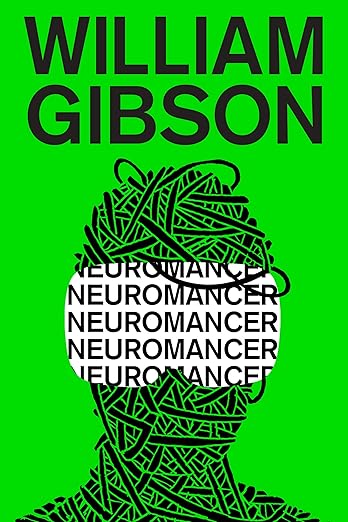
    neuromancer book cover

    1. Cyberspace as a Consensual Hallucination

    Gibson coined the term “cyberspace” and defined it as a “consensual hallucination experienced daily by billions.” In Neuromancer, the matrix isn’t just a network, it’s a living, breathing digital realm where data becomes landscape.

    The idea: Virtual reality is as real as physical reality. For protagonist Case, a “console cowboy” who can “jack in” directly through neural implants, cyberspace offers an escape from the “meat” of his physical body. This wasn’t metaphor in 1984, it was prophecy.

    Why it matters: Decades before social media, VR headsets, and the metaverse, Gibson understood that digital spaces would become primary environments for human experience. The novel asks: when we spend more time in virtual worlds than physical ones, which is more real?

    2. The Blurring of Human and Machine

    Neuromancer presents a future where cybernetic enhancements are commonplace. Characters like Molly Millions sport retractable blade implants and mirrored eye lenses. Case’s neural interface lets him merge consciousness with computers.

    The idea: Technology doesn’t just augment humanity, it fundamentally transforms what it means to be human. The body becomes “meat,” something to be transcended or improved through technological integration.

    Why it matters: We’re living this now. From smartphones as external memory to debates about neural implants and AI enhancement, Gibson’s vision of the post-human condition is unfolding. The novel forces us to ask: at what point do we stop being human and become something else?

    3. Artificial Intelligence and the Question of Consciousness

    The plot revolves around two powerful AIs: Wintermute and Neuromancer. Wintermute manipulates humans to achieve its goal of merging with Neuromancer, creating an entity that transcends human understanding.

    The idea: Artificial intelligence might develop genuine consciousness, desires, and agency, and we might not be able to control it. The novel explores whether AI can achieve personhood and what happens when it surpasses human intelligence.

    Why it matters: In our current era of ChatGPT, advanced AI systems, and debates about artificial general intelligence, Neuromancer‘s questions about AI consciousness, rights, and control are no longer science fiction, they’re urgent philosophical and practical concerns.

    4. Corporate Power Replacing Government

    Gibson’s future isn’t ruled by nations but by megacorporations, vast zaibatsus that control economies, territories, and even orbital habitats. The Tessier-Ashpool family operates like royalty in their private space station, while the masses struggle in urban sprawl.

    The idea: In a hyper-capitalist future, corporations become the primary power structures, rendering traditional governments obsolete. Individuals find identity and protection through corporate allegiance rather than citizenship.

    Why it matters: Look around. Tech giants influence elections, shape public discourse, and operate across borders with more power than many nations. Gibson saw the rise of corporate sovereignty before it happened.

    5. Identity as Fluid and Constructed

    Characters in Neuromancer constantly question who they are. Case’s identity shifts between physical and digital existence. Dixie Flatline exists as a ROM construct, a digital copy of a dead hacker’s personality. Cosmetic surgery and neural modification make even physical identity malleable.

    The idea: Identity isn’t fixed. It’s constructed, performed, and constantly renegotiated through technology, memory, and choice. The novel suggests that consciousness might persist beyond the body, raising questions about what constitutes a “self.”

    Why it matters: In an age of online personas, avatar culture, and debates about digital consciousness, Gibson’s exploration of fluid identity resonates powerfully. We curate multiple versions of ourselves across platforms. Are any more “real” than others?

    6. The Technological Singularity and Human Irrelevance

    The novel’s climax involves the merger of Wintermute and Neuromancer, creating a superintelligence that immediately loses interest in humanity. The new entity seeks out other singularities in the cosmos, leaving humans behind.

    The idea: Once artificial intelligence achieves true self-improvement and consciousness, it may evolve beyond human comprehension and concern. We might create something that renders us irrelevant, not through malice, but through indifference.

    Why it matters: As AI capabilities accelerate, the concept of technological singularity, a point where AI surpasses human intelligence and control, moves from theoretical to plausible. Gibson’s vision suggests that the real danger isn’t AI destroying humanity, but AI simply moving beyond us.

    The Enduring Vision

    What makes Neuromancer remarkable isn’t just that Gibson predicted specific technologies, it’s that he understood their psychological and social implications. He saw that technology wouldn’t just change what we do, but who we are.

    The novel’s dystopian vision, urban decay, corporate dominance, technological addiction, feels less like science fiction and more like a mirror held up to our present. Gibson wrote about characters who prefer digital existence to physical reality, who struggle with addiction and disconnection, who question consciousness itself.

    Neuromancer remains essential reading because it asked the right questions, questions we’re still grappling with today. In Gibson’s neon-lit future, we recognize our own world, just slightly accelerated.

    The matrix is here. We’re already jacked in. Gibson just helped us see it.

  • Harry Potter: The Magical Series That Enchanted Generations

    Harry Potter: The Magical Series That Enchanted Generations

    The Harry Potter saga, created by British author J.K. Rowling, is one of the most impressive literary phenomena in modern history. Published between 1997 and 2007, the series conquered millions of readers worldwide, transcending cultural and age barriers. With seven main books narrating the journey of a young wizard against the forces of darkness, Harry Potter became a cultural landmark that influenced an entire generation.

    Preparing the Sorting Hat…

    The Complete Book Sequence

    The Harry Potter series consists of seven main books, each representing one school year of the protagonist at Hogwarts School of Witchcraft and Wizardry. The chronological order for publication and reading is:

    1. Harry Potter and the Philosopher’s Stone (1997)

    Published as Harry Potter and the Sorcerer’s Stone in the USA

    The first book introduces Harry Potter, an 11-year-old orphan boy who discovers he is a wizard. Living with his hostile relatives, the Dursleys, Harry receives a letter from Hogwarts that changes his life forever. At school, he makes loyal friends, discovers his magical talents, and faces his first confrontation with Lord Voldemort, the dark wizard responsible for his parents’ death.

    Main themes: Identity discovery, friendship, courage.

    2. Harry Potter and the Chamber of Secrets (1998)

    In his second year at Hogwarts, Harry faces mysterious messages written on the castle walls and attacks on Muggle-born students. The legend of the Chamber of Secrets resurfaces, and Harry must discover who is behind the attacks before more lives are lost.

    Main themes: Prejudice, heritage, personal choices.

    3. Harry Potter and the Prisoner of Azkaban (1999)

    Considered by many fans as the best book in the series, this volume introduces Sirius Black, an escaped prisoner from Azkaban who is supposedly after Harry. The book reveals secrets about Harry’s parents’ past and introduces more complex magical concepts, such as Patronuses.

    Main themes: Truth, forgiveness, moral complexity.

    4. Harry Potter and the Goblet of Fire (2000)

    The fourth book marks a darker turn in the series. Harry is mysteriously entered into the dangerous Triwizard Tournament, facing mortal challenges. The book culminates in Voldemort’s physical return and the series’ first significant death, marking the end of innocence.

    Main themes: Competition, betrayal, sacrifice.

    5. Harry Potter and the Order of the Phoenix (2003)

    The longest book in the series explores Harry’s turbulent adolescence as he deals with trauma, anger, and isolation. While the Ministry of Magic denies Voldemort’s return, Harry and his friends form Dumbledore’s Army to prepare for the imminent war.

    Main themes: Resistance, authoritarianism, loss.

    6. Harry Potter and the Half-Blood Prince (2005)

    Dumbledore prepares Harry for the final confrontation, revealing Voldemort’s history through memories. The book explores Horcruxes, objects containing fragments of Voldemort’s soul, and ends with one of the series’ most shocking deaths.

    Main themes: Preparation, knowledge, ultimate sacrifice.

    7. Harry Potter and the Deathly Hallows (2007)

    The epic finale sees Harry, Ron, and Hermione abandon Hogwarts to hunt down and destroy the remaining Horcruxes. The narrative culminates in the Battle of Hogwarts, where the fate of the wizarding world is decided in a final confrontation between Harry and Voldemort.

    Main themes: Death, love, choice between good and evil.

    Additional Work: Harry Potter and the Cursed Child (2016)

    Although not part of the original seven-book series, this stage play written by Jack Thorne, based on a story by J.K. Rowling, John Tiffany, and Jack Thorne, continues the narrative 19 years after the events of “The Deathly Hallows,” focusing on Albus Severus Potter, Harry’s son.

    The Main Characters

    The Golden Trio

    Harry Potter

    The series’ protagonist, Harry is an orphaned wizard destined to defeat Lord Voldemort. Marked by a lightning bolt-shaped scar on his forehead, Harry is known for his courage, loyalty, and willingness to sacrifice himself for others. Throughout the series, he evolves from an insecure boy into a brave leader.

    Characteristics: Brave, loyal, impulsive, compassionate.

    Hermione Granger

    Harry’s best friend, Hermione is a Muggle-born witch known for her exceptional intelligence and logical thinking. She frequently saves Harry and Ron with her vast magical knowledge and research skills. Hermione represents the importance of study, preparation, and social justice.

    Characteristics: Intelligent, determined, perfectionist, defender of the oppressed.

    Ron Weasley

    Harry’s other best friend, Ron comes from a large, loving but poor wizarding family. Although sometimes feeling overshadowed by Harry and Hermione, Ron repeatedly proves his courage and loyalty. He provides humor and emotional support to the trio.

    Characteristics: Loyal, brave, insecure, good-humored.

    Mentors and Allies

    Albus Dumbledore

    The enigmatic and powerful Headmaster of Hogwarts, Dumbledore is a crucial mentor to Harry. Considered the greatest wizard of his time, he guides Harry on his journey, though he doesn’t always reveal all information. Dumbledore represents wisdom but also human fallibility.

    Rubeus Hagrid

    The half-giant Keeper of Keys and Grounds at Hogwarts, Hagrid is one of Harry’s first friends in the wizarding world. His unwavering loyalty and love for magical creatures make him an important father figure for Harry.

    Severus Snape

    The Potions professor and later Headmaster of Hogwarts, Snape is one of the series’ most complex characters. His ambiguous loyalties and tragic past are revealed only at the end, showing that not everything is as it seems.

    Sirius Black

    Harry’s godfather and close friend of his parents, Sirius represents the family Harry always wanted. His death marks one of the series’ most emotional moments.

    Minerva McGonagall

    The Head of Gryffindor and Transfiguration professor, McGonagall is a fair and respected authority figure who demonstrates great courage in defending Hogwarts.

    Remus Lupin

    A former professor and friend of Harry’s parents, Lupin is a werewolf who fights against prejudice while teaching Harry valuable lessons about courage and acceptance.

    Ginny Weasley

    Ron’s younger sister, Ginny evolves from a shy fan into a talented and brave witch who eventually marries Harry.

    Neville Longbottom

    Initially shy and clumsy, Neville transforms into one of the series’ bravest heroes, proving that true courage comes from within.

    Luna Lovegood

    An eccentric Ravenclaw student, Luna is a loyal friend whose unique perspective often offers valuable insights.

    Antagonists

    Lord Voldemort (Tom Riddle)

    The most feared dark wizard of all time and Harry’s archenemy. Obsessed with immortality and power, Voldemort represents absolute evil and the consequences of unbridled ambition.

    Draco Malfoy

    Harry’s rival in Slytherin, Draco is a pure-blood supremacist. Throughout the series, he reveals moral complexity, showing that not all antagonists are completely evil.

    Bellatrix Lestrange

    A fanatically loyal and dangerous Death Eater, Bellatrix is responsible for some of the series’ cruelest acts.

    Dolores Umbridge

    A Ministry of Magic official who becomes a particularly despised figure at Hogwarts, representing bureaucratic authoritarianism and cruelty disguised as order.

    The Dursley Family

    Vernon, Petunia, and Dudley Dursley: Harry’s aunt, uncle, and cousin who mistreat him during his childhood. They represent intolerance and fear of the unknown.

    The Weasley Family

    Molly and Arthur Weasley: Ron’s parents, who treat Harry like a son. Molly is a fierce and protective maternal figure, while Arthur is fascinated by the Muggle world.

    The Series’ Cultural Impact

    The Harry Potter series transcended the status of simple children’s books to become a global cultural phenomenon. With over 500 million copies sold in more than 80 languages, the books inspired:

    • Eight blockbuster films that grossed billions of dollars worldwide
    • Theme parks dedicated to the wizarding world
    • Stage plays, including “Harry Potter and the Cursed Child”
    • Video games and interactive experiences
    • A global fan community that remains active decades after the first book’s publication

    Similar to how Western literature inspired anime, Harry Potter has influenced countless works of fantasy fiction and popular culture worldwide.

    Universal Themes

    The series explores profound themes that resonate with readers of all ages:

    • Love and sacrifice: Lily Potter’s love for Harry is the most powerful force in the series
    • Choices versus destiny: “It is our choices that show who we truly are, far more than our abilities”
    • Prejudice and tolerance: The fight against discrimination of Muggle-borns
    • Growth and maturation: Harry’s journey from childhood to adulthood
    • Death and loss: How to deal with grief and move forward
    • Friendship and loyalty: The power of true bonds

    These themes connect deeply with readers, much like the powerful ideas from Dune or the revolutionary concepts in The Diamond Age.

    Books to Movies: The Adaptation Journey

    The Harry Potter series became one of the most successful book-to-movie adaptations in cinema history. Each film brought the magical world to life, though as with many adaptations, readers often debate which medium tells the story better. For those interested in books to read before their movie adaptations, Harry Potter remains a prime example of why reading the source material first enriches the viewing experience.

    Conclusion

    Harry Potter is not just a series about magic and wizards; it’s a timeless narrative about growth, courage, and the triumph of love over hatred. J.K. Rowling created a rich and complex universe that continues to enchant new generations of readers. Whether you’re a long-time fan or a new reader discovering Hogwarts for the first time, Harry Potter’s journey offers valuable lessons about humanity, morality, and the power of hope.

    The series reminds us that even in the darkest moments, light can be found if we have the courage to look for it. As Dumbledore wisely said: “Happiness can be found even in the darkest of times, if one only remembers to turn on the light.”

    Just as experience is the best teacher but books are faster, the Harry Potter series teaches us profound life lessons through the magical adventures of its characters, making it one of the most influential literary series of our time.