Tag: Strategy

  • Don Corleone’s Management Style

    Don Corleone’s Management Style

    Don Corleone’s Management Style: Loyalty, Family, and Business

    If you strip away the organized crime, the violence, and the illegal rackets from Mario Puzo’s [The Godfather](https://en.wikipedia.org/wiki/The_Godfather_(novel)) what you are left with is one of the greatest textbooks on corporate management ever written.

    I recently decided to reread the novel and rewatch the films through the lens of a startup founder. I was blown away by Vito Corleone’s deep, psychological understanding of how to build and maintain a resilient organization. The stakes in his business aren’t quarterly profits; they are life and death. Because of that extreme pressure, his management tactics are stripped of all corporate fluff.

    Here are the most powerful leadership lessons I learned from Don Corleone’s management style, and how I actively try to apply them to my own career today.


    What I Learned About Sincere vs. Transactional Loyalty

    Modern companies try to buy loyalty with ping-pong tables, Friday pizza, and stock options. But the moment a competitor offers a 15% raise, those employees leave. That is transactional loyalty.

    Vito Corleone builds indebted loyalty. In the brilliant opening scene, the undertaker Bonasera tries to pay the Don to hurt the men who assaulted his daughter. Vito refuses the cash. By refusing the money, Vito upgrades the interaction from a cheap transaction to a massive, lifelong favor built on “friendship.” He solves his follower’s most terrifying personal problems, securing an allegiance that outlasts money.

    The Importance of the Inner Circle

    I also learned that trust scales far better than competence. When building his executive team, Vito doesn’t just hire the smartest people. He elevates Tom Hagen, his adopted, non-Italian son, to Consigliere (chief advisor) purely because Hagen’s loyalty is absolute and unquestionable. A brilliant but selfish employee will destroy a company from within. A slightly less talented but fiercely loyal operator is infinitely more valuable.

    Protecting the Core Business Model

    The entire war in The Godfather begins because Vito refuses to enter the highly lucrative drug trade proposed by Sollozzo. Vito argues that his current businesses (gambling and unions) are tolerated by his political allies, while drugs would draw federal heat and destroy his core infrastructure. He had the immense discipline to say “no” to massive, immediate revenue because he recognized it was fundamentally toxic to the long-term survival of his empire.


    How I Apply the Corleone Playbook Today

    1. Investing in Personal Loyalty, Not Just Perks

    I stopped looking at professional relationships as purely transactional. When someone I work with is going through a personal crisis, a health issue, or a career slump, I try to step in and help with zero expectation of an immediate return. When you help someone when they have absolutely nothing to offer you, you build an unbreakable foundation. True networking isn’t handing out business cards; it’s solving hard problems for people when they are vulnerable.

    2. Rejecting “Toxic Revenue”

    In my own projects, I am constantly tempted by fast money, taking on a bad client who pays well, or pivoting a product to chase a desperate trend. Remembering Vito’s refusal of the Sollozzo deal serves as my anchor. I now audit every new opportunity by asking: “Does the short-term profit of this deal threaten the long-term integrity of my core business?” If the answer is yes, I walk away.

    3. Separating Ego from Strategy

    When Vito is nearly assassinated, his first move upon waking up is not blind, raging revenge. He makes a temporary, painful peace with his enemies to buy time to bring his son Michael home safely. He swallowed his pride for the survival of the organization.

    I actively practice this. When I receive a harsh critique or someone attempts to undercut me professionally, I force myself to detach my ego. Revenge is expensive. Strategy is profitable. If a decision feels emotionally satisfying, it is probably a bad business move. 


    Conclusion

    We shouldn’t emulate the violence of the Corleone family, but ignoring their organizational genius is a mistake. Don Corleone proves that a successful empire is built on fiercely protected relationships, strict emotional discipline, and the foresight to plan for the future.

    The next time you are evaluating your team, your vendors, or your own leadership style, ask yourself: are you building transactional contracts, or are you building a family?

    Summary

    Don Corleone’s approach to management highlights the critical difference between transactional employees and a universally loyal team. By solving genuine problems for your network, rejecting toxic “fast money,” and prioritizing absolute trust over raw talent, you can build a resilient, long-lasting career and enterprise.

  • The Genghis Khan Mindset

    The Genghis Khan Mindset

    The Genghis Khan Mindset: 5 Ruthless Strategies for Modern Success

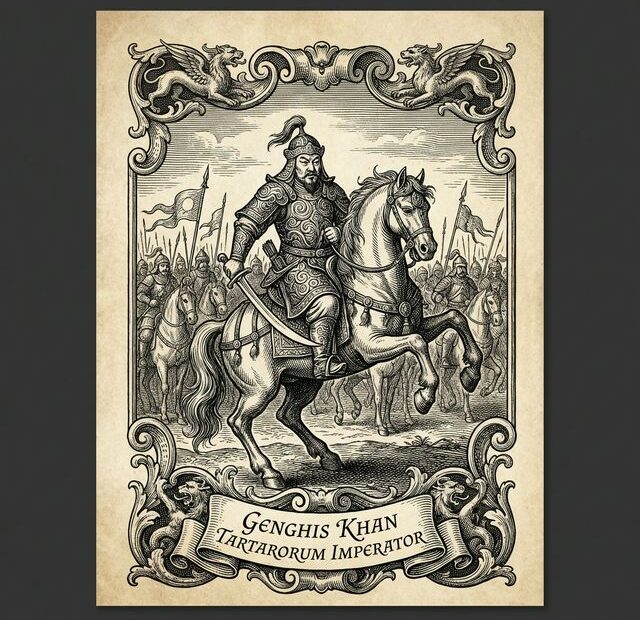
    When we think of Genghis Khan, the image that usually comes to mind is that of a ruthless barbarian leaving a trail of destruction in his wake. However, this is a simplistic and incomplete view. Behind the sword was a brilliant strategic mind that unified warring tribes and created the largest contiguous empire in human history. The “Genghis Khan Mindset” is not about violence, but about ruthless efficiency, adaptation, and long-term vision.

    For the modern entrepreneur or leader, the lessons left by the Great Khan are surprisingly current. He didn’t inherit an empire; he built it from scratch, overcoming adversities that would break most people. Here are five essential strategies we can extract from his life and apply to the pursuit of success today.

    1. Radical Meritocracy over Aristocracy

    Value Competence, Not Blood

    Unlike the feudal armies of Europe or China, where position was determined by birth, the Mongol army operated under a strict meritocracy. Genghis Khan promoted generals based solely on skill and loyalty, often elevating men from humble backgrounds or even former enemies who demonstrated value.

    The Modern Lesson

    In the corporate world and in business, results must speak louder than titles or connections. Build a team where the best ideas win, regardless of who proposed them. A culture that rewards real performance creates a high-performance environment impossible to replicate by organizations stuck in rigid hierarchies and nepotism.

    2. Adaptation and Technological Adoption

    Learn from the Enemy

    The Mongols were originally steppe warriors, masters of cavalry and archery, but ignorant of siege warfare. When they encountered the fortified cities of China and Persia, they didn’t give up. Instead, they captured Chinese and Muslim engineers and learned to build catapults and use gunpowder. They turned the enemy’s technology into their own advantage.

    The Modern Lesson

    Don’t stick to “how we’ve always done things”. The market changes fast. If a competitor has superior technology or processes, don’t ignore it out of pride; study it, adapt it, and improve it. The ability to pivot and integrate new tools (like AI nowadays) is what separates empires that grow from those that fall.

    3. Unwavering Loyalty and Iron Discipline

    The Power of Unity

    The greatest crime in the Mongol army was not defeat, but betrayal and abandoning one’s companions. Genghis Khan instilled a sense of loyalty so deep that his units fought as a single organism. Discipline wasn’t just about following orders, but about protecting the integrity of the group.

    The Modern Lesson

    Organizational culture is your greatest defense. A team united by shared values and mutual loyalty will outperform a group of individualist “stars” any day. Invest in building trust. When your team knows you “have their back”, they will fight your battles with the same intensity as you do.

    4. Information Warfare and Psychology

    Win Before the Battle Begins

    Before invading a territory, Genghis Khan sent spies (merchants, travelers) to map routes, understand local politics, and spread terrifying rumors about the size and ferocity of his army. Many cities surrendered before even seeing a Mongol soldier, defeated by fear and reputation.

    The Modern Lesson

    Information is power. Know your market, your customers, and your competitors better than they know themselves. Use marketing and branding to position your brand dominantly in the consumer’s mind before the “sale” even happens. The perception of authority and inevitability can open doors that brute force could not.

    5. Long-Term Vision and Legacy

    Planting Trees You Won’t See

    Genghis Khan didn’t fight just for immediate riches; he had a vision of a “universal peace” under the eternal sky (which would become the Pax Mongolica, allowing safe trade along the Silk Road). He established laws (the Yassa) and writing systems that ensured his empire would survive and prosper long after his death.

    The Modern Lesson

    Don’t just build for the next quarter. Ask yourself: “What am I building that will last 10, 50 years?”. True success is creating systems and values that transcend your physical presence. Whether in investments or brand building, long-term thinking is the ultimate competitive advantage in an immediate world.

    Frequently Asked Questions (FAQ)

    Wasn’t Genghis Khan a cruel tyrant?
    Yes, his conquests were bloody. However, the “Mindset” here focuses on strategies of efficiency and leadership. We can learn from the strategic effectiveness of historical figures without endorsing their moral actions. Separating technique from morality is crucial for objective historical study.

    How to apply “siege warfare” to small businesses?
    Think of “besieging” a market niche. Instead of attacking the market leader head-on, dominate distribution channels, build barriers to entry, and isolate the customer’s problem until your solution is the only viable one.

    What was the Pax Mongolica?
    It was a period of relative peace and stability that followed the Mongol conquests, where trade, technologies, and ideas (such as printing and gunpowder) flowed freely between East and West, facilitating the beginning of the Renaissance.

    What is the best book to learn more?
    We strongly recommend “Genghis Khan and the Making of the Modern World” by Jack Weatherford, which deconstructs myths and focuses on the administrative and cultural genius of the Mongols.

    Think Big

    Genghis Khan’s legacy teaches us that success depends not only on brute force but on intelligence, adaptability, and unity. In a volatile modern world, adopting this mindset of continuous learning, meritocracy, and strategic vision can be the difference between being conquered by circumstances or leading your own destiny. Be ruthless in the pursuit of excellence, but wise enough to always adapt.


    Did you like this applied historical analysis? Check out our other articles on great strategy books.