Tag: Management

  • Don Corleone’s Management Style

    Don Corleone’s Management Style

    Don Corleone’s Management Style: Loyalty, Family, and Business

    If you strip away the organized crime, the violence, and the illegal rackets from Mario Puzo’s [The Godfather](https://en.wikipedia.org/wiki/The_Godfather_(novel)) what you are left with is one of the greatest textbooks on corporate management ever written.

    I recently decided to reread the novel and rewatch the films through the lens of a startup founder. I was blown away by Vito Corleone’s deep, psychological understanding of how to build and maintain a resilient organization. The stakes in his business aren’t quarterly profits; they are life and death. Because of that extreme pressure, his management tactics are stripped of all corporate fluff.

    Here are the most powerful leadership lessons I learned from Don Corleone’s management style, and how I actively try to apply them to my own career today.


    What I Learned About Sincere vs. Transactional Loyalty

    Modern companies try to buy loyalty with ping-pong tables, Friday pizza, and stock options. But the moment a competitor offers a 15% raise, those employees leave. That is transactional loyalty.

    Vito Corleone builds indebted loyalty. In the brilliant opening scene, the undertaker Bonasera tries to pay the Don to hurt the men who assaulted his daughter. Vito refuses the cash. By refusing the money, Vito upgrades the interaction from a cheap transaction to a massive, lifelong favor built on “friendship.” He solves his follower’s most terrifying personal problems, securing an allegiance that outlasts money.

    The Importance of the Inner Circle

    I also learned that trust scales far better than competence. When building his executive team, Vito doesn’t just hire the smartest people. He elevates Tom Hagen, his adopted, non-Italian son, to Consigliere (chief advisor) purely because Hagen’s loyalty is absolute and unquestionable. A brilliant but selfish employee will destroy a company from within. A slightly less talented but fiercely loyal operator is infinitely more valuable.

    Protecting the Core Business Model

    The entire war in The Godfather begins because Vito refuses to enter the highly lucrative drug trade proposed by Sollozzo. Vito argues that his current businesses (gambling and unions) are tolerated by his political allies, while drugs would draw federal heat and destroy his core infrastructure. He had the immense discipline to say “no” to massive, immediate revenue because he recognized it was fundamentally toxic to the long-term survival of his empire.


    How I Apply the Corleone Playbook Today

    1. Investing in Personal Loyalty, Not Just Perks

    I stopped looking at professional relationships as purely transactional. When someone I work with is going through a personal crisis, a health issue, or a career slump, I try to step in and help with zero expectation of an immediate return. When you help someone when they have absolutely nothing to offer you, you build an unbreakable foundation. True networking isn’t handing out business cards; it’s solving hard problems for people when they are vulnerable.

    2. Rejecting “Toxic Revenue”

    In my own projects, I am constantly tempted by fast money, taking on a bad client who pays well, or pivoting a product to chase a desperate trend. Remembering Vito’s refusal of the Sollozzo deal serves as my anchor. I now audit every new opportunity by asking: “Does the short-term profit of this deal threaten the long-term integrity of my core business?” If the answer is yes, I walk away.

    3. Separating Ego from Strategy

    When Vito is nearly assassinated, his first move upon waking up is not blind, raging revenge. He makes a temporary, painful peace with his enemies to buy time to bring his son Michael home safely. He swallowed his pride for the survival of the organization.

    I actively practice this. When I receive a harsh critique or someone attempts to undercut me professionally, I force myself to detach my ego. Revenge is expensive. Strategy is profitable. If a decision feels emotionally satisfying, it is probably a bad business move. 


    Conclusion

    We shouldn’t emulate the violence of the Corleone family, but ignoring their organizational genius is a mistake. Don Corleone proves that a successful empire is built on fiercely protected relationships, strict emotional discipline, and the foresight to plan for the future.

    The next time you are evaluating your team, your vendors, or your own leadership style, ask yourself: are you building transactional contracts, or are you building a family?

    Summary

    Don Corleone’s approach to management highlights the critical difference between transactional employees and a universally loyal team. By solving genuine problems for your network, rejecting toxic “fast money,” and prioritizing absolute trust over raw talent, you can build a resilient, long-lasting career and enterprise.

  • Silence as Power

    Silence as Power

    Silence as Power: Leadership Lessons from The Godfather

    I recently rewatched Francis Ford Coppola’s [The Godfather](https://en.wikipedia.org/wiki/The_Godfather), and something struck me that I completely missed when I originally saw it as a teenager.

    When you are young, you watch mafia movies for the shootouts, the tension, and the bravado. But watching it now as a professional navigating corporate environments, I realized the movie isn’t really about crime. It is a masterclass in behavioral psychology. And the most powerful tool demonstrated by Vito and Michael Corleone isn’t a gun. It is silence.

    Here is what I learned about the strategic use of silence from the Corleone family, and exactly how I have started applying it to my own life.


    What I Learned About the Economy of Words

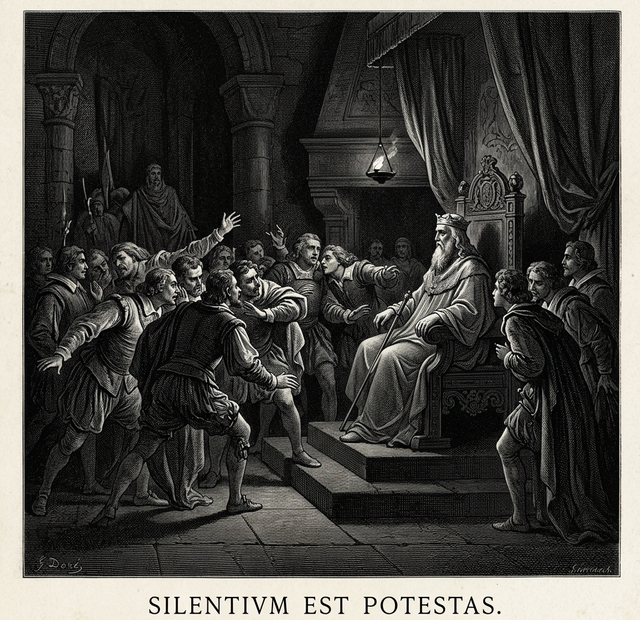
    In modern corporate culture, we are taught to “hustle.” We are told to dominate the room, pitch aggressively, interrupt, and constantly “add value” to meetings by talking. But if you observe the power dynamic in The Godfather, the most powerful characters speak the least.

    Look at Sonny Corleone. He is volatile, loud, and constantly broadcasting his thoughts. His inability to stay quiet gets him killed. Vito Corleone, by contrast, treats words like a finite, highly valuable currency. He barely whispers. He limits his gestures. When you speak rarely, people are conditioned to lean in and listen closely when you finally do.

    The Vacuum Effect

    The most fascinating negotiation tactic I learned from the film is the ‘uncomfortable pause’. When Vito is presented with a threat or an offer, he doesn’t react immediately. He just stares.

    Human beings absolutely hate conversational vacuums. We feel a deep, anxious need to fill the silence. What I noticed is that when Vito stays quiet, his opponents get nervous. They start talking to fill the void, and in doing so, they negotiate against themselves. They reveal their true anxieties or offer concessions Vito never even asked for.


    How I Apply the “Corleone Silence” in My Life

    I used to be the person who jumped into every pause in a meeting. If silence fell, I scrambled to say something smart. After studying the Corleones, I forced myself to implement a new operating system for communication.

    1. The Three-Second Rule in Meetings

    When someone finishes making a point or pitching an idea to me, I now actively count to three in my head before I respond. I don’t nod enthusiastically; I just maintain eye contact.

    The results have been staggering. Usually, by the time I hit “two,” the other person starts talking again. “Well, the price is $500… but we could probably do $450 if you sign today.” I have literally saved money and gained leverage simply by keeping my mouth shut.

    2. Emotional Flatlining in Conflict

    Sonny lost his life because he let his rage become public. Whenever I receive a frustrating email or someone challenges a project aggressively, my instinct is to fire off a defensive reply immediately. Instead, I channel the stoic silence of Michael Corleone at the climax of the film.

    I draft the angry reply, and then I delete it. I let 24 hours of total silence pass. The absence of my reaction usually terrifies the antagonistic party more than any yelling could. It forces them to wonder what my strategy is, giving me total control of the pacing.

    3. Listening for the “Unsaid”

    Vito Corleone was a master at listening. When Sollozzo pitched him the drug business, Vito wasn’t arguing the margins; he was listening to the subtext. He realized Sollozzo desperately needed the politician connections he lacked.

    I now go into business meetings with the goal of talking 20% of the time and listening 80% of the time. I actively try to decipher the subtext of the conversation, what the client is terrified to admit, or the budget constraint they are trying to hide.


    Conclusion

    You don’t need to be a mafia boss to wield the tactical power of silence. The next time you are in a high-stakes negotiation, a job interview, or even a tense family argument, resist the urge to dominate with volume.

    Drop your ego. Let the silence hang in the air. Watch how the room shifts to orbit around your gravity.

    Summary

    The Godfather proves that the most powerful person in the room is rarely the loudest. By using tactical silence, the “Three-Second Rule”, and emotional restraint, you can force opponents to reveal their hands, maintain leverage in negotiations, and project absolute authority without raising your voice.

    Explore More: