Tag: Leadership

  • Don Corleone’s Management Style

    Don Corleone’s Management Style

    Don Corleone’s Management Style: Loyalty, Family, and Business

    If you strip away the organized crime, the violence, and the illegal rackets from Mario Puzo’s [The Godfather](https://en.wikipedia.org/wiki/The_Godfather_(novel)) what you are left with is one of the greatest textbooks on corporate management ever written.

    I recently decided to reread the novel and rewatch the films through the lens of a startup founder. I was blown away by Vito Corleone’s deep, psychological understanding of how to build and maintain a resilient organization. The stakes in his business aren’t quarterly profits; they are life and death. Because of that extreme pressure, his management tactics are stripped of all corporate fluff.

    Here are the most powerful leadership lessons I learned from Don Corleone’s management style, and how I actively try to apply them to my own career today.


    What I Learned About Sincere vs. Transactional Loyalty

    Modern companies try to buy loyalty with ping-pong tables, Friday pizza, and stock options. But the moment a competitor offers a 15% raise, those employees leave. That is transactional loyalty.

    Vito Corleone builds indebted loyalty. In the brilliant opening scene, the undertaker Bonasera tries to pay the Don to hurt the men who assaulted his daughter. Vito refuses the cash. By refusing the money, Vito upgrades the interaction from a cheap transaction to a massive, lifelong favor built on “friendship.” He solves his follower’s most terrifying personal problems, securing an allegiance that outlasts money.

    The Importance of the Inner Circle

    I also learned that trust scales far better than competence. When building his executive team, Vito doesn’t just hire the smartest people. He elevates Tom Hagen, his adopted, non-Italian son, to Consigliere (chief advisor) purely because Hagen’s loyalty is absolute and unquestionable. A brilliant but selfish employee will destroy a company from within. A slightly less talented but fiercely loyal operator is infinitely more valuable.

    Protecting the Core Business Model

    The entire war in The Godfather begins because Vito refuses to enter the highly lucrative drug trade proposed by Sollozzo. Vito argues that his current businesses (gambling and unions) are tolerated by his political allies, while drugs would draw federal heat and destroy his core infrastructure. He had the immense discipline to say “no” to massive, immediate revenue because he recognized it was fundamentally toxic to the long-term survival of his empire.


    How I Apply the Corleone Playbook Today

    1. Investing in Personal Loyalty, Not Just Perks

    I stopped looking at professional relationships as purely transactional. When someone I work with is going through a personal crisis, a health issue, or a career slump, I try to step in and help with zero expectation of an immediate return. When you help someone when they have absolutely nothing to offer you, you build an unbreakable foundation. True networking isn’t handing out business cards; it’s solving hard problems for people when they are vulnerable.

    2. Rejecting “Toxic Revenue”

    In my own projects, I am constantly tempted by fast money, taking on a bad client who pays well, or pivoting a product to chase a desperate trend. Remembering Vito’s refusal of the Sollozzo deal serves as my anchor. I now audit every new opportunity by asking: “Does the short-term profit of this deal threaten the long-term integrity of my core business?” If the answer is yes, I walk away.

    3. Separating Ego from Strategy

    When Vito is nearly assassinated, his first move upon waking up is not blind, raging revenge. He makes a temporary, painful peace with his enemies to buy time to bring his son Michael home safely. He swallowed his pride for the survival of the organization.

    I actively practice this. When I receive a harsh critique or someone attempts to undercut me professionally, I force myself to detach my ego. Revenge is expensive. Strategy is profitable. If a decision feels emotionally satisfying, it is probably a bad business move. 


    Conclusion

    We shouldn’t emulate the violence of the Corleone family, but ignoring their organizational genius is a mistake. Don Corleone proves that a successful empire is built on fiercely protected relationships, strict emotional discipline, and the foresight to plan for the future.

    The next time you are evaluating your team, your vendors, or your own leadership style, ask yourself: are you building transactional contracts, or are you building a family?

    Summary

    Don Corleone’s approach to management highlights the critical difference between transactional employees and a universally loyal team. By solving genuine problems for your network, rejecting toxic “fast money,” and prioritizing absolute trust over raw talent, you can build a resilient, long-lasting career and enterprise.

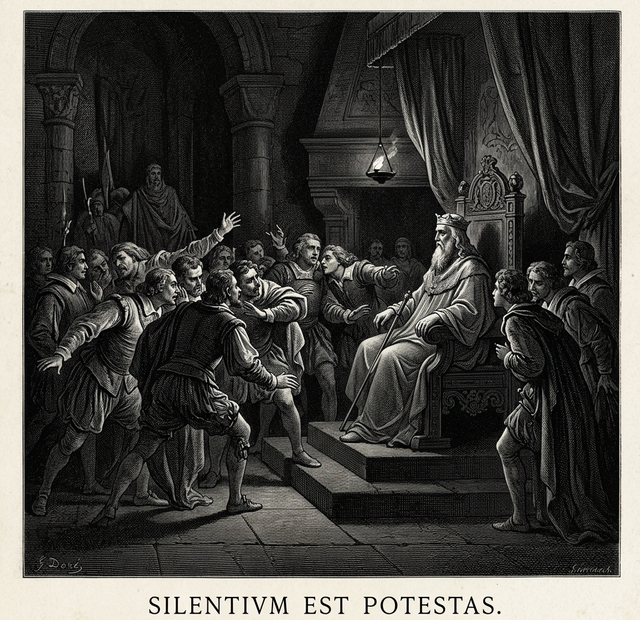
  • Silence as Power

    Silence as Power

    Silence as Power: Leadership Lessons from The Godfather

    I recently rewatched Francis Ford Coppola’s [The Godfather](https://en.wikipedia.org/wiki/The_Godfather), and something struck me that I completely missed when I originally saw it as a teenager.

    When you are young, you watch mafia movies for the shootouts, the tension, and the bravado. But watching it now as a professional navigating corporate environments, I realized the movie isn’t really about crime. It is a masterclass in behavioral psychology. And the most powerful tool demonstrated by Vito and Michael Corleone isn’t a gun. It is silence.

    Here is what I learned about the strategic use of silence from the Corleone family, and exactly how I have started applying it to my own life.


    What I Learned About the Economy of Words

    In modern corporate culture, we are taught to “hustle.” We are told to dominate the room, pitch aggressively, interrupt, and constantly “add value” to meetings by talking. But if you observe the power dynamic in The Godfather, the most powerful characters speak the least.

    Look at Sonny Corleone. He is volatile, loud, and constantly broadcasting his thoughts. His inability to stay quiet gets him killed. Vito Corleone, by contrast, treats words like a finite, highly valuable currency. He barely whispers. He limits his gestures. When you speak rarely, people are conditioned to lean in and listen closely when you finally do.

    The Vacuum Effect

    The most fascinating negotiation tactic I learned from the film is the ‘uncomfortable pause’. When Vito is presented with a threat or an offer, he doesn’t react immediately. He just stares.

    Human beings absolutely hate conversational vacuums. We feel a deep, anxious need to fill the silence. What I noticed is that when Vito stays quiet, his opponents get nervous. They start talking to fill the void, and in doing so, they negotiate against themselves. They reveal their true anxieties or offer concessions Vito never even asked for.


    How I Apply the “Corleone Silence” in My Life

    I used to be the person who jumped into every pause in a meeting. If silence fell, I scrambled to say something smart. After studying the Corleones, I forced myself to implement a new operating system for communication.

    1. The Three-Second Rule in Meetings

    When someone finishes making a point or pitching an idea to me, I now actively count to three in my head before I respond. I don’t nod enthusiastically; I just maintain eye contact.

    The results have been staggering. Usually, by the time I hit “two,” the other person starts talking again. “Well, the price is $500… but we could probably do $450 if you sign today.” I have literally saved money and gained leverage simply by keeping my mouth shut.

    2. Emotional Flatlining in Conflict

    Sonny lost his life because he let his rage become public. Whenever I receive a frustrating email or someone challenges a project aggressively, my instinct is to fire off a defensive reply immediately. Instead, I channel the stoic silence of Michael Corleone at the climax of the film.

    I draft the angry reply, and then I delete it. I let 24 hours of total silence pass. The absence of my reaction usually terrifies the antagonistic party more than any yelling could. It forces them to wonder what my strategy is, giving me total control of the pacing.

    3. Listening for the “Unsaid”

    Vito Corleone was a master at listening. When Sollozzo pitched him the drug business, Vito wasn’t arguing the margins; he was listening to the subtext. He realized Sollozzo desperately needed the politician connections he lacked.

    I now go into business meetings with the goal of talking 20% of the time and listening 80% of the time. I actively try to decipher the subtext of the conversation, what the client is terrified to admit, or the budget constraint they are trying to hide.


    Conclusion

    You don’t need to be a mafia boss to wield the tactical power of silence. The next time you are in a high-stakes negotiation, a job interview, or even a tense family argument, resist the urge to dominate with volume.

    Drop your ego. Let the silence hang in the air. Watch how the room shifts to orbit around your gravity.

    Summary

    The Godfather proves that the most powerful person in the room is rarely the loudest. By using tactical silence, the “Three-Second Rule”, and emotional restraint, you can force opponents to reveal their hands, maintain leverage in negotiations, and project absolute authority without raising your voice.

    Explore More:

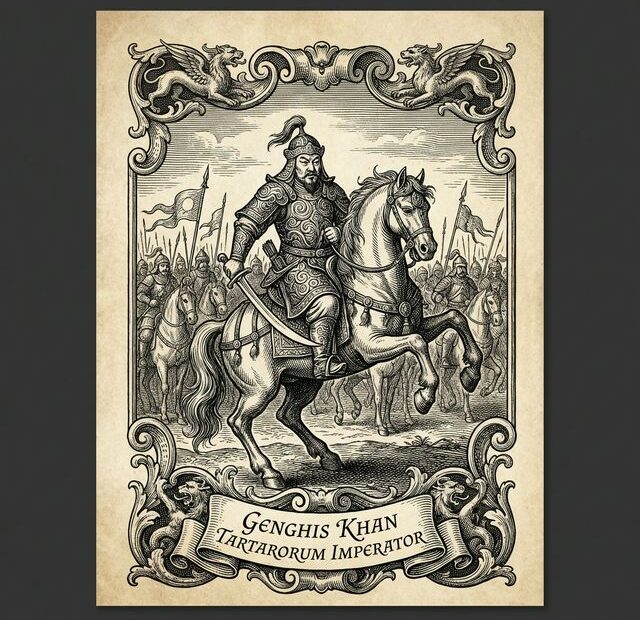
  • The Genghis Khan Mindset

    The Genghis Khan Mindset

    The Genghis Khan Mindset: 5 Ruthless Strategies for Modern Success

    When we think of Genghis Khan, the image that usually comes to mind is that of a ruthless barbarian leaving a trail of destruction in his wake. However, this is a simplistic and incomplete view. Behind the sword was a brilliant strategic mind that unified warring tribes and created the largest contiguous empire in human history. The “Genghis Khan Mindset” is not about violence, but about ruthless efficiency, adaptation, and long-term vision.

    For the modern entrepreneur or leader, the lessons left by the Great Khan are surprisingly current. He didn’t inherit an empire; he built it from scratch, overcoming adversities that would break most people. Here are five essential strategies we can extract from his life and apply to the pursuit of success today.

    1. Radical Meritocracy over Aristocracy

    Value Competence, Not Blood

    Unlike the feudal armies of Europe or China, where position was determined by birth, the Mongol army operated under a strict meritocracy. Genghis Khan promoted generals based solely on skill and loyalty, often elevating men from humble backgrounds or even former enemies who demonstrated value.

    The Modern Lesson

    In the corporate world and in business, results must speak louder than titles or connections. Build a team where the best ideas win, regardless of who proposed them. A culture that rewards real performance creates a high-performance environment impossible to replicate by organizations stuck in rigid hierarchies and nepotism.

    2. Adaptation and Technological Adoption

    Learn from the Enemy

    The Mongols were originally steppe warriors, masters of cavalry and archery, but ignorant of siege warfare. When they encountered the fortified cities of China and Persia, they didn’t give up. Instead, they captured Chinese and Muslim engineers and learned to build catapults and use gunpowder. They turned the enemy’s technology into their own advantage.

    The Modern Lesson

    Don’t stick to “how we’ve always done things”. The market changes fast. If a competitor has superior technology or processes, don’t ignore it out of pride; study it, adapt it, and improve it. The ability to pivot and integrate new tools (like AI nowadays) is what separates empires that grow from those that fall.

    3. Unwavering Loyalty and Iron Discipline

    The Power of Unity

    The greatest crime in the Mongol army was not defeat, but betrayal and abandoning one’s companions. Genghis Khan instilled a sense of loyalty so deep that his units fought as a single organism. Discipline wasn’t just about following orders, but about protecting the integrity of the group.

    The Modern Lesson

    Organizational culture is your greatest defense. A team united by shared values and mutual loyalty will outperform a group of individualist “stars” any day. Invest in building trust. When your team knows you “have their back”, they will fight your battles with the same intensity as you do.

    4. Information Warfare and Psychology

    Win Before the Battle Begins

    Before invading a territory, Genghis Khan sent spies (merchants, travelers) to map routes, understand local politics, and spread terrifying rumors about the size and ferocity of his army. Many cities surrendered before even seeing a Mongol soldier, defeated by fear and reputation.

    The Modern Lesson

    Information is power. Know your market, your customers, and your competitors better than they know themselves. Use marketing and branding to position your brand dominantly in the consumer’s mind before the “sale” even happens. The perception of authority and inevitability can open doors that brute force could not.

    5. Long-Term Vision and Legacy

    Planting Trees You Won’t See

    Genghis Khan didn’t fight just for immediate riches; he had a vision of a “universal peace” under the eternal sky (which would become the Pax Mongolica, allowing safe trade along the Silk Road). He established laws (the Yassa) and writing systems that ensured his empire would survive and prosper long after his death.

    The Modern Lesson

    Don’t just build for the next quarter. Ask yourself: “What am I building that will last 10, 50 years?”. True success is creating systems and values that transcend your physical presence. Whether in investments or brand building, long-term thinking is the ultimate competitive advantage in an immediate world.

    Frequently Asked Questions (FAQ)

    Wasn’t Genghis Khan a cruel tyrant?
    Yes, his conquests were bloody. However, the “Mindset” here focuses on strategies of efficiency and leadership. We can learn from the strategic effectiveness of historical figures without endorsing their moral actions. Separating technique from morality is crucial for objective historical study.

    How to apply “siege warfare” to small businesses?
    Think of “besieging” a market niche. Instead of attacking the market leader head-on, dominate distribution channels, build barriers to entry, and isolate the customer’s problem until your solution is the only viable one.

    What was the Pax Mongolica?
    It was a period of relative peace and stability that followed the Mongol conquests, where trade, technologies, and ideas (such as printing and gunpowder) flowed freely between East and West, facilitating the beginning of the Renaissance.

    What is the best book to learn more?
    We strongly recommend “Genghis Khan and the Making of the Modern World” by Jack Weatherford, which deconstructs myths and focuses on the administrative and cultural genius of the Mongols.

    Think Big

    Genghis Khan’s legacy teaches us that success depends not only on brute force but on intelligence, adaptability, and unity. In a volatile modern world, adopting this mindset of continuous learning, meritocracy, and strategic vision can be the difference between being conquered by circumstances or leading your own destiny. Be ruthless in the pursuit of excellence, but wise enough to always adapt.


    Did you like this applied historical analysis? Check out our other articles on great strategy books.

  • What I Didn’t Learn from Self Help Books

    What I Didn’t Learn from Self Help Books

    What I Didn’t Learn from “How to Win Friends and Influence People”

    The Seduction of Self-Help Manuals

    Books labeled as “self-help” have a well-established formula: they have the design, cover, and text strategically crafted to hook us and deliver something like a kind of instant illumination for our journey. They promise a didactic simplification of what to do next with what we have at hand. This marketed convenience delivers a simplistic approach with easy and palatable language.

    There’s no doubt about the seductive tranquility of this easy-resolution path sold by a “good success manual.” These are works that promise a magic formula filled with jargon and ways of doing things, offering simplified resolutions for very complex situations and plots of distinct realities.

    The Vacuum-Packed Discourse

    Recently, while reading Dale Carnegie’s How to Win Friends and Influence People, I realized this discourse couldn’t be any different. The book resembles a vacuum-packed product displayed on a shelf – ready for consumption but disconnected from the real complexity of human life.

    Now I propose a fundamental question: How can we extract what is truly a lesson from a self-help book so that it becomes applicable to your life? This is certainly not as simple as the reading suggests. We must dive into this thinking and engage in deeper reflection.

    Beyond Superficial Recommendations

    According to Carnegie’s book recommendations, there’s a great impact when you learn to position your voice and make a good reading of the space you’re in.

    But it’s necessary to go beyond and reflect with the help of this starting point: How do I observe myself in this environment without losing the essence and power of who I am a priori?

    This is a question that no manual can answer satisfactorily. Preserving authenticity while developing social skills is a challenge that transcends any pre-established formula.

    The Impossibility of Instant Transformation

    No self-help book, not even this one so highly recommended for shy people, can help you maintain your essence while completely transforming how you act before others and in your relationships. The idea that someone can develop into a surprisingly extroverted and influential person just by following a manual is, in fact, a dangerous illusion.

    This genuine transformation is, in reality, a hard task arduously sponsored by the maturation of ideas and life’s difficulties. It’s a process allied with the constant growth we have – and I dare say we all have – as we develop on life’s journey.

    The Real Value of Observation

    Certainly, getting to know people through observation and note-taking tells me much more about my curiosity regarding taking knowledge notes about the environment I’m inserted in and the way I’m inserting myself into it. This practice reveals more about our internal learning process than about social manipulation techniques.

    Genuine observation of people and environments is a skill that develops over time and through lived experience, not through the mechanical application of techniques learned from books.

    The Need for Multiple Perspectives

    Carnegie’s book is worth reading, but it’s crucial to recognize that there are no complete manuals for the complexity of human relationships. Therefore, I recommend other readings that offer deeper perspectives on human behavior:

    • Body language and non-verbal communication: Such as “The Body Speaks” by Marshall
    • Strategy and power: “The Prince” by Machiavelli
    • Social philosophy: Works that explore social dynamics in more complex ways

    The Search for Authenticity in a World of Formulas

    The great challenge is not in following ready-made recipes, but in developing discernment to extract valuable insights without losing our individuality. We must constantly question: do these techniques help me express myself better, or are they transforming me into someone I’m not?

    True influence and the ability to make genuine friends don’t come from mechanically applied techniques, but from developing empathy, active listening, and the capacity to authentically connect with other human beings.

    The Paradox of Prescribed Spontaneity

    One of the most striking contradictions in self-help literature is the attempt to systematize spontaneity. Carnegie’s book suggests specific phrases and behaviors to seem more likable, but there’s something fundamentally flawed about scripted authenticity. How can we be genuinely interested in others if we’re following a predetermined script?

    This paradox reveals the inherent limitation of any manual that tries to codify human complexity. Real charisma and genuine connection emerge from a place of true curiosity about others, not from memorized techniques.

    The Cultural Context Problem

    Another aspect that self-help books often ignore is the cultural relativity of social behaviors. What works in one cultural context may be completely inappropriate in another. Carnegie’s recommendations were developed within a specific American business culture of the early 20th century, yet they’re often presented as universal truths.

    Authentic social skills require sensitivity to context, culture, and individual differences – something that no universal manual can adequately address.

    The Journey of Self-Discovery

    What I truly learned from reading “How to Win Friends and Influence People” wasn’t from its pages, but from questioning its premises. The book served as a mirror that reflected my own assumptions about success, relationships, and authenticity.

    The real learning came from asking: What kind of person do I want to be? Do I want to influence others, or do I want to connect with them? Is there a difference?

    These questions led me to deeper self-reflection than any technique ever could.

    Learning Beyond the Manual

    What I didn’t learn from “How to Win Friends and Influence People” was precisely what no manual can teach: how to be genuinely myself while developing social skills. The book offers useful tools, but wisdom lies in knowing when and how to apply them without losing our essence.

    True personal transformation is a long process, sometimes painful, but deeply rewarding. There are no shortcuts to genuine growth, and perhaps this is the most valuable lesson we can extract from any reading experience: real growth happens in the space between what we read and what we live.

    Self-help manuals can be interesting starting points, but they should never be considered final destinations. The journey of self-knowledge and developing human relationships is unique to each person and requires much more than applying standardized techniques – it requires courage to be authentic in a world that constantly pressures us to follow ready-made formulas.

    The most profound influence we can have is not through manipulation or technique, but through the courage to show up as our authentic selves and create space for others to do the same. This cannot be learned from any book – it must be lived.