Tag: Larry Niven

  • Ringworld: 6 Ideas That Changed How We Think About Space

    Ringworld: 6 Ideas That Changed How We Think About Space

    Introduction

    Published in 1970 and winner of both the Hugo and Nebula Awards, Ringworld by Larry Niven is one of the most audacious feats of imagination in science fiction. A gigantic ring structure, one million miles wide, orbiting a sun — built not by gods, but by engineers. More than a thrilling adventure, Ringworld is a philosophical and scientific sandbox packed with radical ideas. Here are 6 of the most thought-provoking.

    1. Engineering on a Civilizational Scale

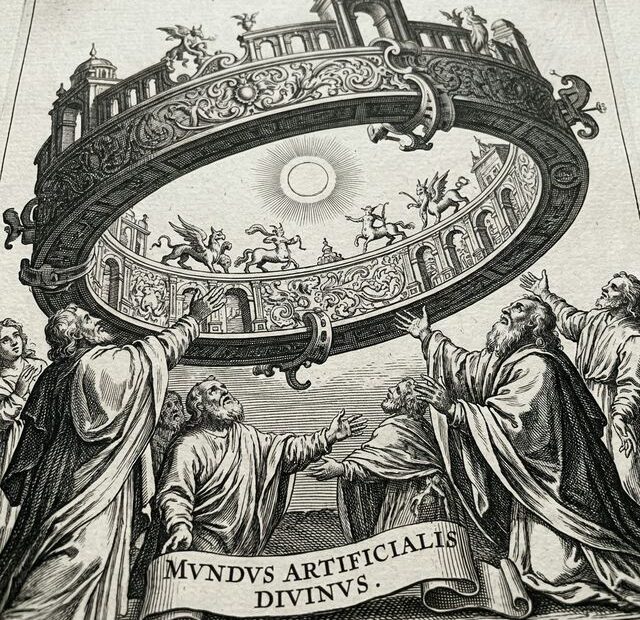
    The Ringworld itself is the central idea: a habitable band 600 million miles in circumference, built from a material stronger than any known substance (called scrith). Its inner surface has an area equivalent to three million Earths. Niven asks us to consider: what does a species do after it has colonized an entire solar system? It builds. The Ringworld is a monument to what post-scarcity engineering could look like — and a warning about what happens to a civilization that stops questioning why it builds.

    2. Luck as an Evolutionary Force

    Louis Wu’s companion, Teela Brown, was selected for the expedition partly because of a theory: the Puppeteers have been secretly breeding humans for good luck over generations, by manipulating who gets Earth’s overcrowded birth lottery tickets. Niven plays this almost as a biological joke — luck as a heritable trait, natural selection working on probability itself. The idea is absurd and brilliant: if a lucky individual survives more often, their genes (and their luck) propagate. Evolution, in this view, is not just about strength or intelligence, but about fortune.

    3. The Puppeteers and Risk-Averse Civilization

    The Pierson’s Puppeteers are among science fiction’s most memorable alien species. They are cowards by biology — their survival instinct is so overwhelming that any individual willing to take risks is considered clinically insane by their society. Yet they are immensely powerful and manipulative, engineering entire civilizations from a safe distance. Niven’s insight is sharp: a civilization can be extraordinarily advanced and still be paralyzed by fear. The Puppeteers are a mirror for any society (or institution) that mistakes caution for wisdom.

    4. A Civilization That Forgot Itself

    The humanoid inhabitants discovered on Ringworld have completely regressed. Once the engineers of the greatest structure ever built, they have lost all knowledge of technology, living as primitive tribes on its surface. The machinery that maintains the Ringworld is failing — the shadow squares are breaking down — and no one knows how to fix it. This is Niven’s darkest idea: that civilizational collapse is not dramatic; it is gradual and total. A species can forget itself. The Ringworld is an enormous ruin, still technically functional, inhabited by people who worship it as a god. This theme connects powerfully with ideas explored in Cities in Flight, where decay is also treated as an inevitable historical force.

    5. Superstition Born from Technology

    Following from the above, the novel explores how sufficiently advanced technology becomes religion. The Ringworld’s failing systems — automated repair drones, weather control mechanisms — are interpreted by the inhabitants as divine will. This echoes Arthur C. Clarke’s famous third law, but Niven gives it a tragic weight: these are the descendants of the builders, and they no longer recognize their own ancestors’ work. In a world of functional magic, reason gives way entirely to mythology.

    6. The Problem of the Rim Wall

    One of the novel’s cleverest hard-science details: the Ringworld has thousand-mile-high walls along its edges to prevent the atmosphere from spilling into space. But what do those walls mean for the people who live near them? Niven thinks through the second- and third-order consequences of his creation with unusual rigor. The walls cast enormous shadows. The ocean currents behave differently. The climate zones follow strange latitudinal patterns. This commitment to following the physics of an impossible structure is what separates Ringworld from lesser “Big Dumb Object” stories. For another example of rigorous speculative world-building from the same era, see our notes on Triplanetary.

    Conclusion

    Ringworld endures because Niven never lets the wonder of the setting overwhelm the questions it raises: about ambition, decay, luck, fear, and the fate of knowledge. It is a novel that rewards engineers and philosophers equally. If you have not read it, the Ringworld is waiting — enormous, ancient, and slowly falling apart.


    Frequently Asked Questions (FAQ)

    1. Is Ringworld scientifically plausible?
    The concept is physically possible but requires materials with properties far beyond anything we can currently produce. The physics of spin-gravity, atmosphere retention, and solar energy are handled with surprising rigor.

    2. Are there sequels to Ringworld?
    Yes. Larry Niven wrote three direct sequels: The Ringworld Engineers, The Ringworld Throne, and Ringworld’s Children, which expand the lore and address structural problems raised by readers.

    3. What is “scrith”?
    Scrith is the fictional ultra-strong material from which the Ringworld is built. It must withstand stresses far beyond any known substance, making it a useful thought experiment in meta-materials science.