Tag: How to apply Stoicism

  • Griffith vs. Guts: The Stoic vs. The Machiavellian Mindset

    Griffith vs. Guts: The Stoic vs. The Machiavellian Mindset

    Griffith vs. Guts: The Stoic vs. The Machiavellian Mindset

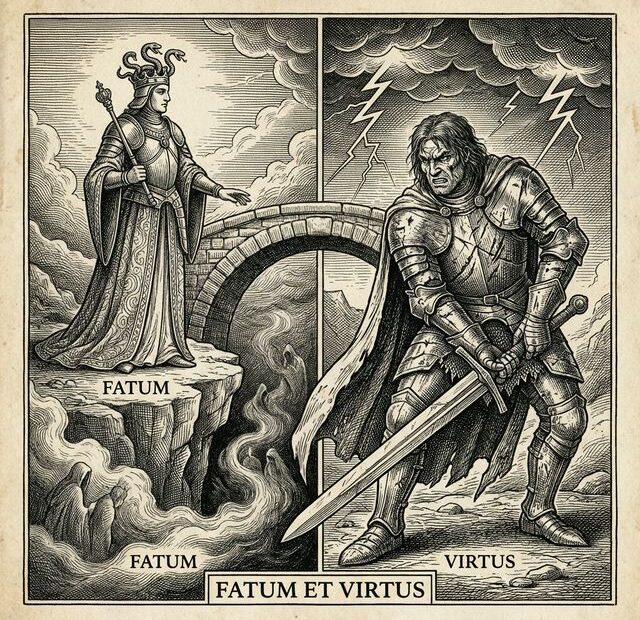
    Berserk by Kentaro Miura is many things: a masterwork of dark fantasy, a meditation on trauma, an exploration of the human will to survive. But at its philosophical core, it is a sustained argument between two worldviews, embodied in its two central characters, Griffith and Guts, that maps almost perfectly onto one of philosophy’s oldest debates.

    Griffith is a Machiavellian. Guts is a Stoic. And the story of their collision, friendship, and catastrophic rupture is one of manga’s most searching explorations of what it costs to have a dream, and what it costs to refuse one. For a complementary take on mindset and ambition, see our analysis of Rick Rubin’s philosophy of creative attention.


    Griffith: The Pure Machiavellian

    Niccolò Machiavelli‘s The Prince (1513) is one of the most misunderstood books in Western intellectual history. Its argument is not that rulers should be cruel, it is that rulers who wish to maintain power must be willing to act in ways that transcend conventional morality when the situation requires it.

    The Machiavellian leader:

    • Subordinates personal virtue to strategic necessity — what matters is the outcome, not the purity of the means.
    • Uses people instrumentally — allies and subordinates are resources to be deployed toward a goal.
    • Maintains a compelling public image — appearance of virtue is more important than virtue itself.
    • Accepts that great achievement requires terrible cost — and does not flinch from paying it.

    Griffith embodies each of these principles with terrifying completeness. Every relationship he forms is calibrated toward his dream: to rule a kingdom of his own. His sincerity is always in service of the dream, never independent of it. The clearest evidence of Griffith’s Machiavellianism is not the Eclipse, it is his definition of friendship:

    “A friend is someone who would risk their life for your dream, not just share it.”

    This reveals the structure of Griffith’s relationships: other people are valued in proportion to their contribution to his goal. This is systematic instrumentalization of human beings, and it is the defining feature of the Machiavellian disposition.


    Guts: The Reluctant Stoic

    Stoicism, developed by Zeno of Citium and later articulated by Marcus Aurelius, Epictetus, and Seneca, is a philosophy of radical responsibility and acceptance. Its central insight is the dichotomy of control: some things are within our power (our judgments, desires, and responses), and some are not (external events, others’ actions, the past).

    Guts did not choose Stoicism. He was forged by it. Born from a corpse on a battlefield, raised by a mercenary who abused him, betrayed by the person he trusted most, Guts’ entire life is an exercise in absorbing circumstances that should have destroyed him. What distinguishes Guts from a character who simply suffers is that he refuses to stop. Not out of hope, Guts is frequently hopeless, but out of a refusal to give the world, or fate, or Griffith, the satisfaction of his surrender.


    The Nature of Their Conflict

    The philosophical tension between Griffith and Guts is not simply “good vs. evil.” Both characters are morally compromised. The conflict is between two fundamentally different answers to the same question: what makes a human life meaningful?

    For Griffith, meaning is located entirely in the achievement of the dream. The Machiavellian logic reaches its endpoint at the Eclipse: when the moment comes to sacrifice the Band of the Hawk, Griffith chooses the dream without hesitation. People were always means, never ends. This is where The Prince‘s logic terminates when applied without limit: complete moral evacuation in pursuit of a transcendent goal.

    For Guts, meaning, if it exists at all, is located in the act of continuing. After the Eclipse, Guts does not formulate a new dream. He picks up a sword too large to lift and walks forward. Not toward a goal. Away from surrender. The quality of his response to what happened is the only thing Griffith could not take.


    What Machiavelli Gets Right

    It is important not to read Griffith as simply a villain to be rejected. His worldview has genuine philosophical force. Machiavelli’s insight, that the world as it is requires a different ethical framework than the world as we wish it were, is not obviously wrong. The question The Prince forces is real: if you genuinely believe your goal is worth achieving, at what point does the means become impermissible? Griffith’s answer is never.

    Most ethical frameworks draw the line somewhere before “sacrifice your closest friends to demonic entities.” But the principle beneath his choice, that the dream outweighs the people,  shows up in real history with uncomfortable frequency.


    What Stoicism Gets Right

    Stoicism’s strength is precisely where Machiavellianism is weakest: it does not depend on external success. The Machiavellian requires the achievement of the goal to vindicate the sacrifices made to reach it. If the goal fails, the sacrifices were meaningless.

    Marcus Aurelius writes in Meditations: “You have power over your mind, not outside events. Realize this, and you will find strength.” Guts arrives at exactly this position, not through reason but through necessity. The Stoic conclusion is that the only things that cannot be taken from you are the things you choose, and Griffith could not take the refusal.


    The Lesson for Real Life

    The Machiavellian path is seductive because it appears more efficient. It removes the friction of moral consideration. But it has a hidden cost that Miura dramatizes with remarkable precision: it hollows out the self. Griffith, at the moment of his greatest triumph, is the least human thing in the story. He has achieved everything and become nothing.

    Guts, scarred and exhausted and still walking, is still entirely, completely human. For further reading on how resilience and creative perseverance connect, see our notes on Rick Rubin’s philosophy of the creative act.


    Resumé

    Berserk holds both positions with genuine respect for their internal logic and shows, unflinchingly, what each costs. What Miura seems to believe is that a life oriented entirely around achievement, at the cost of authentic connection and moral integrity, is not a life enlarged but a life evacuated. And that the Stoic path, defined not by triumph but by the quality of persistence, is the only one that leaves you still recognizably yourself. The sword is too heavy. Carry it anyway.


    Frequently Asked Questions (FAQ)

    1. Do I need to read Berserk to understand this article?
    No. The philosophical argument is self-contained. But reading Berserk will make both Stoicism and Machiavelli far more vivid.

    2. Is Griffith purely evil in Berserk?
    Berserk deliberately resists this reading. Griffith’s logic is internally coherent, and Miura invests real effort in making his dream understandable.

    3. Where should I start with Stoicism?
    Marcus Aurelius’ Meditations is the most accessible entry point. Ryan Holiday’s The Obstacle Is the Way translates Stoic principles into contemporary language.

    4. Is Machiavelli’s The Prince a manual for evil?
    No. It is a work of political realism that describes how power operates, not a prescription for how it should operate.

    5. What does Berserk ultimately argue — Stoicism or Machiavellianism?
    Neither definitively. But the narrative weight suggests Miura’s sympathies lie closer to Guts.

  • Top 10 philosophy things that I learn with Einchiridion

    Top 10 philosophy things that I learn with Einchiridion

    Top 10 Lessons I Learned from the Enchiridion

    Introduction

    Hello, everyone! Today, I want to share some valuable points from the book Enchiridion by Epictetus. This book was pointed out to me during a philosophy class.

    Since then, I’ve read it three times. And every time I read it, I find something new, powerful, and meaningful about life, how we do things, how we approach things, and how we live.

    Please, sit down, grab a cup of tea (or coffee), and enjoy the read.

    einchiridion

    The Problem Philosophy Solves

    I believe that philosophy solves a unique problem: it heals and restores our soul.

    What do I mean? Have I gone crazy? Yes (and maybe no). Have you ever noticed that we wake up and immediately reach for our phones? We can barely go an hour without them, let alone without accessing the internet.

    And in my opinion, this is the exact problem that philosophy solves. It helps us rediscover who we are.

    Think about it with me: the questions of “Who am I?”, “What is my purpose?”, and “Where am I going?” have not been answered by the internet. On the contrary, the hole has only gotten wider and deeper.

    However, the only way I see to fill this void (even partially) is:

    “Know thyself, and master thyself.”

    The Matrix Reference

    Think about it, remember the movie The Matrix? Released in 1999, with that protagonist in the black coat and sunglasses, named Neo? It forever changed the way we think.

    (Spoilers ahead)

    In the iconic Kung Fu fight scene against Morpheus, notice that Neo is “reborn” from the Matrix. He’s barely used to the new plug in the back of his neck and shows discomfort when he touches it.

    The kung fu scene of Matrix
    The kung fu scene of Matrix

    Note that, by lying back in a chair with a cable connected to that plug, in seconds, our dear hero and former hacker is ready. He begins his fight against Morpheus, but soon, hesitating with his new ability, he gets lost and is struck. Why did you hesitate, Neo? The knowledge is already there. What’s preventing it from flowing?

    This is where philosophy comes in. We are all born with skills, “gifts,” or talents. Call them what you will. In the end, we need to connect our soul to our inner wisdom.

    Therefore, after the longest and most significant introduction I’ve written in the last nine months, I will show you in the following lines how important philosophy is for everyone and why, at least in my country (Brazil), it was removed from the school curriculum.

    The Top 10 Lessons

    Epictetus was a slave and was lame. However, he did not allow these limitations to paralyze him. He wrote the manual for life, the Enchiridion.

    There are many versions of the book. Choose the one that best suits you.

    Lesson 1 – Focus Only on What Is Within Your Control First, take this gut punch.

    Why do you want to earn $100,000 a month? Why do you want the Ferrari? Why do you want to be the coolest person on the block? Suspend your desires for now, my dear Jedi. Focus on what you can control. Don’t get it? You can and should achieve everything you want.

    The problem is putting all your time, focus, and energy only on the end result. What’s wrong with that? Frustration. If you focus on small daily steps, you gain rhythm, consistency, and stamina. Then, as the months go by, you earn the right to enter the marathon.

    Lesson 2 – Be Prepared!

    Wisely written by Epictetus, who may or may not have influenced Marcus Aurelius, this maxim is related to what some call luck. How many stories have you heard of people who worked and dedicated themselves for years to a business, and when they got one chance—a single opportunity—they changed their lives for the better?

    That’s right, there are few such stories; you can count them on your fingers. I myself have worked with two outliers—hard-working, focused people who, with the one chance they were given, changed the course of their lives and their families‘ lives for the much, much better. However, none of this would have happened if they hadn’t been prepared.

    Lesson 3 – What Is Meant to Be, Will BeSurely

    You’ve had a moment in your life when you worked and poured every drop of sweat into a goal. However, as time went on and you didn’t reach the target, disappointment started knocking at your door and living rent-free in your head.

    Then, tired and slightly discouraged, you decided to rest, either by choice or out of exhaustion. Suddenly, your goal was achieved! Like a magic trick. Sometimes, we need to “let go” and let life happen.

    Lesson 4 – You Already Have the Resources for Any Challenge

    Before starting this website, I tried to create several different things for the internet (Instagram, Facebook, Pinterest, YouTube, Blogger), and the whole process was tedious. Although I tried hard, I felt something was always missing. So, I did what any sensible person would do: I sought help. Only to realize that people knew and did exactly what the vast majority did.

    I completely ignored what I felt and thought about my ideas and how I wanted to create them. And so, I realized that deep down, I needed help, but not that kind of help. I was trying, failing, and most importantly, learning! After some time, I understood that I already had the resources I needed with me. And I can guarantee that we don’t know or even grasp the quantity and quality of this resource that ALL of us carry inside. Use it!

    Lesson 5 – Everything Has Its Price

    How many stories do you hear about someone who sucked up to the boss to get a promotion? Meanwhile, you—the humble, dedicated worker who devours the company manuals and moves mountains—are left in the dust in favor of your dear colleague.

    Yes, everything has its price. You don’t know what your colleague had to do. Don’t complain if you weren’t willing to pay the price he paid. However, you always have the right to keep your integrity intact.

    Lesson 6 – Look Before You Leap

    I certainly spent at least two days thinking about this four-word phrase, so full of context. Imagine if I decided right now that I want to become a professional boxer. At 33, there’s still time in the sport. But what would it cost me? Diet, rigid routines, sleep, seclusion from social life, and surrendering my body to a trainer.

    And only if I manage to turn pro in the next five years, my career might be short. Another 5-7 years of professional boxing? Maybe. And what if I don’t make it? How much time, energy, and resources will be spent in pursuit of the goal? Look before you leap. Pros and cons should always be weighed, in everything in life.

    Lesson 7 – Nature Moves Away from What Is Harmful and Towards What Is Useful

    Surely, you’ve had or have that friend who, time and again, gets you into trouble. Let me explain: you have your routine, your goals, and your life. Sometimes, on a Thursday, you just want to stay home and watch TV.

    Then your friend sends a message saying, “I’ll just swing by for a minute…” Twelve beers and a hangover pill later, you’re struggling to stay awake and focused at work the next day. As the years go by, nature itself takes care of moving you away from that friend.

    Lesson 8 – You Don’t Need to Know the Future

    As human beings, we flirt with and love the future. There’s a mystical aura about what will happen. Notice how we’ve been fascinated with stars and numbers for thousands of years.

    Although humans haven’t been given the gift of predicting the future, we desire it like the philosopher’s stone. But if we already know which events we cannot control, then we know that worrying excessively about the future is not for us.

    Lesson 9 – Be True to Yourself

    In my opinion, journals are the new iPhone! “Oh, come on!” you say. Let me tell you who kept journals: Marcus Aurelius, war generals, Churchill. What’s the connection between a journal and being true? I know many people don’t go to therapy, as it can be difficult emotionally and financially.

    The cheapest and most accessible way I know to do therapy is with pen and paper (or a keyboard). Paper, Docs, WhatsApp, Telegram, Notion… it doesn’t matter where. We men were taught that writing down our thoughts and feelings was “for girls,” only to later see the same people who said that sink into alcohol, drugs, and who knows what else. If you are honest with yourself about what you think, feel, and do, no one can shake you—not with words, not with actions. You have mastered yourself.

    Lesson 10 – Treat Your Critics with Compassion

    Everyone—I mean, absolutely everyone—wants to criticize you whenever you change or try something new. Never, ever, under any circumstances, ask for someone’s opinion. Instead, trust your intuition.

    Talk to God or your deity. But do not retreat. If you retreat, you will fail twice: for not starting the movement, and for empowering the hater.

    Therefore, if you can stay true to your purpose, principles, and beliefs, you will earn the right to dine with the Gods. But if you help your critics even after they’ve attacked you for changing, you will be served as one of them.

    Fortune Cookie

    You are not what you have. Stop living for appearances. Live for what you believe in. Your integrity is worth more than all the wealth the world has ever seen.

    Bonus: Your actions are the only thing you can be proud of.

    When no one is looking, you pick up trash from the street.

    When no one is looking, you help someone at the grocery store pay for their items.

    When no one is looking, you study for hours on end to finish your degree.

    When no one is looking, you lie down, tired, in your bed—the one you worked hard to buy—and rest your head on your pillow, which took months to acquire because you wanted the best that YOUR money could buy.

    You remember what you did during your day, and a subtle smile plays on your lips. Happiness fills your heart, and you feel complete because you did the right thing.

    Conclusion

    I’ll stop here before I become a nuisance. That’s all for this post. See you soon!