Tag: Hard Science Fiction

  • Triplanetary: 6 Ideas That Invented Space Opera

    Triplanetary: 6 Ideas That Invented Space Opera

    Triplanetary: 6 Ideas That Invented Space Opera

    Before Dune, before Foundation, before almost everything, there was Triplanetary. Originally written in 1934 as a standalone story and later revised by Edward E. “Doc” Smith to serve as the opening chapter of his Lensman series, it is a work of breathtaking ambition and staggering scope. Smith essentially invented the template for large-scale space opera. Here are 6 ideas from Triplanetary that defined the genre and still resonate today.

    1. Cosmic Conflict as Background History

    Triplanetary opens not with a hero, but with two godlike alien civilizations,  the Arisians and the Eddorians, locked in a secret war for control of the galaxy across millions of years. Humanity’s entire history is revealed to be a side effect of this conflict. Smith was among the first to propose deep time as a narrative frame: our wars, our empires, our species are just a chapter in a story far larger than we can perceive. This “gods playing chess with civilizations” structure would later influence Asimov, Herbert, and countless others.

    2. The Inertialess Drive

    Smith introduced the concept of inertialess faster-than-light travel, a drive that eliminates a ship’s inertia, allowing it to reach any velocity instantly without the usual physical consequences. This was not just a handwave; Smith thought through the implications. A ship without inertia would need to carefully manage its transition back to normal space. The idea seeded decades of science fiction engineering, influencing concepts from hyperdrives to jump drives, and represents one of the earliest serious attempts to rationalize FTL travel in fiction.

    3. Space as a Three-Dimensional Battlefield

    Before Triplanetary, space combat in fiction was mostly naval warfare transplanted into the void. Smith made it genuinely three-dimensional and tactical. His battles involve flanking maneuvers in all directions, using planetary bodies for cover, and the terrifying challenge of tracking enemies across a volume, not just a surface. The genre has never fully returned to two-dimensional space combat since Smith made it feel absurd. His descriptions of massed fleet engagements remain kinetically vivid nearly a century later. Compare this with the grand fleet battles imagined in Ringworld‘s universe.

    4. The Inevitability of Empire — and Its Corruption

    The novel cycles through human history; Atlantis, Rome, World War I, showing that every empire follows the same arc: rise through ambition, expansion through strength, corruption through power, collapse through decadence. Smith is not nostalgic or moralistic about this; he presents it as almost mechanistic. The same human drives that build civilizations destroy them. This cyclical pessimism, embedded in what reads as a pulp adventure story, gives Triplanetary an unexpected philosophical weight, one that Cities in Flight later develops much further through Spenglerian theory.

    5. Women as Agents, Not Just Prizes

    For 1934, Triplanetary is surprisingly progressive in one specific area: Clio Marsden, the female lead, actively drives plot. She is not simply rescued; she makes decisions, shows courage under pressure, and is treated as a full participant in the adventure rather than a reward for the male hero. This was far from universal in pulp fiction of the era. Smith’s female characters are not complex by modern standards, but they act,  they are agents, not objects.

    6. The Arms Race as a Natural Law

    Perhaps the most chilling idea in Triplanetary is that technological escalation is inevitable. Every new weapon demands a new defense; every new defense demands a new weapon. Smith dramatizes this as an arms race between factions first on Earth (submarines vs. depth charges, gas vs. gas masks) and then in space (screens vs. beams). He seems to suggest that this escalation is not a political failure but a physical law,  the nature of any universe where power is possible. This proto-game-theory insight anticipates the Cold War’s mutual destruction logic by over a decade.

    Start Now

    Triplanetary is rough, pulpy, and unapologetically grand. But its ideas, cosmic time scales, inertialess drives, three-dimensional warfare, cyclical empire, provided the foundation on which modern space opera was built. Reading it today is like touring the archaeological site of your favorite genre. Everything starts somewhere, and much of science fiction starts here.


    Frequently Asked Questions (FAQ)

    1. Do I need to read Triplanetary before the Lensman series?
    It helps for context, but the core Lensman series (starting with Galactic Patrol) can be read independently. Triplanetary serves as an extended prologue.

    2. Is Doc Smith’s writing dated?
    Yes, in prose style and some social attitudes. But the ideas are remarkably durable, and the sense of scale and excitement is unmatched in pulp science fiction.

    3. What is the connection between Triplanetary and the Skylark series?
    They are separate series by the same author. The Skylark series was written first; the Lensman series (which includes Triplanetary) is generally considered Smith’s more ambitious and mature work.

  • Cities in Flight 6 Ideas About

    Cities in Flight 6 Ideas About

    Cities in Flight: 6 Ideas About Civilization, Decay, and the Stars

    James Blish‘s Cities in Flight tetralogy (written between 1950 and 1962) is one of the strangest and most ambitious projects in science fiction. The premise is deceptively simple: cities, using anti-gravity drives called spindizzies, lift themselves off the Earth and fly through the galaxy as roving economic units, essentially becoming migrant workers among the stars. But beneath this extraordinary concept, Blish is writing a dense meditation on history, capitalism, decline, and hope. Here are 6 of its most powerful ideas.

    1. The City as a Self-Sufficient Economic Unit

    In Blish’s future, nation-states and planets have become irrelevant. The flying cities themselves are the primary economic actors. New York, for example, becomes “Okie”,  a city that trades labor, technology, and services to underdeveloped planets in exchange for raw materials. This is capitalism taken to its logical extreme: if a business can move its entire operation off-planet, it will. Blish asks what happens when the most mobile unit of economic production is not a factory or a corporation, but an entire city and its million inhabitants.

    2. The Okies and the Logic of Migrant Labor

    The term “Okie”, borrowed from the Dust Bowl migrants of the 1930s American Midwest, is Blish’s most deliberate historical reference. The flying cities are migrant workers at cosmic scale: economically desperate, skilled, often exploited, and defined by their mobility. They go where the work is. They are looked down upon by settled planets. They organize, they are sometimes raided, and they develop their own culture of endurance and solidarity. Blish is writing about economic precarity with a science-fictional frame that makes its dynamics impossible to ignore.

    3. Spenglerian History — Every Civilization Must Decline

    Blish was deeply influenced by Oswald Spengler’s The Decline of the West, which argued that civilizations, like organisms, have natural life cycles, they are born, flourish, decline, and die. Cities in Flight is structured around this idea. Earth itself follows the Spenglerian arc: from confident expansion to paralysis to collapse. The cities that flee are not escaping history, they are recapitulating it at a smaller scale. Blish’s universe is tragic not because of villains, but because of this seemingly inevitable entropy. This doom-laden sense of history also haunts Triplanetary, where every empire follows the same corrupting arc.

    4. The Immortality Problem

    Two characters, Mayor Amalfi and his city manager Hazleton, are kept alive by anti-agathic drugs (life-extension medications) across the novel’s narrative, which spans thousands of years. Blish uses their near-immortality to explore what happens to a mind that outlives its cultural context. They are tired in ways that the young crew cannot understand. They have made decisions whose consequences they must live with across centuries. The question of identity under radical longevity, who is the same person across a thousand-year arc? runs quietly beneath the plot, echoing similar themes in Robert Heinlein’s work on Lazarus Long and the Ringworld universe.

    5. Technology as Theology

    The spindizzy drive is not simply a plot device; in Blish’s universe, the physics that enables it also implies a closed universe with a definite end. The cosmological framework of the series, borrowed from actual physics of the era, means that everything, including the universe itself, has a finite lifespan. Late in the series, this becomes theologically urgent. Blish is one of the few science fiction authors who takes seriously the question: what does a civilization do when it discovers that reality itself is running out? The answer Blish offers is quietly extraordinary.

    6. Democracy Dies Slowly, Not Dramatically

    Blish depicts the decline of democracy not as a coup or a revolution, but as a slow administrative erosion. Earth’s government becomes increasingly bureaucratic, paranoid, and sclerotic over decades. Rights are reduced incrementally, each small surrender justified by emergency. By the time the cities choose to flee, Earth is already unrecognizable as the free society it once claimed to be. Blish’s model of political decline is depressingly familiar: not a boot on a neck, but a form that must be filed, a permit that is denied, a generation that grows up not knowing what was lost.

    Read the Book!

    Cities in Flight is demanding, sometimes slow, and absolutely essential. Blish refuses to let his extraordinary premise simply be an adventure story. He uses it to think seriously about economics, history, consciousness, and physics. The flying cities are the most melancholy image in science fiction, whole communities of human beings, airborne and homeless, carrying their culture and their debts among the stars, still loyal to something called New York long after the original city dissolved into dust.


    Frequently Asked Questions (FAQ)

    1. In what order should the Cities in Flight books be read?
    The internal chronological order is: They Shall Have Stars, A Life for the Stars, Earthman, Come Home, and A Clash of Cymbals. This is the recommended reading order.

    2. Is Cities in Flight hard science fiction?
    It is harder than most, especially in its cosmological framework, but Blish is primarily interested in sociological and historical ideas rather than pure physics.

    3. What is Spenglerian history, and why does Blish use it?
    Oswald Spengler argued in The Decline of the West (1918) that civilizations follow organic life cycles. Blish applies this macro-historical lens to both Earth and the flying cities, giving the series its distinctive tragic tone.

  • Ringworld: 6 Ideas That Changed How We Think About Space

    Ringworld: 6 Ideas That Changed How We Think About Space

    Introduction

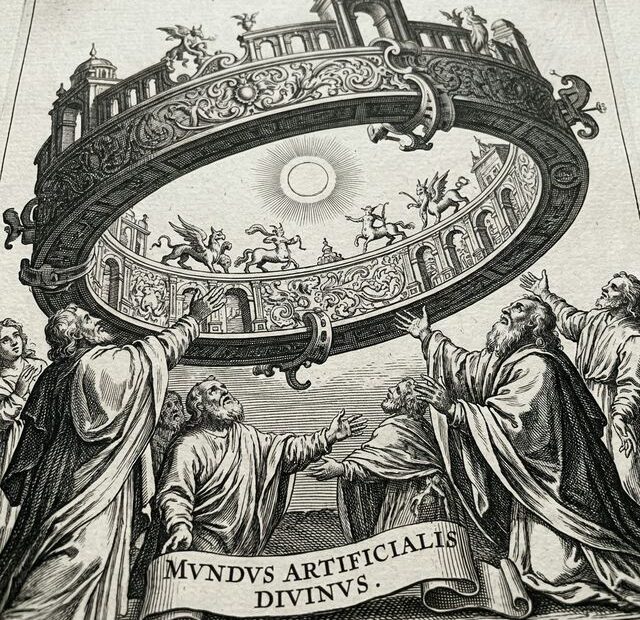
    Published in 1970 and winner of both the Hugo and Nebula Awards, Ringworld by Larry Niven is one of the most audacious feats of imagination in science fiction. A gigantic ring structure, one million miles wide, orbiting a sun — built not by gods, but by engineers. More than a thrilling adventure, Ringworld is a philosophical and scientific sandbox packed with radical ideas. Here are 6 of the most thought-provoking.

    1. Engineering on a Civilizational Scale

    The Ringworld itself is the central idea: a habitable band 600 million miles in circumference, built from a material stronger than any known substance (called scrith). Its inner surface has an area equivalent to three million Earths. Niven asks us to consider: what does a species do after it has colonized an entire solar system? It builds. The Ringworld is a monument to what post-scarcity engineering could look like — and a warning about what happens to a civilization that stops questioning why it builds.

    2. Luck as an Evolutionary Force

    Louis Wu’s companion, Teela Brown, was selected for the expedition partly because of a theory: the Puppeteers have been secretly breeding humans for good luck over generations, by manipulating who gets Earth’s overcrowded birth lottery tickets. Niven plays this almost as a biological joke — luck as a heritable trait, natural selection working on probability itself. The idea is absurd and brilliant: if a lucky individual survives more often, their genes (and their luck) propagate. Evolution, in this view, is not just about strength or intelligence, but about fortune.

    3. The Puppeteers and Risk-Averse Civilization

    The Pierson’s Puppeteers are among science fiction’s most memorable alien species. They are cowards by biology — their survival instinct is so overwhelming that any individual willing to take risks is considered clinically insane by their society. Yet they are immensely powerful and manipulative, engineering entire civilizations from a safe distance. Niven’s insight is sharp: a civilization can be extraordinarily advanced and still be paralyzed by fear. The Puppeteers are a mirror for any society (or institution) that mistakes caution for wisdom.

    4. A Civilization That Forgot Itself

    The humanoid inhabitants discovered on Ringworld have completely regressed. Once the engineers of the greatest structure ever built, they have lost all knowledge of technology, living as primitive tribes on its surface. The machinery that maintains the Ringworld is failing — the shadow squares are breaking down — and no one knows how to fix it. This is Niven’s darkest idea: that civilizational collapse is not dramatic; it is gradual and total. A species can forget itself. The Ringworld is an enormous ruin, still technically functional, inhabited by people who worship it as a god. This theme connects powerfully with ideas explored in Cities in Flight, where decay is also treated as an inevitable historical force.

    5. Superstition Born from Technology

    Following from the above, the novel explores how sufficiently advanced technology becomes religion. The Ringworld’s failing systems — automated repair drones, weather control mechanisms — are interpreted by the inhabitants as divine will. This echoes Arthur C. Clarke’s famous third law, but Niven gives it a tragic weight: these are the descendants of the builders, and they no longer recognize their own ancestors’ work. In a world of functional magic, reason gives way entirely to mythology.

    6. The Problem of the Rim Wall

    One of the novel’s cleverest hard-science details: the Ringworld has thousand-mile-high walls along its edges to prevent the atmosphere from spilling into space. But what do those walls mean for the people who live near them? Niven thinks through the second- and third-order consequences of his creation with unusual rigor. The walls cast enormous shadows. The ocean currents behave differently. The climate zones follow strange latitudinal patterns. This commitment to following the physics of an impossible structure is what separates Ringworld from lesser “Big Dumb Object” stories. For another example of rigorous speculative world-building from the same era, see our notes on Triplanetary.

    Conclusion

    Ringworld endures because Niven never lets the wonder of the setting overwhelm the questions it raises: about ambition, decay, luck, fear, and the fate of knowledge. It is a novel that rewards engineers and philosophers equally. If you have not read it, the Ringworld is waiting — enormous, ancient, and slowly falling apart.


    Frequently Asked Questions (FAQ)

    1. Is Ringworld scientifically plausible?
    The concept is physically possible but requires materials with properties far beyond anything we can currently produce. The physics of spin-gravity, atmosphere retention, and solar energy are handled with surprising rigor.

    2. Are there sequels to Ringworld?
    Yes. Larry Niven wrote three direct sequels: The Ringworld Engineers, The Ringworld Throne, and Ringworld’s Children, which expand the lore and address structural problems raised by readers.

    3. What is “scrith”?
    Scrith is the fictional ultra-strong material from which the Ringworld is built. It must withstand stresses far beyond any known substance, making it a useful thought experiment in meta-materials science.