Tag: grit and perseverance mindset

  • Don Corleone’s Management Style

    Don Corleone’s Management Style

    Don Corleone’s Management Style: Loyalty, Family, and Business

    If you strip away the organized crime, the violence, and the illegal rackets from Mario Puzo’s [The Godfather](https://en.wikipedia.org/wiki/The_Godfather_(novel)) what you are left with is one of the greatest textbooks on corporate management ever written.

    I recently decided to reread the novel and rewatch the films through the lens of a startup founder. I was blown away by Vito Corleone’s deep, psychological understanding of how to build and maintain a resilient organization. The stakes in his business aren’t quarterly profits; they are life and death. Because of that extreme pressure, his management tactics are stripped of all corporate fluff.

    Here are the most powerful leadership lessons I learned from Don Corleone’s management style, and how I actively try to apply them to my own career today.


    What I Learned About Sincere vs. Transactional Loyalty

    Modern companies try to buy loyalty with ping-pong tables, Friday pizza, and stock options. But the moment a competitor offers a 15% raise, those employees leave. That is transactional loyalty.

    Vito Corleone builds indebted loyalty. In the brilliant opening scene, the undertaker Bonasera tries to pay the Don to hurt the men who assaulted his daughter. Vito refuses the cash. By refusing the money, Vito upgrades the interaction from a cheap transaction to a massive, lifelong favor built on “friendship.” He solves his follower’s most terrifying personal problems, securing an allegiance that outlasts money.

    The Importance of the Inner Circle

    I also learned that trust scales far better than competence. When building his executive team, Vito doesn’t just hire the smartest people. He elevates Tom Hagen, his adopted, non-Italian son, to Consigliere (chief advisor) purely because Hagen’s loyalty is absolute and unquestionable. A brilliant but selfish employee will destroy a company from within. A slightly less talented but fiercely loyal operator is infinitely more valuable.

    Protecting the Core Business Model

    The entire war in The Godfather begins because Vito refuses to enter the highly lucrative drug trade proposed by Sollozzo. Vito argues that his current businesses (gambling and unions) are tolerated by his political allies, while drugs would draw federal heat and destroy his core infrastructure. He had the immense discipline to say “no” to massive, immediate revenue because he recognized it was fundamentally toxic to the long-term survival of his empire.


    How I Apply the Corleone Playbook Today

    1. Investing in Personal Loyalty, Not Just Perks

    I stopped looking at professional relationships as purely transactional. When someone I work with is going through a personal crisis, a health issue, or a career slump, I try to step in and help with zero expectation of an immediate return. When you help someone when they have absolutely nothing to offer you, you build an unbreakable foundation. True networking isn’t handing out business cards; it’s solving hard problems for people when they are vulnerable.

    2. Rejecting “Toxic Revenue”

    In my own projects, I am constantly tempted by fast money, taking on a bad client who pays well, or pivoting a product to chase a desperate trend. Remembering Vito’s refusal of the Sollozzo deal serves as my anchor. I now audit every new opportunity by asking: “Does the short-term profit of this deal threaten the long-term integrity of my core business?” If the answer is yes, I walk away.

    3. Separating Ego from Strategy

    When Vito is nearly assassinated, his first move upon waking up is not blind, raging revenge. He makes a temporary, painful peace with his enemies to buy time to bring his son Michael home safely. He swallowed his pride for the survival of the organization.

    I actively practice this. When I receive a harsh critique or someone attempts to undercut me professionally, I force myself to detach my ego. Revenge is expensive. Strategy is profitable. If a decision feels emotionally satisfying, it is probably a bad business move. 


    Conclusion

    We shouldn’t emulate the violence of the Corleone family, but ignoring their organizational genius is a mistake. Don Corleone proves that a successful empire is built on fiercely protected relationships, strict emotional discipline, and the foresight to plan for the future.

    The next time you are evaluating your team, your vendors, or your own leadership style, ask yourself: are you building transactional contracts, or are you building a family?

    Summary

    Don Corleone’s approach to management highlights the critical difference between transactional employees and a universally loyal team. By solving genuine problems for your network, rejecting toxic “fast money,” and prioritizing absolute trust over raw talent, you can build a resilient, long-lasting career and enterprise.

  • Silence as Power

    Silence as Power

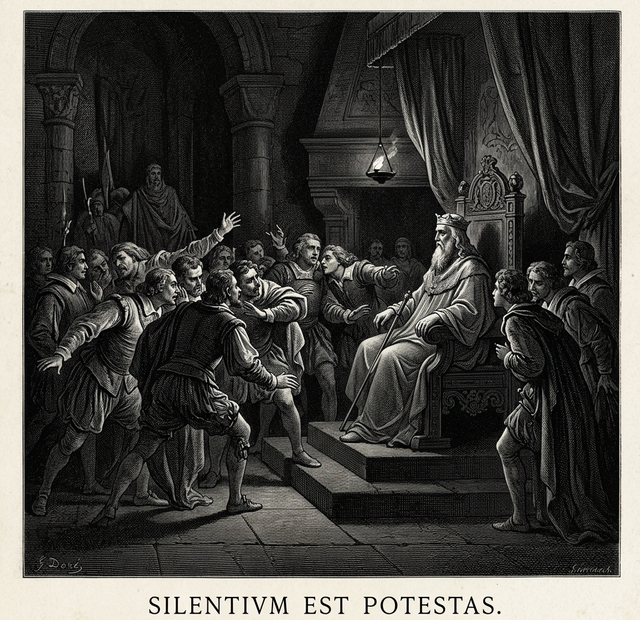
    Silence as Power: Leadership Lessons from The Godfather

    I recently rewatched Francis Ford Coppola’s [The Godfather](https://en.wikipedia.org/wiki/The_Godfather), and something struck me that I completely missed when I originally saw it as a teenager.

    When you are young, you watch mafia movies for the shootouts, the tension, and the bravado. But watching it now as a professional navigating corporate environments, I realized the movie isn’t really about crime. It is a masterclass in behavioral psychology. And the most powerful tool demonstrated by Vito and Michael Corleone isn’t a gun. It is silence.

    Here is what I learned about the strategic use of silence from the Corleone family, and exactly how I have started applying it to my own life.


    What I Learned About the Economy of Words

    In modern corporate culture, we are taught to “hustle.” We are told to dominate the room, pitch aggressively, interrupt, and constantly “add value” to meetings by talking. But if you observe the power dynamic in The Godfather, the most powerful characters speak the least.

    Look at Sonny Corleone. He is volatile, loud, and constantly broadcasting his thoughts. His inability to stay quiet gets him killed. Vito Corleone, by contrast, treats words like a finite, highly valuable currency. He barely whispers. He limits his gestures. When you speak rarely, people are conditioned to lean in and listen closely when you finally do.

    The Vacuum Effect

    The most fascinating negotiation tactic I learned from the film is the ‘uncomfortable pause’. When Vito is presented with a threat or an offer, he doesn’t react immediately. He just stares.

    Human beings absolutely hate conversational vacuums. We feel a deep, anxious need to fill the silence. What I noticed is that when Vito stays quiet, his opponents get nervous. They start talking to fill the void, and in doing so, they negotiate against themselves. They reveal their true anxieties or offer concessions Vito never even asked for.


    How I Apply the “Corleone Silence” in My Life

    I used to be the person who jumped into every pause in a meeting. If silence fell, I scrambled to say something smart. After studying the Corleones, I forced myself to implement a new operating system for communication.

    1. The Three-Second Rule in Meetings

    When someone finishes making a point or pitching an idea to me, I now actively count to three in my head before I respond. I don’t nod enthusiastically; I just maintain eye contact.

    The results have been staggering. Usually, by the time I hit “two,” the other person starts talking again. “Well, the price is $500… but we could probably do $450 if you sign today.” I have literally saved money and gained leverage simply by keeping my mouth shut.

    2. Emotional Flatlining in Conflict

    Sonny lost his life because he let his rage become public. Whenever I receive a frustrating email or someone challenges a project aggressively, my instinct is to fire off a defensive reply immediately. Instead, I channel the stoic silence of Michael Corleone at the climax of the film.

    I draft the angry reply, and then I delete it. I let 24 hours of total silence pass. The absence of my reaction usually terrifies the antagonistic party more than any yelling could. It forces them to wonder what my strategy is, giving me total control of the pacing.

    3. Listening for the “Unsaid”

    Vito Corleone was a master at listening. When Sollozzo pitched him the drug business, Vito wasn’t arguing the margins; he was listening to the subtext. He realized Sollozzo desperately needed the politician connections he lacked.

    I now go into business meetings with the goal of talking 20% of the time and listening 80% of the time. I actively try to decipher the subtext of the conversation, what the client is terrified to admit, or the budget constraint they are trying to hide.


    Conclusion

    You don’t need to be a mafia boss to wield the tactical power of silence. The next time you are in a high-stakes negotiation, a job interview, or even a tense family argument, resist the urge to dominate with volume.

    Drop your ego. Let the silence hang in the air. Watch how the room shifts to orbit around your gravity.

    Summary

    The Godfather proves that the most powerful person in the room is rarely the loudest. By using tactical silence, the “Three-Second Rule”, and emotional restraint, you can force opponents to reveal their hands, maintain leverage in negotiations, and project absolute authority without raising your voice.

    Explore More:

  • Rick Rubin’s ‘The Creative Act’

    Rick Rubin’s ‘The Creative Act’

    Rick Rubin’s ‘The Creative Act’: Why Talent is Overrated

    In 2023, Rick Rubin,  the man who produced albums for Johnny Cash, Jay-Z, Red Hot Chili Peppers, Adele, and Kanye West, released a book that had nothing to do with music. The Creative Act: A Way of Being is not a memoir, not a how-to guide, and not a business book. It is something stranger and more useful: a quiet, meditative argument that creativity is not a talent reserved for the exceptional. It is a posture, a practice, and a relationship with the world available to anyone willing to pay attention.

    This article explores the book’s most challenging and liberating ideas, and why its central thesis, that talent is overrated, might be the most important thing you hear this year. For another exploration of how mindset shapes outcome, see our piece on Griffith vs. Guts: the Stoic and the Machiavellian.


    What Rick Rubin Actually Believes About Creativity

    The opening premise of The Creative Act is disorienting if you expect Rubin to explain how he made great records. He does not. Instead, he argues that creativity is not something you do, it is something you are, when you are genuinely present and open to what the world is offering.

    “The universe is always sending us transmissions. The artist’s job is to be a good receiver.”

    This is not mysticism disguised as productivity advice. Rubin’s point is empirical: the creators he has worked with for five decades are not distinguished by superior raw ability. They are distinguished by their quality of attention. They notice what others walk past. They take their own responses seriously. They resist the urge to make something acceptable in favor of making something true.

    Rubin describes three categories of artist: those who follow trends, those who follow their own preferences, and those who follow the work itself, who subordinate personal taste to what the piece needs. The third category, he argues, produces the most enduring art. And it has almost nothing to do with talent.


    The Myth of the Gifted Creator

    Western culture has a deep investment in the idea of the gifted individual, the child prodigy, the natural, the visionary who simply arrived with abilities the rest of us lack. This story is flattering to those who succeed and consoling to those who do not. It explains outcomes without assigning effort or luck.

    Rubin dismantles this narrative not by denying that some people have exceptional raw ability, but by arguing that raw ability is the least interesting part of creative work. The musicians who produce records with lasting cultural impact are not always the most technically proficient. They are the ones who found a way to make the listener feel something they had not felt before, and that is a question of attention, honesty, and courage, not of instrumental virtuosity.

    He points to the phenomenon of artists who peak early and disappear: they had enormous natural talent but never developed the practice of creative attention. And then he points to artists who arrived late, worked slowly, and produced work that deepened over decades. The difference, consistently, was not talent. It was what they did with the silence between works.


    Creativity as a Practice, Not a Gift

    The book’s practical core is an extended argument that creativity functions like meditation or physical training: it requires daily showing up, tolerance for discomfort, and the willingness to produce bad work on the way to good work.

    1. The Seed vs. The Craft

    Rubin distinguishes between the seed of a work, the initial impulse, image, or feeling that ignites a project, and the craft that shapes it into form. Most people conflate these and believe the seed is the hard part. Rubin argues the opposite: seeds are abundant. What is rare is the willingness to sit with a seed until it becomes something. Most creative potential dies not in the absence of inspiration but in the absence of patience.

    2. The Inner Critic as a Tool

    Rather than treating self-doubt as an obstacle to be overcome, Rubin reframes the inner critic as information. The critic appears most aggressively when you are working close to something real. Learning to read the critic’s volume as a signal of proximity to truth is one of the book’s most counterintuitive and useful ideas.

    3. Awareness Before Execution

    Rubin insists that the most important creative skill is observational, learning to notice the texture of experience with unusual precision. You cannot manufacture this material. You can only cultivate the conditions for it.


    Why This Is Uncomfortable

    The Creative Act annoys some readers because it refuses to provide a checklist. There is no seven-step process for becoming more creative. What Rubin is really arguing is that the search for a technique, for a shortcut that makes creative work safe and predictable, is itself the enemy of creative work. The desire for a reliable process is a defense mechanism against the vulnerability of genuinely trying and potentially failing.

    This is why talent is overrated: it gives people a story. Either “I have it and will succeed” or “I don’t have it and therefore cannot succeed.” Rubin is removing that story and replacing it with something much harder, the invitation to simply try, repeatedly, without guarantee.


    What Rubin Shares About His Own Process

    Throughout the book, Rubin is careful not to present himself as a model. But certain details of his practice emerge:

    • He rarely plays an instrument in the studio. His role is to listen for what is working, what is missing, and what the artist is actually trying to say.
    • He has no fixed working hours. Creative work, for him, is inseparable from living, from conversations, books, walks, and time spent doing nothing in particular.
    • He deliberately works on many projects simultaneously, to avoid the pressure that accumulates when a single piece carries the weight of everything.
    • He considers boredom a creative state, a productive space in which the mind naturally drifts toward genuine preoccupations.

    The Political Argument Beneath the Surface

    Buried in The Creative Act is an argument that is quietly political: institutional gatekeepers do not determine who is creative. The MFA program, the record label, the publishing house, the film studio, these structures select for particular kinds of talent that fit their existing formats. Rubin’s model is, among other things, a decentralized model. It does not require validation. It does not require an audience. This connects directly with why we argue you should stop searching for free PDF downloads, the creative ecosystem only survives when it is supported.


    Read the Book!

    The Creative Act arrives at a moment when the cultural conversation about creativity is dominated by productivity metrics and algorithmic optimization. Its argument, that creativity is a way of being rather than a set of skills to be acquired, is profoundly countercultural. The most enduring creative work you have ever encountered was made by someone who was paying extraordinary attention to something that mattered to them. Not someone who was more talented than everyone else. Someone who showed up, stayed present, and did not look away.


    Frequently Asked Questions (FAQ)

    1. Is The Creative Act only for artists and musicians?
    No. Rubin explicitly frames the book for anyone who engages with the creative process, including writers, designers, entrepreneurs, and scientists.

    2. Is The Creative Act a practical book or a philosophical one?
    Both. It contains concrete observations about creative practice alongside philosophical reflections. It does not offer step-by-step instructions, which some readers find frustrating and others find liberating.

    3. Do you need to know about music to enjoy this book?
    Not at all. Music is occasionally used as a reference point, but the book’s arguments translate to any creative domain.

    4. How long is The Creative Act?
    Around 350 pages in a large, sparsely typeset format. It is designed to be read slowly and returned to, rather than consumed in a single sitting.

    5. What is Rick Rubin’s philosophy of talent in one sentence?
    Talent is the least important thing about a creative person; the quality of attention they bring to their work and the world is everything.

  • The Genghis Khan Mindset

    The Genghis Khan Mindset

    The Genghis Khan Mindset: 5 Ruthless Strategies for Modern Success

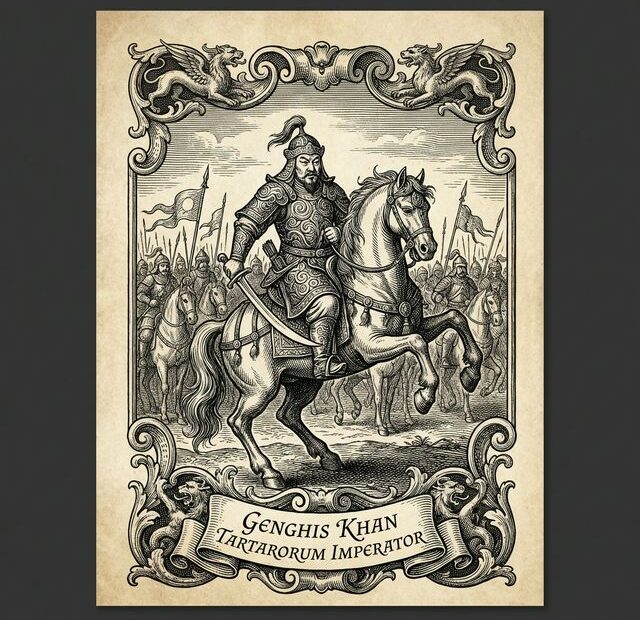
    When we think of Genghis Khan, the image that usually comes to mind is that of a ruthless barbarian leaving a trail of destruction in his wake. However, this is a simplistic and incomplete view. Behind the sword was a brilliant strategic mind that unified warring tribes and created the largest contiguous empire in human history. The “Genghis Khan Mindset” is not about violence, but about ruthless efficiency, adaptation, and long-term vision.

    For the modern entrepreneur or leader, the lessons left by the Great Khan are surprisingly current. He didn’t inherit an empire; he built it from scratch, overcoming adversities that would break most people. Here are five essential strategies we can extract from his life and apply to the pursuit of success today.

    1. Radical Meritocracy over Aristocracy

    Value Competence, Not Blood

    Unlike the feudal armies of Europe or China, where position was determined by birth, the Mongol army operated under a strict meritocracy. Genghis Khan promoted generals based solely on skill and loyalty, often elevating men from humble backgrounds or even former enemies who demonstrated value.

    The Modern Lesson

    In the corporate world and in business, results must speak louder than titles or connections. Build a team where the best ideas win, regardless of who proposed them. A culture that rewards real performance creates a high-performance environment impossible to replicate by organizations stuck in rigid hierarchies and nepotism.

    2. Adaptation and Technological Adoption

    Learn from the Enemy

    The Mongols were originally steppe warriors, masters of cavalry and archery, but ignorant of siege warfare. When they encountered the fortified cities of China and Persia, they didn’t give up. Instead, they captured Chinese and Muslim engineers and learned to build catapults and use gunpowder. They turned the enemy’s technology into their own advantage.

    The Modern Lesson

    Don’t stick to “how we’ve always done things”. The market changes fast. If a competitor has superior technology or processes, don’t ignore it out of pride; study it, adapt it, and improve it. The ability to pivot and integrate new tools (like AI nowadays) is what separates empires that grow from those that fall.

    3. Unwavering Loyalty and Iron Discipline

    The Power of Unity

    The greatest crime in the Mongol army was not defeat, but betrayal and abandoning one’s companions. Genghis Khan instilled a sense of loyalty so deep that his units fought as a single organism. Discipline wasn’t just about following orders, but about protecting the integrity of the group.

    The Modern Lesson

    Organizational culture is your greatest defense. A team united by shared values and mutual loyalty will outperform a group of individualist “stars” any day. Invest in building trust. When your team knows you “have their back”, they will fight your battles with the same intensity as you do.

    4. Information Warfare and Psychology

    Win Before the Battle Begins

    Before invading a territory, Genghis Khan sent spies (merchants, travelers) to map routes, understand local politics, and spread terrifying rumors about the size and ferocity of his army. Many cities surrendered before even seeing a Mongol soldier, defeated by fear and reputation.

    The Modern Lesson

    Information is power. Know your market, your customers, and your competitors better than they know themselves. Use marketing and branding to position your brand dominantly in the consumer’s mind before the “sale” even happens. The perception of authority and inevitability can open doors that brute force could not.

    5. Long-Term Vision and Legacy

    Planting Trees You Won’t See

    Genghis Khan didn’t fight just for immediate riches; he had a vision of a “universal peace” under the eternal sky (which would become the Pax Mongolica, allowing safe trade along the Silk Road). He established laws (the Yassa) and writing systems that ensured his empire would survive and prosper long after his death.

    The Modern Lesson

    Don’t just build for the next quarter. Ask yourself: “What am I building that will last 10, 50 years?”. True success is creating systems and values that transcend your physical presence. Whether in investments or brand building, long-term thinking is the ultimate competitive advantage in an immediate world.

    Frequently Asked Questions (FAQ)

    Wasn’t Genghis Khan a cruel tyrant?
    Yes, his conquests were bloody. However, the “Mindset” here focuses on strategies of efficiency and leadership. We can learn from the strategic effectiveness of historical figures without endorsing their moral actions. Separating technique from morality is crucial for objective historical study.

    How to apply “siege warfare” to small businesses?
    Think of “besieging” a market niche. Instead of attacking the market leader head-on, dominate distribution channels, build barriers to entry, and isolate the customer’s problem until your solution is the only viable one.

    What was the Pax Mongolica?
    It was a period of relative peace and stability that followed the Mongol conquests, where trade, technologies, and ideas (such as printing and gunpowder) flowed freely between East and West, facilitating the beginning of the Renaissance.

    What is the best book to learn more?
    We strongly recommend “Genghis Khan and the Making of the Modern World” by Jack Weatherford, which deconstructs myths and focuses on the administrative and cultural genius of the Mongols.

    Think Big

    Genghis Khan’s legacy teaches us that success depends not only on brute force but on intelligence, adaptability, and unity. In a volatile modern world, adopting this mindset of continuous learning, meritocracy, and strategic vision can be the difference between being conquered by circumstances or leading your own destiny. Be ruthless in the pursuit of excellence, but wise enough to always adapt.


    Did you like this applied historical analysis? Check out our other articles on great strategy books.

  • The Productivity Secret That Comes from 1882

    The Productivity Secret That Comes from 1882

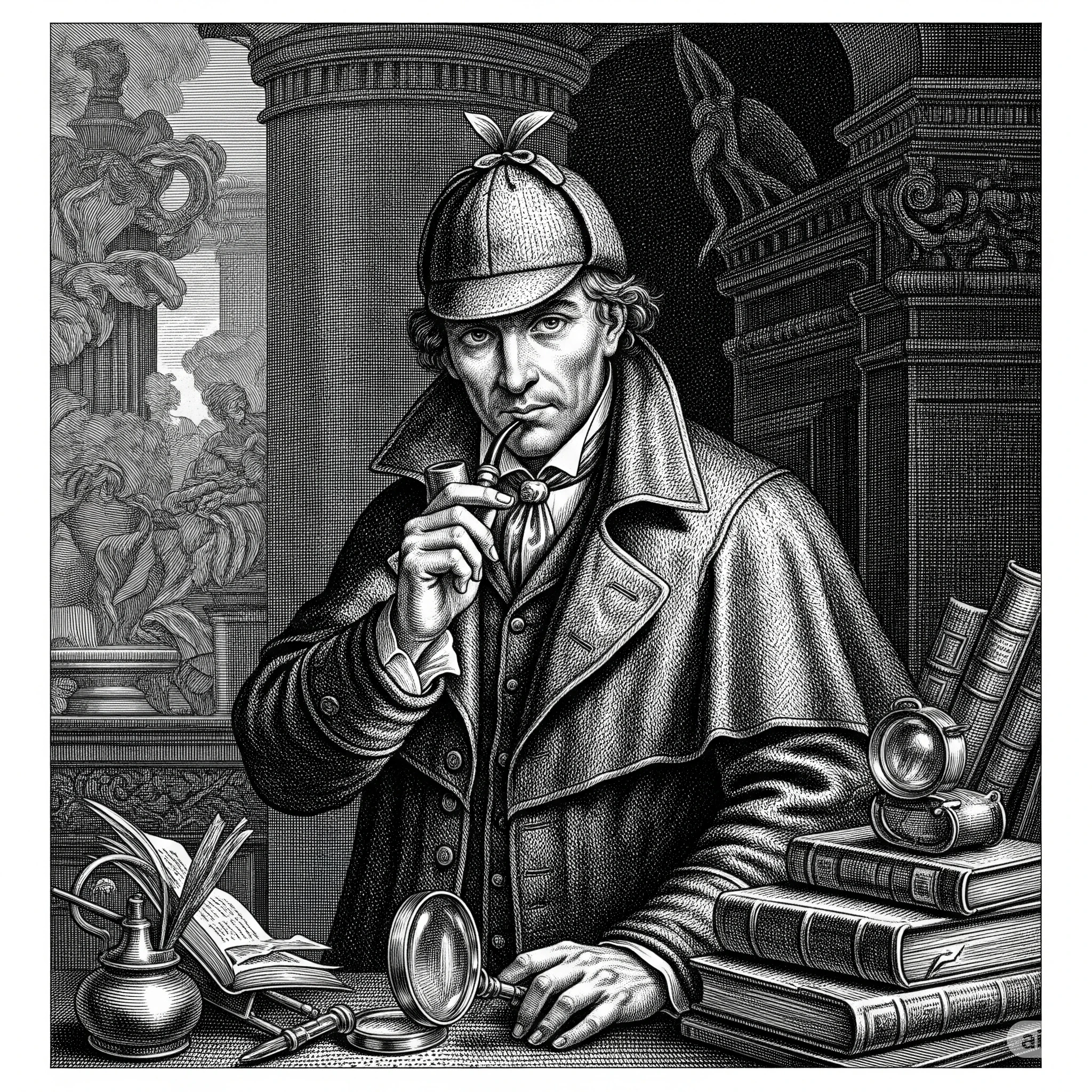
    The Scherlock Holmes secret spice

    We live bombarded by productivity methods. From the Pomodoro technique to time blocking, from TikTok trends to the latest apps — the options are endless. But perhaps the most powerful productivity hack isn’t a modern invention. In fact, it was created in 1882, hidden within the pages of an English crime novel.

    The secret to high-performance productivity lies in the character of Sherlock Holmes. His methods offer timeless lessons on focus, environment, and perseverance. By examining the principles that guided the world’s greatest detective, we can discover a more effective and sustainable way to approach our own work and challenges.

    The Superpower of Singular Focus

    Sherlock Holmes’s legendary deductive abilities weren’t a natural gift, but the result of years of dedicated training. His genius was rooted in a single powerful skill: the ability to focus with unwavering intensity.

    When confronted with a difficult case, Holmes would concentrate all his mental energy on that one task, completely blocking out all noise and distractions. He wasn’t a multitasker — you would never find him watching a Mr. Beast video while pondering a clue.

    His state of obsession during a case was so profound that he would often go days without eating or sleeping. Instead, he preferred to chain smoke and pace around his room, completely immersed in a state of deep concentration. His partner, Dr. Watson, noted numerous times that absolutely nothing could distract Sherlock when he was in this trance-like state.

    The crucial lesson here isn’t to deprive yourself of food in the name of productivity. The real lesson is that Sherlock’s unique intellect and productivity reside in his ability to focus.

    In an age of constant notifications and digital distractions, the temptation to divide our attention is stronger than ever. The next time you feel the urge to scroll through your phone while you should be studying or working, consider following Sherlock’s example. The ability to commit fully to a single task is the foundation of meaningful progress.

    man, focusing with your eyewears

    Engineering an Environment for Deep Work

    Beyond his mental discipline, Sherlock Holmes was a master of environmental design. He instinctively created a space at 221B Baker Street where deep work wasn’t just possible — it was automatic. His surroundings were carefully curated to facilitate concentration and contemplation, not distraction.

    Observe his rituals:

    • When he was deep in thought and needed to work through a problem, he would pick up his violin, not his phone
    • When he needed to slow down and ponder, he would pick up his pipe, not scroll through YouTube Shorts

    The point isn’t to advocate for nicotine use or learning the violin. The key insight is that Sherlock had rituals, and these rituals were essential to his process. They were small, repeatable actions that signaled to his brain that it was time to work.

    This is a powerful concept that stands in direct opposition to our modern conditioning. Modern life trains us to respond to notifications when we should be responding to rituals.

    How to Apply This Lesson

    To apply this lesson, you must create your own process — a set of steps that tells your brain it’s time to focus. The specific ritual doesn’t matter as much as its consistency.

    It could be something simple like:

    • Listening to a specific playlist before heading to the gym
    • Making a cup of coffee right before you start studying
    • Organizing your desk in a particular way

    The goal is to build a consistent habit that automatically triggers a state of focus.

    The Unsung Virtue of Grit: A Lesson from Dr. Watson

    While Sherlock embodies genius-level focus, his loyal companion, Dr. Watson, offers an equally vital lesson. Watson may not have been a genius, but he possessed an incredible amount of grit.

    His determination is perfectly captured in The Hound of the Baskervilles, where he states:

    “I swore it should not be due to lack of energy or perseverance that I should miss this chance that fortune has thrown my way.”

    The modern translation of this sentiment is simple:

    “I’m going to do what I need to do regardless of how I feel.”

    Life presents us with numerous opportunities, but we often miss or ignore them because we’d rather stay in our comfort zone and do something easy, like rewatching our favorite TV show for the 28th time.

    This mindset is about choosing to act based on intention, not emotion. It aligns with the idea that when faced with two choices, we should always choose the option that involves short-term pain, as it almost always leads to long-term gains.

    Imagine what you could achieve if you consistently chose the path of perseverance over the path of immediate gratification.

    Beyond Apps and Systems

    Reading Sherlock Holmes won’t magically organize your calendar or plan your week for you. Its lessons are more fundamental. The stories show you what you’re capable of achieving if you truly lock in and refuse to quit.

    The solution to our productivity problems isn’t necessarily a new app or a complex system. Often, the answer is much simpler. You just need some focus and some grit.

    The next time you encounter a difficult challenge or a hard case in your own life, resist the urge to scroll or quit. Instead, channel your inner Sherlock, cultivate your focus, and work the case until it’s solved.