Rick Rubin’s ‘The Creative Act’: Why Talent is Overrated
In 2023, Rick Rubin, the man who produced albums for Johnny Cash, Jay-Z, Red Hot Chili Peppers, Adele, and Kanye West, released a book that had nothing to do with music. The Creative Act: A Way of Being is not a memoir, not a how-to guide, and not a business book. It is something stranger and more useful: a quiet, meditative argument that creativity is not a talent reserved for the exceptional. It is a posture, a practice, and a relationship with the world available to anyone willing to pay attention.
This article explores the book’s most challenging and liberating ideas, and why its central thesis, that talent is overrated, might be the most important thing you hear this year. For another exploration of how mindset shapes outcome, see our piece on Griffith vs. Guts: the Stoic and the Machiavellian.
What Rick Rubin Actually Believes About Creativity
The opening premise of The Creative Act is disorienting if you expect Rubin to explain how he made great records. He does not. Instead, he argues that creativity is not something you do, it is something you are, when you are genuinely present and open to what the world is offering.
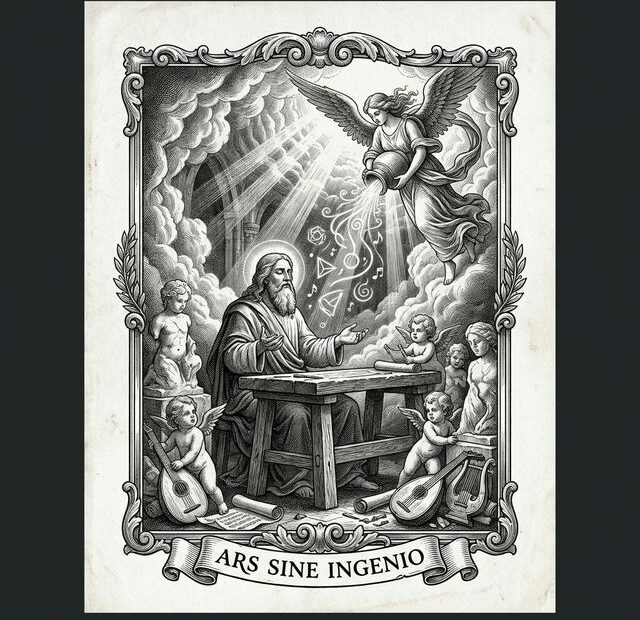
“The universe is always sending us transmissions. The artist’s job is to be a good receiver.”
This is not mysticism disguised as productivity advice. Rubin’s point is empirical: the creators he has worked with for five decades are not distinguished by superior raw ability. They are distinguished by their quality of attention. They notice what others walk past. They take their own responses seriously. They resist the urge to make something acceptable in favor of making something true.
Rubin describes three categories of artist: those who follow trends, those who follow their own preferences, and those who follow the work itself, who subordinate personal taste to what the piece needs. The third category, he argues, produces the most enduring art. And it has almost nothing to do with talent.
The Myth of the Gifted Creator
Western culture has a deep investment in the idea of the gifted individual, the child prodigy, the natural, the visionary who simply arrived with abilities the rest of us lack. This story is flattering to those who succeed and consoling to those who do not. It explains outcomes without assigning effort or luck.
Rubin dismantles this narrative not by denying that some people have exceptional raw ability, but by arguing that raw ability is the least interesting part of creative work. The musicians who produce records with lasting cultural impact are not always the most technically proficient. They are the ones who found a way to make the listener feel something they had not felt before, and that is a question of attention, honesty, and courage, not of instrumental virtuosity.
He points to the phenomenon of artists who peak early and disappear: they had enormous natural talent but never developed the practice of creative attention. And then he points to artists who arrived late, worked slowly, and produced work that deepened over decades. The difference, consistently, was not talent. It was what they did with the silence between works.
Creativity as a Practice, Not a Gift
The book’s practical core is an extended argument that creativity functions like meditation or physical training: it requires daily showing up, tolerance for discomfort, and the willingness to produce bad work on the way to good work.
1. The Seed vs. The Craft
Rubin distinguishes between the seed of a work, the initial impulse, image, or feeling that ignites a project, and the craft that shapes it into form. Most people conflate these and believe the seed is the hard part. Rubin argues the opposite: seeds are abundant. What is rare is the willingness to sit with a seed until it becomes something. Most creative potential dies not in the absence of inspiration but in the absence of patience.
2. The Inner Critic as a Tool
Rather than treating self-doubt as an obstacle to be overcome, Rubin reframes the inner critic as information. The critic appears most aggressively when you are working close to something real. Learning to read the critic’s volume as a signal of proximity to truth is one of the book’s most counterintuitive and useful ideas.
3. Awareness Before Execution
Rubin insists that the most important creative skill is observational, learning to notice the texture of experience with unusual precision. You cannot manufacture this material. You can only cultivate the conditions for it.
Why This Is Uncomfortable
The Creative Act annoys some readers because it refuses to provide a checklist. There is no seven-step process for becoming more creative. What Rubin is really arguing is that the search for a technique, for a shortcut that makes creative work safe and predictable, is itself the enemy of creative work. The desire for a reliable process is a defense mechanism against the vulnerability of genuinely trying and potentially failing.
This is why talent is overrated: it gives people a story. Either “I have it and will succeed” or “I don’t have it and therefore cannot succeed.” Rubin is removing that story and replacing it with something much harder, the invitation to simply try, repeatedly, without guarantee.
What Rubin Shares About His Own Process
Throughout the book, Rubin is careful not to present himself as a model. But certain details of his practice emerge:
- He rarely plays an instrument in the studio. His role is to listen for what is working, what is missing, and what the artist is actually trying to say.
- He has no fixed working hours. Creative work, for him, is inseparable from living, from conversations, books, walks, and time spent doing nothing in particular.
- He deliberately works on many projects simultaneously, to avoid the pressure that accumulates when a single piece carries the weight of everything.
- He considers boredom a creative state, a productive space in which the mind naturally drifts toward genuine preoccupations.
The Political Argument Beneath the Surface
Buried in The Creative Act is an argument that is quietly political: institutional gatekeepers do not determine who is creative. The MFA program, the record label, the publishing house, the film studio, these structures select for particular kinds of talent that fit their existing formats. Rubin’s model is, among other things, a decentralized model. It does not require validation. It does not require an audience. This connects directly with why we argue you should stop searching for free PDF downloads, the creative ecosystem only survives when it is supported.
Read the Book!
The Creative Act arrives at a moment when the cultural conversation about creativity is dominated by productivity metrics and algorithmic optimization. Its argument, that creativity is a way of being rather than a set of skills to be acquired, is profoundly countercultural. The most enduring creative work you have ever encountered was made by someone who was paying extraordinary attention to something that mattered to them. Not someone who was more talented than everyone else. Someone who showed up, stayed present, and did not look away.
Frequently Asked Questions (FAQ)
1. Is The Creative Act only for artists and musicians?
No. Rubin explicitly frames the book for anyone who engages with the creative process, including writers, designers, entrepreneurs, and scientists.
2. Is The Creative Act a practical book or a philosophical one?
Both. It contains concrete observations about creative practice alongside philosophical reflections. It does not offer step-by-step instructions, which some readers find frustrating and others find liberating.
3. Do you need to know about music to enjoy this book?
Not at all. Music is occasionally used as a reference point, but the book’s arguments translate to any creative domain.
4. How long is The Creative Act?
Around 350 pages in a large, sparsely typeset format. It is designed to be read slowly and returned to, rather than consumed in a single sitting.
5. What is Rick Rubin’s philosophy of talent in one sentence?
Talent is the least important thing about a creative person; the quality of attention they bring to their work and the world is everything.

I write things about books, animes and movies. I am passionate about this topics and want to share with you my impressions.