What i learn from Sinners
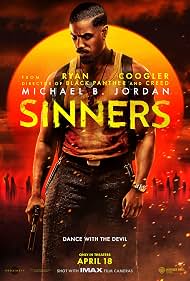
What does it cost to build something sacred in a world designed to take it from you? This is the question Ryan Coogler places at the heart of Sinners, one of the most culturally significant and philosophically dense films of 2025. On its surface, it is a vampire horror film set in 1932 Jim Crow-era Mississippi. Beneath that surface, it is something far more enduring.
I watched Sinners expecting genre entertainment. What I found was a film that refused to let me leave it at the theater. It followed me home, into my thinking about culture, identity, and the invisible forces that drain life from what communities build together. Few recent films have earned that kind of haunting.
This article is not a plot summary. It is a philosophical reading, an attempt to excavate the five deepest lessons buried inside Coogler’s Southern Gothic masterpiece, and to ask what each one demands of us in our own lives.
“You built something beautiful here. And the darkness will always come for what is beautiful.”
— Sinners (2025), dir. Ryan Coogler
1. The Origin Codex: Ryan Coogler and the Making of a Myth
Ryan Coogler, the filmmaker behind Fruitvale Station, Creed, and Black Panther has spent his career returning to a single obsession: what does it mean to protect something you love in a system that was never designed to allow it to survive? Sinners is the fullest expression of that obsession to date.
Set in the Mississippi Delta during the height of the Jim Crow era, the film follows twin brothers Smoke and Stack, who return home from Chicago to open a juke joint, a space for music, community, and a few hours of joy carved out from an otherwise brutal existence. The vampire Remmick, an Irish immigrant who turned centuries ago, arrives and begins recruiting.
Critics immediately recognized Sinners as what one reviewer called a “Trojan horse film”: the horror genre used as a delivery mechanism for a sustained, rigorous argument about race, cultural theft, assimilation, and the cost of freedom. Shot on IMAX 70mm, it is also one of the most visually extraordinary American films in decades.
2. The Five Illuminated Lessons
Lesson 1: Vampirism Is the Oldest Metaphor for Assimilation
Remmick is not simply a monster. He is a man who was once victimized; Irish immigrants faced brutal discrimination in 19th-century America and who chose, upon being turned, to join the dominant power structure rather than resist it. He now seeks to extend that offer to others. Assimilation, the film argues, is a vampire bite with paperwork.
What does it mean to give up what makes you distinct your culture, your music, your ancestral memory in exchange for the protection of belonging to the majority? Remmick presents this as liberation. The film presents it as a form of death more complete than dying, because it erases not just the body but the lineage.
This is not a metaphor confined to 1932. Every generation faces its version of Remmick’s offer: abandon who you are, and you will be safe. Sinners is a refusal of that bargain, filmed in chiaroscuro light and Delta blues.
Lesson 2: Sacred Spaces Must Be Actively Defended
The juke joint at the center of Sinners is not merely a bar. It is an act of political defiance, a space where Black Americans under Jim Crow could be fully human for a few hours, free from the performance of deference that survival demanded in daylight. Smoke and Stack understand this. They build it anyway, knowing the risks.
The film’s central horror; that what you build will always attract forces seeking to possess or destroy it, is not paranoia. It is history. The blues itself was appropriated. The juke joint was bulldozed. The lesson Coogler embeds is that the creation of sacred space is not a one-time act. It is a continuous practice of protection, vigilance, and renewal.
What is your juke joint? What space physical, creative, relational, do you maintain that allows you to be fully yourself? And who or what is circling it in the dark?
Lesson 3: Culture Is Not a Product — It Is a Living Covenant
The blues in Sinners is not background music. It is the spiritual core of the film. When the young musician Sammie plays, something metaphysically significant happens, the music ruptures the boundary between the living and the dead, between the present and all the ancestors who carried that sound forward through generations of suffering.
Remmick wants to possess this. He cannot create it. He can only consume it and mimic it. This distinction — between creating from a place of genuine cultural rootedness and consuming someone else’s expression is one of the sharpest questions the film poses. Culture stolen from its source is a body without a soul. It performs, but it does not breathe.
In an era of algorithmic trend-chasing, content extraction, and aesthetic appropriation, this lesson lands with considerable force. What are you creating from the inside out, versus what are you adopting from the outside in?
Lesson 4: The Social Contract Extracts a Hidden Tax
Smoke and Stack returned from Chicago with money, suits, and the studied calm of men who had learned to navigate white spaces without triggering the violence that awaited Black men who forgot to perform their diminishment. This performance is itself a form of tax invisible, constant, and exhausting.
Sinners refuses to let this cost remain invisible. Every scene in which the twins interact with white authority the sheriff, the landowner is shot with a specific tension that communicates exactly what is being suppressed, and exactly what it costs to suppress it. Freedom, the film insists, is not simply the absence of chains. It is the absence of the performance of helplessness.
This extends beyond race. Anyone who has ever had to make themselves smaller to be safe in a room understands the tax. The question the film asks is: at what point does paying that tax constitute complicity in the system that levies it?
Lesson 5: Resistance Is an Act of Love, Not Hatred
The climax of Sinners is not about defeating an enemy. It is about protecting a community, about two brothers choosing, in their final hours, to stand between something beautiful and the darkness that would consume it. Their motivation is not rage. It is love, expressed through the willingness to absorb violence so that others do not have to.
This reframes resistance entirely. The most potent acts of defiance in history were not born from hatred of the oppressor but from an overwhelming love for what was being threatened: a language, a tradition, a family, a way of singing a song. Coogler’s twins are not heroes because they are strong. They are heroes because they know what they are protecting and they refuse to let it go.
3. The Sword & the Shield: The Film’s Ambition and Its Fractures
What Sinners accomplishes at its best is almost without precedent in recent American genre filmmaking. The integration of the blues as a metaphysical force; not merely a soundtrack but an actual narrative instrument that bends the film’s reality is extraordinary. Michael B. Jordan’s dual performance as Smoke and Stack is disciplined, layered, and deeply moving.
The film’s visual language is equally remarkable. Cinematographer Autumn Durald Arkapaw uses the IMAX 70mm format not for spectacle but for intimacy; close-ups that reveal the textures of faces and hands and wood grain with an almost documentary tenderness. The juke joint feels genuinely sacred before a single vampire arrives.
Where the film divides audiences is in its third act. The density of its thematic argument occasionally strains the narrative momentum, and some viewers have found the final confrontation less emotionally satisfying than the philosophical architecture that precedes it. This is the film’s price of ambition. It asks more of its audience than most genre films do, and not everyone is willing to pay.
But this difficulty is, again, part of the argument. Coogler is not interested in easy resolutions. He is interested in honest reckonings. The film’s refusal to provide clean catharsis is itself a statement about the refusal of history to provide it. Sinners ends as it must: with survival, not triumph. With continuation, not resolution.
4. The Alchemist’s Practice: How to Carry These Lessons Into Your Life
The first application of Sinners‘ philosophy is the practice of identifying your cultural inheritance. What traditions, stories, or ways of making meaning were handed to you by people who paid a price to preserve them? Most of us receive these gifts unconsciously. The film asks us to become conscious of what we carry, and intentional about what we pass on.
The second application concerns the spaces you inhabit and create. Every person needs at least one space physical or otherwise, where the performance is off. Where you do not have to manage others’ comfort. Where you are not performing a diminished version of yourself. The creation and protection of that space is not a luxury. It is a psychological necessity.
The third application is the most demanding: examine where you have accepted Remmick's offer. Where have you traded distinctness for safety? Where have you assimilated in voice, in appearance, in opinion in ways that cost you something essential? The film does not condemn these trades; it asks you to see them clearly, because only what you can see clearly can be renegotiated.
Finally, locate what you are protecting. The twins’ clarity of purpose their sister, their community, their music gives their actions a moral weight that pure self-interest could never generate. The clearest and most sustainable forms of resistance are always rooted in love of something specific. Find the specific thing. Guard it accordingly.
These are not comfortable instructions. But Sinners was not made to comfort. It was made to illuminate — and to remind us that the act of building something beautiful in hostile conditions is itself one of the most profound forms of freedom available to human beings.
5. FAQ: Questions from the Scriptorium
Q1: Is Sinners (2025) primarily a horror film or a social commentary?
It is both simultaneously, and neither label is adequate alone. Coogler uses the vampire genre as a vehicle for a sustained philosophical argument about race, culture, and freedom. The horror elements are real and visceral, but they function as allegory. Viewers who approach it as pure genre entertainment will find it rewarding; those who engage its themes will find it extraordinary.
Q2: What does Remmick represent at a philosophical level?
Remmick is the face of assimilation-as-seduction. He was once a victim of systemic oppression, and his response was to join the oppressor’s metaphysical club rather than resist it. He represents the offer that every marginalized group eventually receives: surrender your distinctness, and we will stop hunting you. The film’s central moral argument is that this offer is not liberation but a more elegant form of destruction.
Q3: How does the blues function thematically in the film?
The blues is not background music, it is the film’s metaphysical spine. In Sinners, the blues is presented as a form of cultural memory that operates across time, connecting the living to the ancestors who forged the music through suffering. When Sammie plays, it is a conjuring act. The vampires’ desire to possess this music; and their inability to truly create it, encodes the film’s argument about cultural appropriation and the irreducible authenticity of expression rooted in lived experience.
Q4: What other films or books explore similar themes of cultural identity and resistance?
Get Out (2017) by Jordan Peele explores similar territory through a different horror metaphor. For literary companions, Toni Morrison’s Beloved examines memory, inheritance, and the cost of survival with devastating precision. James Baldwin’s The Fire Next Time remains the essential non-fiction text on the politics of Black identity in America, and its arguments echo throughout Sinners with remarkable clarity.
References & Codex Bibliography
1. Coogler, Ryan (dir.). Sinners. Warner Bros. Pictures, 2025.
2. Morrison, Toni. Beloved. Alfred A. Knopf, 1987.
3. Baldwin, James. The Fire Next Time. Dial Press, 1963.
4. External reference: Sinners (2025) on Wikipedia.
5. Internal link: What Rocky Balboa Teaches Us About Never Giving Up.
Conclusion
Sinners ends not with the extermination of evil but with its continuation, and with the survivor carrying forward the song that evil tried to silence. This is Coogler’s final and most important lesson: the point was never to eliminate the darkness. The point was to keep the music alive inside it.
Whatever sacred thing you are building, whatever juke joint of the spirit you have constructed against the pressure of a world that does not always want it to exist; guard it. Play the music louder. And understand that the act of creation, in hostile conditions, is its own form of triumph. The vampires cannot turn what they cannot catch. Keep moving. Keep singing.

I write things about books, animes and movies. I am passionate about this topics and want to share with you my impressions.