Top 10 lessons that i learn from Solo Leveling
What do you do when the world decides you are the weakest? When every system, every hierarchy, every person around you confirms that you were simply born to lose; do you accept it, or do you find a hidden door no one else can see?
This is the question at the heart of Solo Leveling, the manhwa-turned-anime that became the most searched and celebrated series of 2025. Sung Jinwoo begins the story as humanity’s weakest hunter, a man so fragile that his peers openly mock his willingness to enter dungeons at all.
And yet, his story became a global phenomenon. Not because he was born special, but precisely because he was not. These are the lessons his journey teaches u, lessons that go far beyond fantasy and land squarely in the territory of personal philosophy.
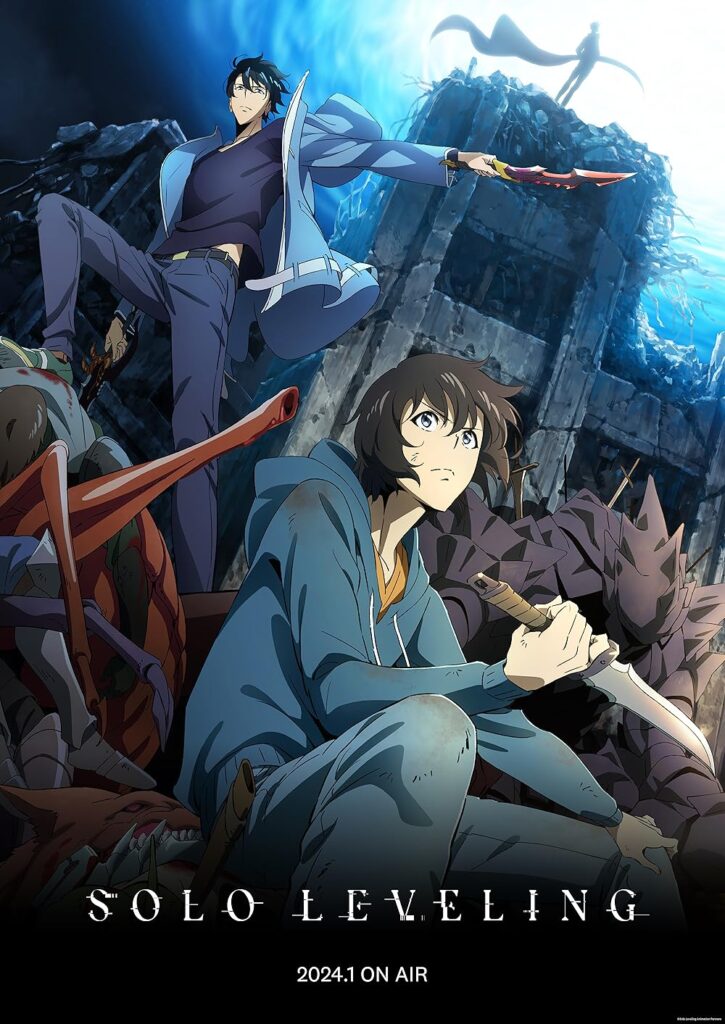
“I alone am the celebrated hunter.”
— Sung Jinwoo, Solo Leveling
1. The Origin Codex: The Creator and the World of Solo Leveling
Solo Leveling was originally written by South Korean author Chugong, serialized on KakaoPage from 2018 to 2021. The story is set in a world where inter-dimensional “gates” suddenly appear, unleashing monsters upon Earth, and only those who awakened as hunters can fight back.
The manhwa exploded into international consciousness during the pandemic years, becoming one of the most-read Korean web novels globally. Its anime adaptation, produced by A-1 Pictures, won the 2025 Anime Awards an achievement that validated what millions of fans had known for years: this was not just entertainment, it was mythology for the modern age.
What makes Chugong’s creation extraordinary is its paradox: a story about becoming the strongest human alive is actually, at its core, a meditation on starting from zero. The lessons it offers are not about the destination. They are about what you build inside yourself during the climb.
2. The Ten Illuminated Lessons
Lesson 1: Start Where You Are, Not Where You Wish You Were
Sung Jinwoo does not begin his journey with a hidden advantage or a secret bloodline. He begins ranked E — the absolute bottom. His first lesson is one of radical acceptance: you cannot level up from a starting point you refuse to acknowledge. Pretending you are further along than you are is not ambition, it is delay.
Lesson 2: Consistency Is the Only Cheat Code
The System gives Jinwoo daily quests. Miss them, and face punishment. This mechanic mirrors a brutal truth: growth is not a grand gesture made once. It is the relentless accumulation of small, repeated actions. The world rewards those who show up every single day, not those who perform brilliantly and then disappear.
In a world obsessed with shortcuts and hacks, Solo Leveling is almost old-fashioned in its insistence that discipline is the mechanism not inspiration, not talent, not luck.
Lesson 3: Use Pain as Data, Not as a Verdict
Every time Jinwoo nearly dies, and he nearly dies often he does not interpret the experience as evidence that he should stop. He interprets it as information about his current limits, and then he works to expand those limits. Pain becomes a diagnostic tool, not a stop sign.
Lesson 4: The Danger of a Fixed Identity
The hunters who die first in Solo Leveling are often those who are too attached to their rank, their title, their existing power. They have confused their current level with their permanent self. Jinwoo’s great insight, never stated, always shown, is that identity must remain fluid. You are not who you were last month.
Lesson 5: Silent Confidence Outperforms Loud Pride
As Jinwoo grows stronger, he becomes quieter. He does not announce his power. He does not seek validation from those who once mocked him. This restraint is one of the series’ most underrated teachings: genuine strength requires no audience. The loudest person in the room is rarely its most powerful.
Lesson 6: Solitude Is Not the Same as Loneliness
The title itself — Solo Leveling — is a philosophical statement. Jinwoo walks a path that no one else can walk for him. His growth is irreducibly personal. This mirrors one of the most profound truths of human development: there are things you cannot delegate. The work of becoming yourself is always solo work.
Lesson 7: Protect What You Love Before You Have the Strength To
Jinwoo’s deepest motivation is never glory. It is protection; of his sister, his mother, eventually all of humanity. Purpose rooted in love is categorically different from purpose rooted in ego. It does not exhaust itself when things get hard. It intensifies. Ask yourself: are you fighting for something, or just against something?
Lesson 8: Every Monster Is a Mirror
Each dungeon Jinwoo enters confronts him with a threat that matches; and then slightly exceeds, his current capacity. Life operates by this same principle. The challenges you face are not random. They are, in a sense, calibrated. They reveal exactly what still needs to be built inside you. Obstacles are not interruptions to growth — they are the mechanism of it.
Lesson 9: The Past Cannot Be Renegotiated, Only Integrated
Jinwoo carries grief, for comrades lost, for time wasted, for the person he was forced to be before the System found him. He does not pretend these losses did not happen. He integrates them into his identity as a hunter. This is mature emotional work: not forgetting, not dwelling, but carrying forward.
Lesson 10: Becoming the Strongest Is Less About Beating Others and More About Not Betraying Yourself
The final and deepest lesson of Solo Leveling is this: Jinwoo’s true opponent was never any monster or rival hunter. It was the version of himself that might have given up. Every level gained was a refusal to betray his own potential. Power, in this story, is ultimately a measure of integrity under pressure.
3. The Sword & the Shield: What the Series Gets Right and Where It Challenges You
What Solo Leveling captures with rare precision is the psychology of the long game. Most stories about growth show a montage. This one shows the texture of discipline the morning runs, the quests refused in fear, the quiet moments before a choice that will define everything.
The animation by A-1 Pictures translates this perfectly. Jinwoo’s physical transformation is mirrored in his gaze: the shift from exhausted anxiety to calm, deliberate focus. It is one of the finest pieces of visual character writing in recent anime history.
Where the series challenges some readers is in its pacing. The early chapters, particularly before the Double Dungeon arc, demand patience. The payoff is extraordinary, but the journey to it requires you to tolerate extended periods of Jinwoo being genuinely, consistently weak. This, too, is a lesson. Most of us abandon our own story before the first arc concludes.
The slowness of the beginning is not a flaw. It is the point. You cannot understand what Jinwoo becomes without sitting inside what he was. The discomfort of those early chapters is intentional and instructive.
4. The Alchemist’s Practice: How to Apply These Lessons Today
The most direct translation of Solo Leveling‘s philosophy is the concept of daily quests. Pick three non-negotiable actions physical, intellectual, relational and complete them every day regardless of how you feel. Do not negotiate with your mood. The System does not negotiate with Jinwoo’s fatigue.
The second practical application is reframing every setback as a level gate. When you are fired, rejected, or humiliated, ask what the dungeon is testing. What skill or capacity is this adversity forcing you to develop? This is not toxic positivity. It is a strategic relationship with difficulty.
The third application concerns identity. Write down, today, three things you believe are fixed about yourself that are actually just your current rank. “I am bad at public speaking.” “I am not a disciplined person.” “I am not someone who finishes things.” These are E-rank assessments. Treat them as starting points, not verdicts.
Finally, apply Lesson 7 in reverse: identify what you are protecting. The clearest missions are not about personal gain, they are about shielding something or someone whose existence gives your effort meaning. Find your sister. Find your reason.
When motivation fails, and it will; purpose carries you. Jinwoo does not always want to enter the dungeon. But he knows what happens to those he loves if he does not.
5. FAQ: Questions from the Scriptorium
Q1: Do I need to watch the anime or is reading the manhwa sufficient to understand these lessons?
Both versions are deeply rewarding, but the anime’s visual storytelling adds an emotional layer that is genuinely difficult to replicate in text. If time allows, read the manhwa first, then experience the transformation through A-1 Pictures’ animation.
Q2: Is Solo Leveling philosophy similar to Stoicism?
There are striking parallels. Like the Stoics, Jinwoo focuses on what is within his control his training, his discipline, his decisions and accepts what is not. His relationship with adversity mirrors Marcus Aurelius’s view that obstacles are not problems to avoid but materials to build with.
Q3: What is the best entry point for someone new to manhwa or anime?
Begin with the first season of the anime (2024), which covers the Double Dungeon arc and Jinwoo’s initial awakening. It is self-contained enough to be deeply satisfying, and it establishes all ten of the lessons discussed in this article within its first six episodes.
Q4: Are there books that complement the philosophy of Solo Leveling?
Yes — Meditations by Marcus Aurelius for its focus on discipline and adversity, Man’s Search for Meaning by Viktor Frankl for purpose under extreme suffering, and The Courage to Be Disliked by Kishimi and Koga for its treatment of self-determination and the irrelevance of external validation.
References & Codex Bibliography
1. Chugong. Solo Leveling. KakaoPage / Yen Press, 2018–2021.
2. Aurelius, Marcus. Meditations. Penguin Classics, 180 AD.
3. Frankl, Viktor. Man’s Search for Meaning. Beacon Press, 1946.
4. External reference: Solo Leveling on Wikipedia.
5. Internal link: How Re:Zero Teaches Us About Trauma and Resilience.
The Epilogue
Sung Jinwoo’s story does not end with him becoming the strongest human alive. It ends with him choosing to remain human; choosing love, protection, and connection over pure, cold power. That final choice is perhaps the eleventh and most important lesson: strength without purpose is just isolation with better armor.
The dungeon you face today is yours alone. No one can enter it for you, no one can clear it on your behalf, and no system will grant you a shortcut. But if you show up, complete the quest, and refuse to betray your own potential; the level will come. It always does.
I write things about books, animes and movies. I am passionate about this topics and want to share with you my impressions.